





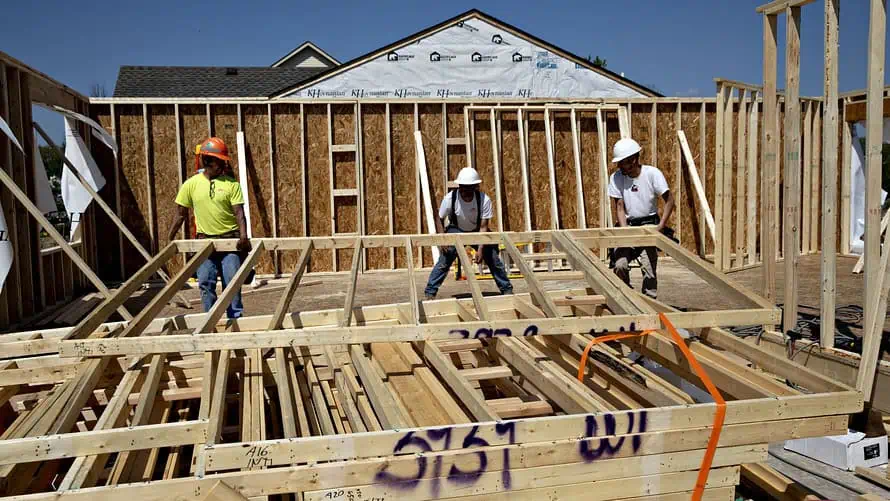
All five of Durham Region’s urban Lake Ontario towns have agreed to participate in the Canada-Ontario Development Charges reduction program, an $8.8 billion application-based initiative for over 200 municipalities that charge development fees, though they do have some reservations.
This program, funded by both the federal and provincial governments, aims to support municipal infrastructure needed for housing by lowering development charges to speed up new home construction.
The catch is that agreeing to this requires communities to cut residential development charges – one-time payments made by developers to help fund roads, parks, recreation centers, and other essential infrastructure for new developments – by 30 percent over three years.
Whitby Mayor Elizabeth Roy expressed that while there’s “no single solution” to the housing crisis, increasing the supply of housing “must be part of the answer.”
“By reducing development charges on residential projects, this program is intended to encourage new housing construction, support a wider range of housing options, and help accelerate the delivery of homes that families need,” she said. “At the same time, it’s important to recognize that development charges play a critical role in funding the infrastructure required to support growth.”
Although both levels of government will cover some revenue losses municipalities might face from this program, local governments will still have to absorb a portion of these costs, Roy pointed out.
“At a time when municipalities across Ontario are facing unprecedented financial pressures and continued downloading of responsibilities from other levels of government, I remain concerned about the potential impact on property taxpayers who are already struggling with rising costs.”
Ajax is all set; its council supported a staff recommendation last week to apply for $122 million in grant funding through the Development Charge Reduction Program (DCRP).
Mayor Shaun Collier acknowledged that there are “risks” involved with this program and noted residents will likely have many questions about its long-term effects.
“An agreement of this size will come with conditions and risks, including possible reductions in development charges by up to 50 percent and municipal contribution requirements. However, staff believe that overall financial impact on taxpayers will be low at this time since the town already has obligations toward these capital projects,” he said.
The town is aiming for upfront funding for five “critical infrastructure projects” through this program. These include Rossland Road, Harwood Avenue North and Hunt Street during a period when revenues from development charges have been affected by slower-than-expected growth.
Council directed staff to move ahead with the application and negotiate an agreement that is “responsible and financially prudent” while keeping taxpayer interests in mind as well.
“The goal is to address funding gaps that could delay critical infrastructure necessary for supporting new housing as well as serving current residents.”
Oshawa Mayor Dan Carter described this initiative as a “bold and cooperative approach” aimed at addressing challenges related to housing supply and affordability.
The announcement showcased a “shared commitment” among all three levels of government towards promoting faster housing availability and affordability,” he added.
“The City of Oshawa has shared this commitment before and will continue pushing forward with efforts to accelerate housing along with necessary infrastructure development.”
With growing neighborhoods planned in Kedron and Columbus expected to host around 46,000 people plus 1,600 residential units already being developed downtown along with at least 2,800 additional units potentially coming up within two years city-wide; Oshawa is also preparing a list of projects aimed at bolstering infrastructure growth while speeding up housing construction throughout its area.
“Oshawa is ready to put shovels in the ground.”
Clarington councillors also backed applying for funds under this program recently despite raising concerns during a special council meeting on June 12 regarding benefits for taxpayers alongside future service payment capabilities.
The municipality hopes securing funds can help mitigate slowdowns in local developments partly due to high development charge rates.
The City of Pickering also submitted applications seeking grants focused on enabling various housing-related infrastructure projects like Seaton Fire Station #3 through Canada-Ontario Development Charge Reduction Program funding as well.
Additonally , Whitby Council endorsed an amendment urging their mayor write Prime Minister Mark Carney along with Premier Doug Ford requesting collaborative discussions among all three governmental tiers refining Canada-Ontario Partnership framework further down line too. p >
“We all share common goals : building more homes & enhancing affordability. Yet , we must ensure municipalities maintain abilities supporting such expansions without placing greater financial burdens onto existing residents via escalating property taxes. “ p >
Municipalities had until June 19 th deadline submitting project proposals considered receiving financial assistance. Final agreements between individual municipal bodies & province shall confirm three year reductions on applicable developmental fees locking-in combined provincial/federal backing offsetting lost revenues partially. p >
Province also committed making available partnership funds extending opportunities rural/small/northern municipalities too. p >INsauga’s Editorial Standards and Policies
Last 30 Days : 42 ,976 Votes
All Time : 1 ,402 ,165 Votes
2177 VOTES