





Do you prefer a balsam fir for its lovely scent or a white pine for its gentle needles?
Selecting a real Christmas tree is a cherished tradition for many families and it’s also an eco-conscious choice. However, as our climate shifts, tree farmers must adjust to new challenges such as changing seasons and unexpected pests. While these obstacles are considerable, there’s plenty of room for innovation.
Based in the Faculty of Environment, the University of Waterloo’s Christmas Tree Lab supports Christmas tree growers all year long by providing research and practical tools aimed at enhancing sustainability and resilience throughout the industry.
With over 1,300 farms spread across Canada, this is no small feat, but the Lab experienced significant achievements this past year. The team introduced a public education series called Christmas in July and documented the history of the Christmas tree industry over the last century. Most importantly, they collaborated with the Christmas Tree Farmers of Ontario (CTFO) to produce a Growers Glossary.
The Growers Glossary was first presented at the Annual Field Day hosted by the Christmas Tree Farmers of Ontario.
Created in close partnership with farmers, the Grower’s Glossary combines hands-on insights from field experience with research-backed advice, ensuring it serves producers whether they’re veterans or newcomers in the industry. This process involved strong collaboration where growers provided input before officially launching the guide at CTFO’s Annual Field Day in Listowel.
The annual event showcases new technology, research advancements, and best practices within the sector. From site planning and soil care to irrigation methods designed to cope with unpredictable weather patterns, participants gained valuable knowledge that highlights how vital it is to adapt to our changing climate.
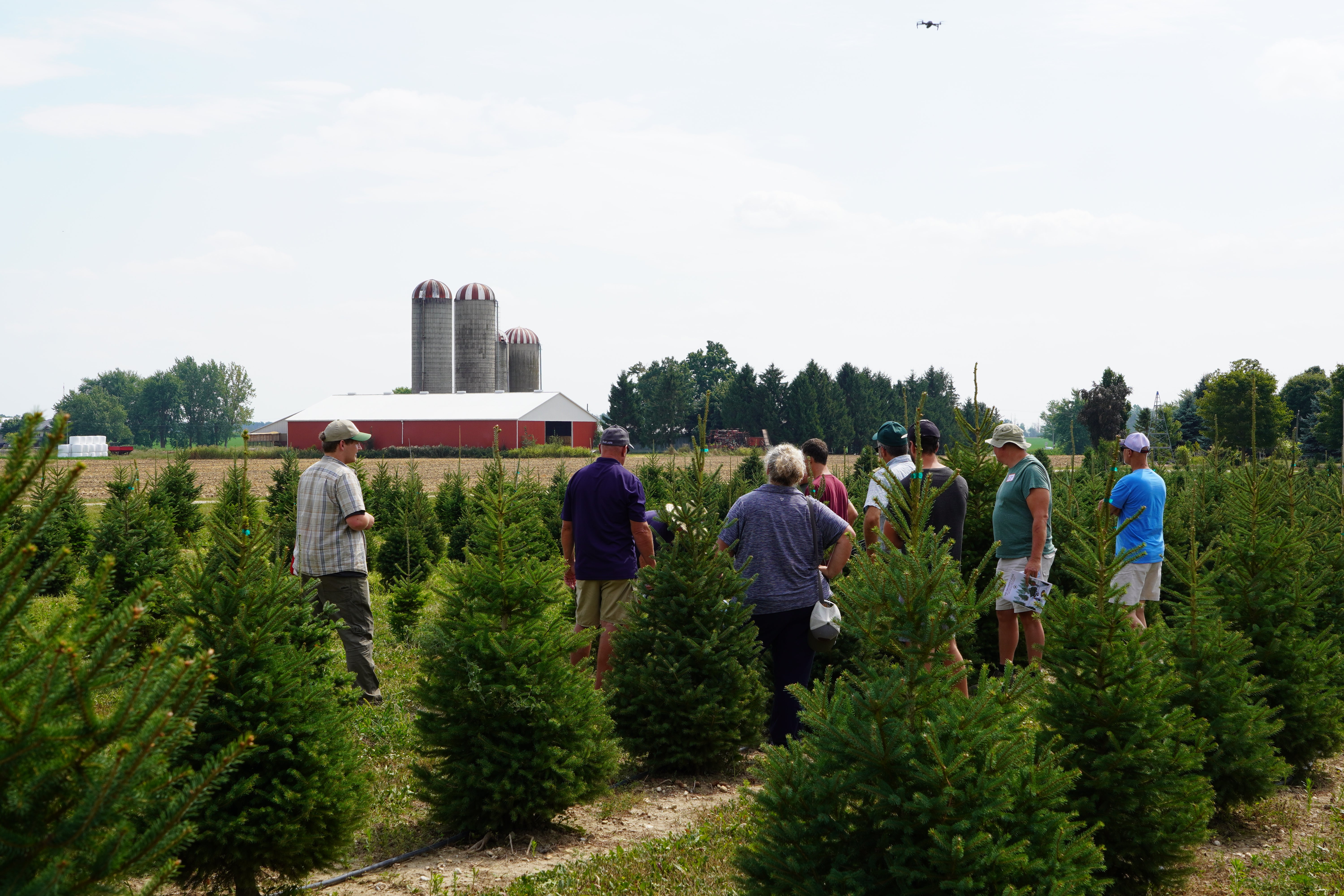
Farmers discuss pruning techniques during the 2025 CTFO Field Day.
“The more we can promote awareness about field days like this happening across Canada, the better,” says Dr. Kelsey Leonard, professor in the Faculty of Environment and director of the lab. “They’re places where research gets not just shared but actively applied. Attending these events is crucial for engaging communities because it’s about meeting people where they are.”
For five decades now, the University has been at the forefront of sustainability research and education while fostering environmental innovations that benefit both people and planet alike.
As we approach this holiday season, activities surrounding Christmas trees are ramping up.
“We have some exciting projects lined up in partnership with Environment and Climate Change Canada along with an article featuring insights from Great Lakes Christmas Tree Journal,” says Alison Clarke, research associate.
Looking forward to next year, the team is seeking funding to enhance their efforts on tree health due to rising concerns about local technical capabilities needed to tackle emerging pests and diseases.
“We’ve built trust so that farmers feel comfortable bringing these issues to us; however, creating an effective research network requires increased dedicated funding,” Leonard explains.
As this lab expands its research capacity while strengthening ties with growers, one message remains clear: choosing a real Christmas tree helps protect local ecosystems while supporting family-owned farms throughout Canada-benefitting both communities and nature alike.
Source link