


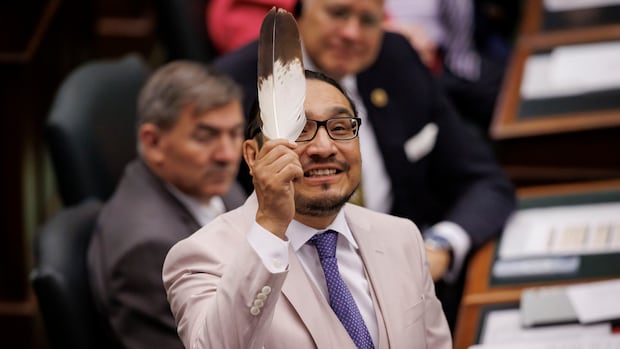
Sol Mamakwa believes many folks don’t understand the significance of language, which is why he makes it a point to speak in Anishininiimowin, also known as Oji-Cree, at Queen’s Park whenever he can.
Mamakwa, who is the NDP MPP for Kiiwetinoong in northwestern Ontario, gave a five-minute speech in his language on Monday to kick off National Indigenous History Month.
“It is time to reflect and remember the unique history of Indigenous peoples, our history as one rich in culture, teachings from our ancestors on how to honour the lands and the waters that have been placed in our care,” Mamakwa said, according to the translation provided.
Mamakwa made history in May 2024 by addressing Queen’s Park in his own language, marking the first time a language other than English and French had been allowed by officials in Ontario’s legislative chamber.
WATCH | MPP marks National Indigenous History Month at Queen’s Park in Anishininiimowin: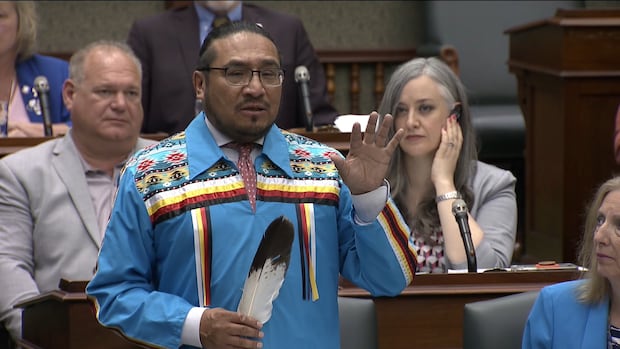
MPP marks National Indigenous History Month at Queen’s Park in Anishininiimowin
Kiiwetinoong NDP MPP Sol Mamakwa marked the beginning of National Indigenous History Month on Monday with an address at Queen’s Park in Anishininiimowin, also known as Oji-Cree. Here are his remarks.
More than two years later, the member of Kingfisher Lake First Nation said it’s more important than ever to keep sharing his culture through his words.
“There will be young people behind me that will be relearning their language, that will be speaking the language, and language is who we are; language is nationhood; language is so important,” Mamakwa told .
This year marks the 30th anniversary of National Indigenous Peoples Day, which takes place on June 21.
Ontario Regional Chief Abram Benedict says this “is an opportunity to honour the strength of our Nations and recognize the generations of Knowledge Keepers, leaders, and communities who continue to carry our cultures forward.”
“As we reflect on this milestone, we are also reminded of our responsibility to ensure our Nations are places where all our people are respected and supported,” Benedict said in a news release from Chiefs of Ontario Monday.
That said, Mamakwa pointed out that June also serves as a reminder of the ongoing challenges Indigenous people continue to face.
“Whether it’s health or education or governance-the systems that are there-these systems aren’t broken. They’re working exactly how they were designed: to take away the rights of those involved,” said Mamakwa.
“But I think we’ve been here for a long time and we will be here; we will continue to be here.”
‘They need to go back to the land’
In his comments on Monday, Mamakwa told his fellow legislators that “I don’t have to remind you of all the processes that had been attempted to do away with our people.”
This includes dealing with colonialism’s lasting effects along with issues like Indian residential schools and the Sixties Scoop.>
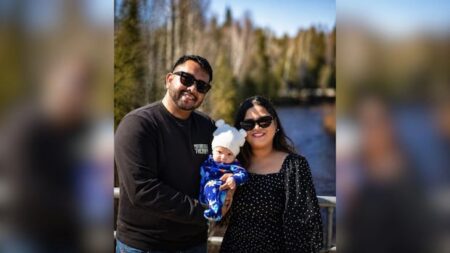
To counteract these issues he highlighted how vital it is to respect Elders’ teachings while preserving his language and culture for future generations.>Pearl Mamakwa, Sol Mamakwa’s late wife who passed suddenly in June 2025. “She was a devoted wife, a loving mother, and a proud grandmother. Pearl’s strength kindness, and unconditional love were foundational for our family, and her absence leaves a void that can never be filled,” Sol Mamakwa shared on Facebook after her death. (Sol Mamakwa/Facebook)>
This month holds extra weight for Mamakwa since it marks one year since losing his wife Pearl.>
Mamakwa mentioned one conversation they had where they talked about how crucial it is protecting traditional lands amid discussions over Bill 5-the province’s controversial development legislation.>
“She said ‘what people need to do is they need go backto land,'” remembered Mamakwashe. >
“The teachings, the ways life, the language, tokeeptheland, to bekeepersoftheland.. that’s whatthe youthandyoungpeopleneedtoacknowledge.”प>
Source link