




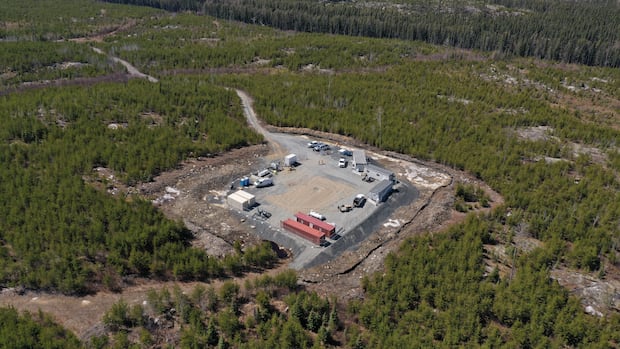
For years, the northwestern part of Ontario has been considered as a potential location for Canada’s first deep geological repository (DGR) intended for nuclear waste.
The proposed site, situated near the Township of Ignace and Wabigoon Lake Ojibway Nation, would involve burying Canada’s spent nuclear fuel hundreds of metres beneath the surface – a plan that has faced significant backlash from environmentalists and Indigenous leaders.
This Wednesday, the federal government revealed that the DGR might be categorized as a project of national interest, suggesting that its construction timeline could be expedited under the Building Canada Act.
This announcement is being positively received by some community leaders, who argue that this project is vital for revitalizing the local economy. However, others, particularly those involved with We the Nuclear Free North, describe the government’s push to fast-track approval as “a betrayal of public trust.”
WATCH | Why this Ontario town agreed to take Canada’s nuclear waste:
Why this Ontario town agreed to take Canada’s nuclear waste
The northern Ontario town of Ignace has consented to host Canada’s nuclear waste. The National’s Nick Purdon traveled to learn why most residents support this decision and how toxic materials will be safely stored deep underground.
Ignace has a population of about 1,200 people and is located roughly 245 kilometres northwest of Thunder Bay. Meanwhile, Wabigoon Lake Ojibway Nation consists of around 200 members on reserve.
Aaron Gullins, chief administrative officer of Ignace, mentioned that if the DGR gets approved, the township’s population could potentially double or triple.
“We’re hoping that Ignace realizes that growth,” Gullins stated. “because it hasn’t done well in the last couple of decades.”
After experiencing years of industrial decline and rising living costs, the township welcomes any chance “to alleviate some of those pressures and ensure that our community can thrive like it did back in the ‘80s.”
Project ‘still subject to impact assessments’: feds
The DGR is currently undergoing a federal impact assessment under the Impact Assessment Act along with a Canadian Nuclear Safety Commission licensing review following the Nuclear Safety and Control Act. Additionally, it’s also going through regulatory assessment and approval processes by Wabigoon Lake Ojibway Nation.
“The Building Canada Act is not about bypassing approvals. It aims to streamline federal regulatory processes so projects deemed nationally important move forward efficiently and predictably,” wrote Pierre-Alain Bujold from media relations at Privy Council Office in an email sent to Thursday.
“Projects listed under this Act are still required to go through impact assessments and Crown consultations with potentially impacted Indigenous communities.”
The Government of Canada stated that before making any decisions regarding listing the DGR as a project of national interest, “consultations will occur with Indigenous communities who may be affected by this project to decide whether it should be classified under this Act.”
“These consultations will commence over upcoming months with an aim for recommendations from the Minister of One Canadian Economy for Governor in Council decisions by fall,” according to information on government’s website.
‘The future of Ontario lies in northern Ontario’
<p Regional leaders are applauding attention towards DGR including groups like Northwestern Ontario Municipal Association (NOMA) and Federation of Northern Ontario Municipalities (FONOM).
<p“It's clear we recognize that northern Ontario holds key potential for our province's future; knowing now there's federal interest moving swiftly feels great," said FONOM president Dave Plourde who also serves as mayor in Kapuskasing. p>Dave Plourde is mayor of Kapuskasing, Ont., and president of Federation of Northern Ontario Municipalities. (Town of Kapuskasing website)
“It involves taking decisive action while ensuring we have all necessary provisions ready so we can truly capitalize on expected growth.” p>
This means implementing essential infrastructure upgrades along Highway 11-17 corridor which address persistent safety issues. p>
NOMA along with FONOM have urged federal officials recognizing these highways – critical east-west transportation routes across country – as strategic national infrastructure. p>LISTEN | Northwest nuclear waste repository could become a nationally important project:
7:01Northwest nuclear waste repository could become a nationally important project p>The federal government considers designating Canada’s first deep geological repository planned for Ignace region an issue deserving nationwide importance; we hear insights from Federation President Dave Plourde regarding possible impacts on area.
“Both routes require urgent repairs whether it relates directly transporting nuclear material or increased traffic anticipated due mining developments occurring locally,” Plourde highlighted. p>
The municipal associations urge provincial & federal governments collaborate “to pinpoint priority sections needing expansion, twinning, and safety upgrades along Highways 11&17” states news release issued Wednesday. p>