





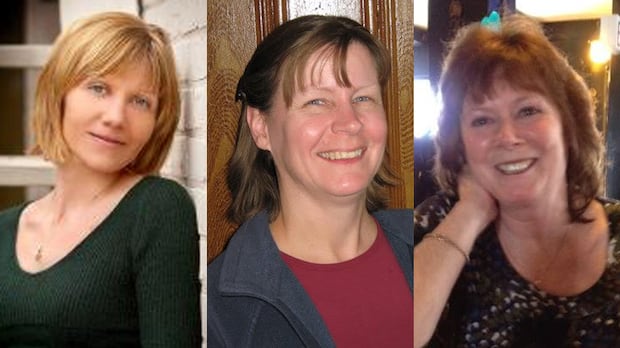
A psychologist who looked into the background of the man responsible for the deaths of three women in rural eastern Ontario in 2015 described him as a “domestic violence terrorist” who needed help much earlier in his life.
“He terrorized many women over many years and created an incredible level of harm,” said Dr. Peter Jaffe, a former director at the Centre for Research and Education on Violence Against Women & Children, during a coroner’s inquest on Wednesday.
For two weeks, the inquest is investigating the September 22, 2015 murders of Carol Culleton, Anastasia Kuzyk, and Nathalie Warmerdam, all killed by a man they were familiar with in Renfrew County, west of Ottawa.
Basil Borutski was found guilty of three counts of murder during a jury trial and received a life sentence with no possibility of parole for 70 years.
Five jurors – three men and two women – are being asked to recommend specific measures to better protect and support survivors of domestic violence in rural areas going forward.
Over a span of 20 years leading up to his killing spree, Borutski had abused two other women, and there were numerous warning signs for family, friends, and authorities that he posed a significant threat to women, Jaffe noted in his report for the inquest.
“The women had been abused and told multiple people that they were frightened by him,” Jaffe wrote.
Jaffe’s review indicated that from 2010 when Borutski became involved with Warmerdam until the murders occurred in 2015, there were as many as 120 chances for intervention from friends, family or law enforcement who knew about Borutski’s violent behavior or threats.
The inquest heard that Borutski’s neighbor reported that on the night before the murders he stated he “could go tomorrow morning and kill my [former partner] and still go to heaven.”
By 2013, police reports had already labeled Borutski as “high risk,” according to Jaffe’s findings from his review conducted before the murders took place.
“By spring 2015, it appeared there was consensus among probation reports, police assessments, and Crown evaluations that this individual posed a serious danger not only to one victim but also to any future intimate partners.”
Prison Did Not Change Borutski’s Behavior
At the same time, Borutski presented an “extreme” challenge regarding efforts aimed at changing his behavior.
The trial and subsequent inquiries revealed that at the time of these murders he was on probation following an assault against Kuzyk. He also refused to participate in a court-ordered domestic violence program while being under a lifetime ban on possessing weapons.
Kuzyk and Warmerdam lost their lives due to gunfire; Borutski claimed he discovered the shotgun hidden beneath floorboards inside an old motor home at a junkyard.
“Clearly if someone doesn’t want help they’re conveying something important,” testified Jaffe.
Borutski had spent time incarcerated after being convicted previously for assaulting Warmerdam.
“Incarceration did nothing to improve his actions; rather it seemed like he left jail even angrier justifying his killings based on personal accounts,” wrote Jaffe.
The Ontario Provincial Police recovered this firearm from Nathalie Warmerdam’s bedroom after she was killed by Basil Borutski. The investigation revealed Warmerdam felt so threatened by his unpredictable nature that she stored her weapon right next to her bed.
The burden often fell upon victims themselves when it came down to protecting them from Borutski’s aggression.”
Valerie Warmerdam testified how her mother kept firearms under her bed while choosing parking spots strategically so she could leave quickly if necessary.”
“She always tried staying alert making plans along with backup plans,” Valerie said.”
First Conviction Happened When He Was Only 20
Jaffe also mentioned how Borutski received his first conviction related to intimate partner violence back in 1977 when he was merely twenty years old.”
This means some abusive acts might have occurred while he was still just a teenager given how lengthy court processes can be.”
While it’s unclear what kind assistance if any provided then; it has been reported that Borutski himself experienced abuse during childhood along with struggles involving mental health issues.”
The chance for effective intervention should’ve taken place early during young adulthood,” wrote Jaffe.”
Source link