



Heartland Democrats are starting to make a return.
This year, Democrats are actively competing in more governor and senator races across the industrial Midwest and Farm Belt than they have since the early days of Barack Obama’s presidency.
The party still encounters significant doubt from many voters in the heartland, especially regarding cultural matters, but rising costs of living have weakened the GOP’s hold on this region. Both parties are engaged in competitive races for governor and/or Senate not only in traditional battlegrounds like Michigan and Wisconsin but also in states that turned solidly red since Obama’s time – including Ohio, Iowa, and possibly even Nebraska and Kansas.
“These states are all on the playing field,” says David Kochel, a seasoned GOP strategist who has been active in Iowa and other areas across the region.
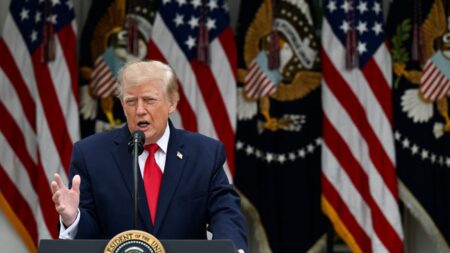
Each race has its own local dynamics. However, a shared theme is the decline of President Donald Trump’s support in states that largely backed him in 2024 – particularly among working-class White voters and those living in rural areas who make up a large portion of these electorates.
“They were sold a bill of goods in 2024 that their life was going to get easier – and it’s got a hell of a lot harder,” says Eva Kemp, director of paid media and partnerships at American Bridge, a Democratic group focused on regaining working-class voters.
Across this broad battlefield, key races may hinge on whether Republicans can remind conservative voters why they became skeptical of Democrats since Obama’s era – or if Democrats can keep them focused on their immediate dissatisfaction with Trump and economic issues.
“In Trump’s first term what you would see is people whispering to you in rural areas like ‘I don’t want anyone to know I’m a Democrat,’” says Heidi Heitkamp, former Democratic Senator from North Dakota and founder of the One Country Project aimed at reviving the party’s presence in rural America. “Now there are more people willing to say, ‘This is not normal, this is not right, and you know better.’” p >
When Barack Obama took office , industrial heartland remained highly competitive between both parties. p >
Different analysts use different definitions when determining which states fit those categories. However , one definition stretching from west to east might include North Dakota , South Dakota , Nebraska , Kansas ; Minnesota , Iowa , Missouri ; Wisconsin , Illinois , Michigan , Indiana , Ohio , Pennsylvania (which strongly prefers not being labeled as part of the Midwest but usually acts politically like it ). p >
In two thousand nine , Democrats controlled eighteen out o f twenty-six Senate seats from those thirteen states, and eight out o f thirteen governorships. It may seem hard to believe today, but back then , Democrats held both Senate seats i n North Dakota, along with single seats i n South Dakota, Nebraska, Iowa , and Indiana. Obama won eight o f those thirteen states i n two thousand eight. At that time, “people were less tribal an d more willing to reward performance,” says Heitkamp. p >
What followed was ten years of decline for Democ rats. The major hit came during th e twenty ten midterm backlash against Obama ’ s rocky start. In two thousand ten, D emocrats lost Senate seats in North D akota, Indiana, Wisconsin, Pennsylvania, and even Illinois-the state where O bam a began his political career. Republicans flipped control over g overnor’ s mansions in I ow a, Kansas, Michigan, Ohi o, Pennsy lvania, and Wisconsinsimultaneously. p >
Obama managed to run well throughout th eregion during his two thousand twelve reelection campaign. However, D emocrats faced further losses in S en ate contests throughout th ese years-two thousand twelve, two thousand fourteen-and especially two thousand eighteen (when H eitkamp along with incumbents from Missouri and Indiana were voted out). p >