





Your support helps us to tell the story
From reproductive rights to climate change to Big Tech, The Independent is on the ground when the story is developing. Whether it’s investigating the financials of Elon Musk’s pro-Trump PAC or producing our latest documentary, ‘The A Word’, which shines a light on the American women fighting for reproductive rights, we know how important it is to parse out the facts from the messaging.
At such a critical moment in US history, we need reporters on the ground. Your donation allows us to keep sending journalists to speak to both sides of the story.
The Independent is trusted by Americans across the entire political spectrum. And unlike many other quality news outlets, we choose not to lock Americans out of our reporting and analysis with paywalls. We believe quality journalism should be available to everyone, paid for by those who can afford it.
Your support makes all the difference. Read more
Southern states are quickly moving to redraw political lines that eliminate majority-Black districts after the Supreme Court weakened vital protections in the Voting Rights Act against racial discrimination, allowing a new wave of racial gerrymandering that critics worry may lead back to conditions reminiscent of Jim Crow.
The Supreme Court “gave them a defibrillator to the heart of Jim Crow,” said Davante Lewis, a member of the Louisiana Public Service Commission.
Black voting rights advocates are rushing to respond as changes sweep through the South, which remains at the center of a fierce civil rights struggle aimed at dismantling racist barriers against voting. However, Lewis told reporters Friday that “we’re prepared to make noise.”
For decades, advocates have pushed Republican states to follow Supreme Court rulings and federal rules protecting against segregation and discrimination at polling places. Yet it took less than a week for those same states to redraw their maps following this latest Supreme Court decision.
“Every time Black communities get close to political power, we see this shift. The rules are recalibrated,” said Anneshia Hardy, director of voting rights advocacy group Alabama Values. “We see states across the South reminding the country exactly why those protections exist in the first place.”
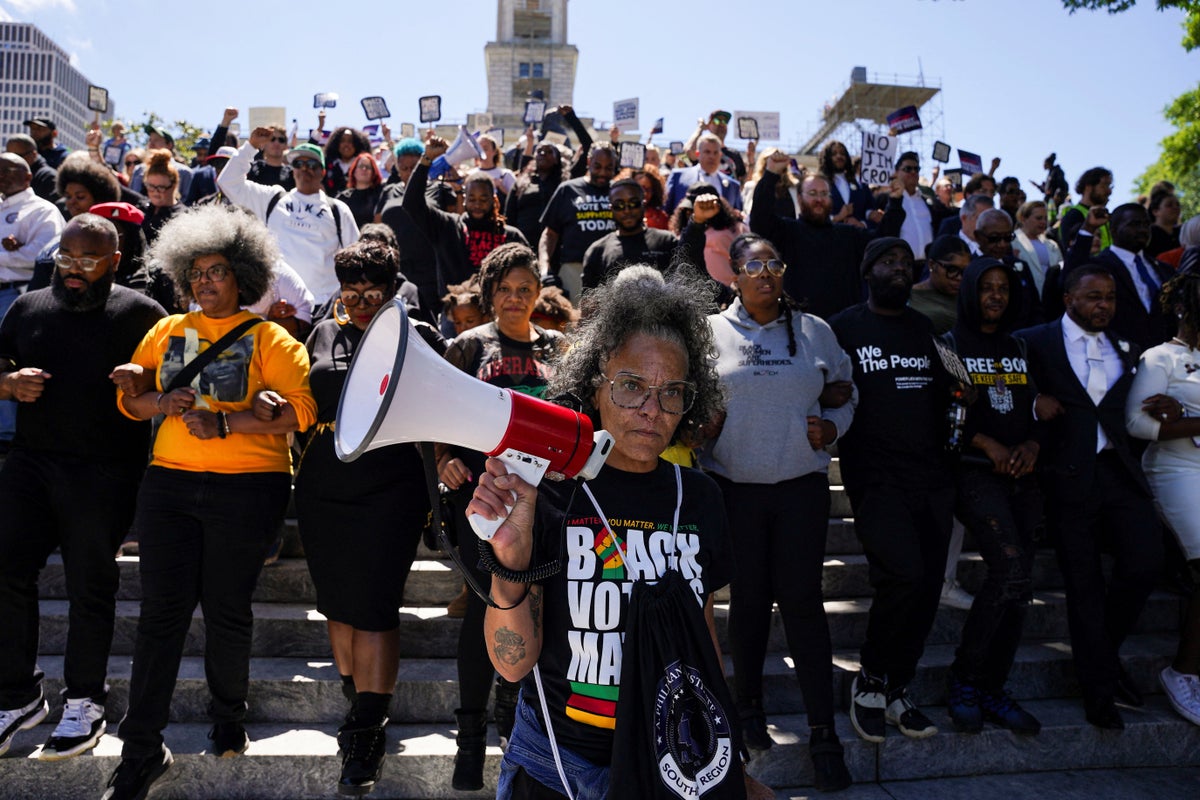
Voting rights advocates in Tennessee protested a rapidly advanced congressional map that eliminates the state’s only Black-majority district after the Supreme Court opened up opportunities for racially motivated gerrymanders (REUTERS)
Just one week after the Supreme Court’s significant ruling in Louisiana v Callais, Tennessee on Thursday became one of the first Southern states to adopt a new redistricting map that removes a majority-Black district.
The hastily created map is among several being considered in state legislatures throughout the South that aim to establish congressional boundaries erasing districts representing majority-Black areas known for supporting Democratic candidates.
The Supreme Court’s decision invalidated a Louisiana map containing two majority-Black districts and triggered an urgent effort among Republican-led Southern states-each having at least one majority-Black district-to revise their maps ahead of midterm elections.
In Virginia, state supreme court officials rejected Democrats’ redistricting plan approved by voters during last month’s special election. In Florida, multiple lawsuits challenge newly drawn partisan gerrymanders despite state constitutional bans against such practices.
Republicans in South Carolina seek to eliminate their only Black-majority district along with its sole Democratic seat while Alabama officials want reinstatement of a map previously struck down by the Supreme Court just three years ago due to illegal dilution of Black voting strength.
Section 2 of the Voting Rights Act prohibits voting laws based on race discrimination. But “the Supreme Court says as long as you’re doing it for ‘partisan’ reasons, it’s legal,” said Lewis.
This ruling has significantly fueled an ongoing gerrymandering competition spurred by Donald Trump’s call for Republican-led states to reshape congressional districts before midterm elections so they can maintain control over Congress.
However, these new maps will ultimately “rob the political power of Black people in South,” according to Amir Badat, an attorney focused on voting rights with Fair Fight Action.
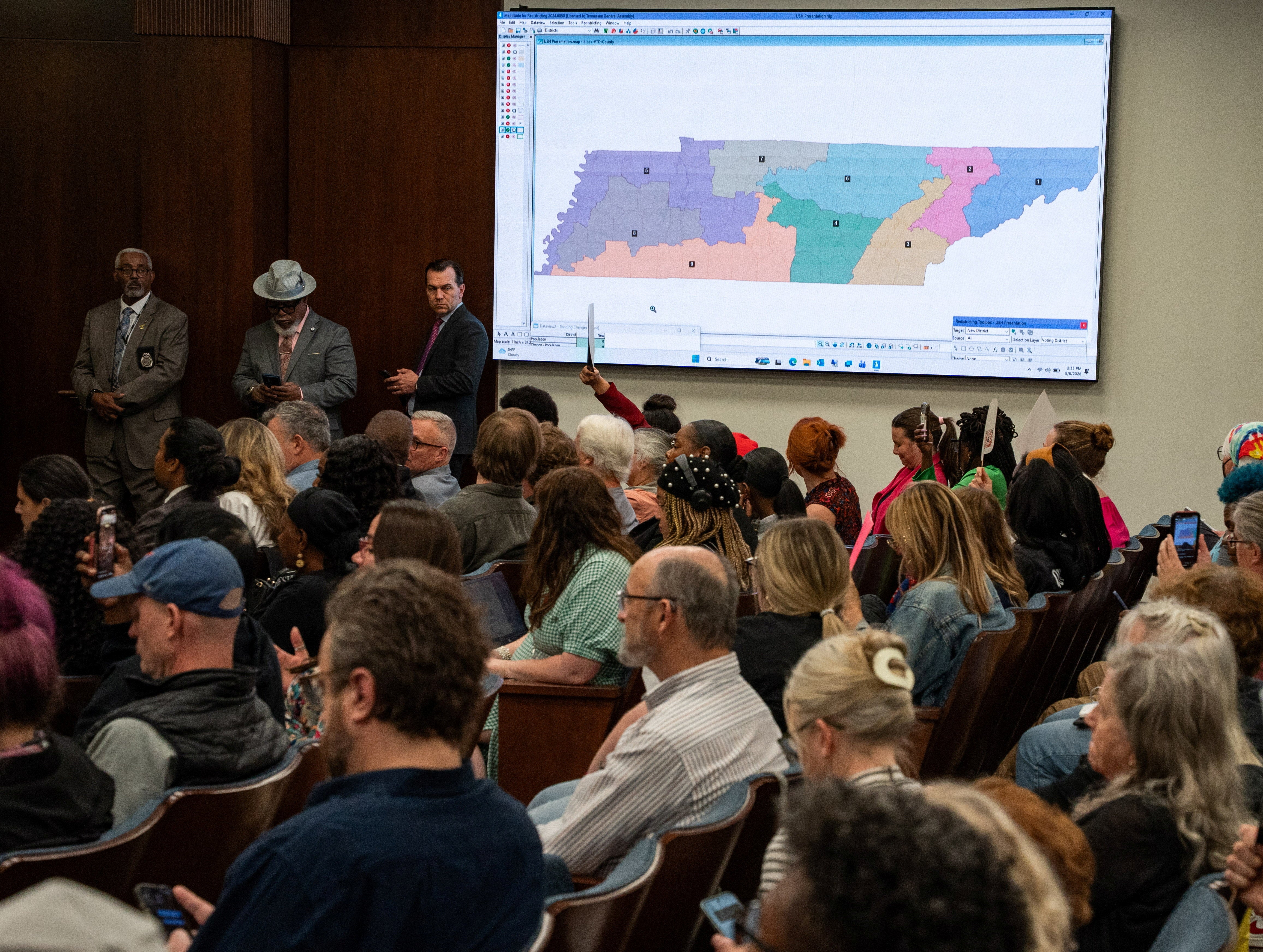
The Supreme Court’s ruling set off a mad dash among Republican states in th South – allofwhichhaveatleastonemajority-blackdistrict -toresetthemaps intheirfavorbeforemidtermelections (REUTERS)
In Tennessee, this newly passed map dismantles what usedto bethe state’s only Democraticleaning districtby splitting Memphis-a city over60 percent Black-into three separate districts; diluting their political influence across predominantly white Republican areas within thestate.
This doesn’t revert theregion backtoa pre-Voting Rights Act statusquo; insteadit gets ridof adistrictthat hasexistedforover100years. Memphis has haditsowncongressionaldistrict since1923.
“This was notthewillofpeople,” Civic Tennessee Matia Powell toldreporters Friday.
“It wasn’tthepeoplewhocalledthegovernorforaspecialsession,” shesaid.”Itwaspresident.”
The fast paceofchanges hasdisorientedvotingrightsadvocateswho’vefoughtagainstvotersuppressionfor decades, butit isn’tnewtothem.
“What we’re witnessingispartof amucholder, historical pattern,”said Hardy, w ho tracedthelatterredistrictingracebackto theso-called Southern Strategyfollowingthe Voting Rights Act’spassagein1965when Republicans“weaponized”racialresentmentto attract votersaftercivilrightsvictories.
“It hasn’t disappeared; ithas evolved,”shesaid.”Historyhasreceipts.”
Tennessee staterepresentative Justin Pearson, runningfor ahouse seatrepresenting Memphisin Congress, calls thenewlyadoptedcongressionalmapa“politicallynching”thatsets thestateback150years.
“The authoritarianismthathastakenover Tennesseeandotherstatehousesacrossourcountryisnotonlyathreattodemocracy; it drainsresourcesbetterusedtoimprovethequalityoflifeformarginalizedcommunitiesandincreaseciviceducationandengagement,” hesaidinremarksafterstatelawmakersvotedforthemap.
“Instead, Tennesseehastakenonamodelforabuseofpowerinthenameofracismandpoliticalideology,” hestated.”Butwearenotpowerless.”
Source link