

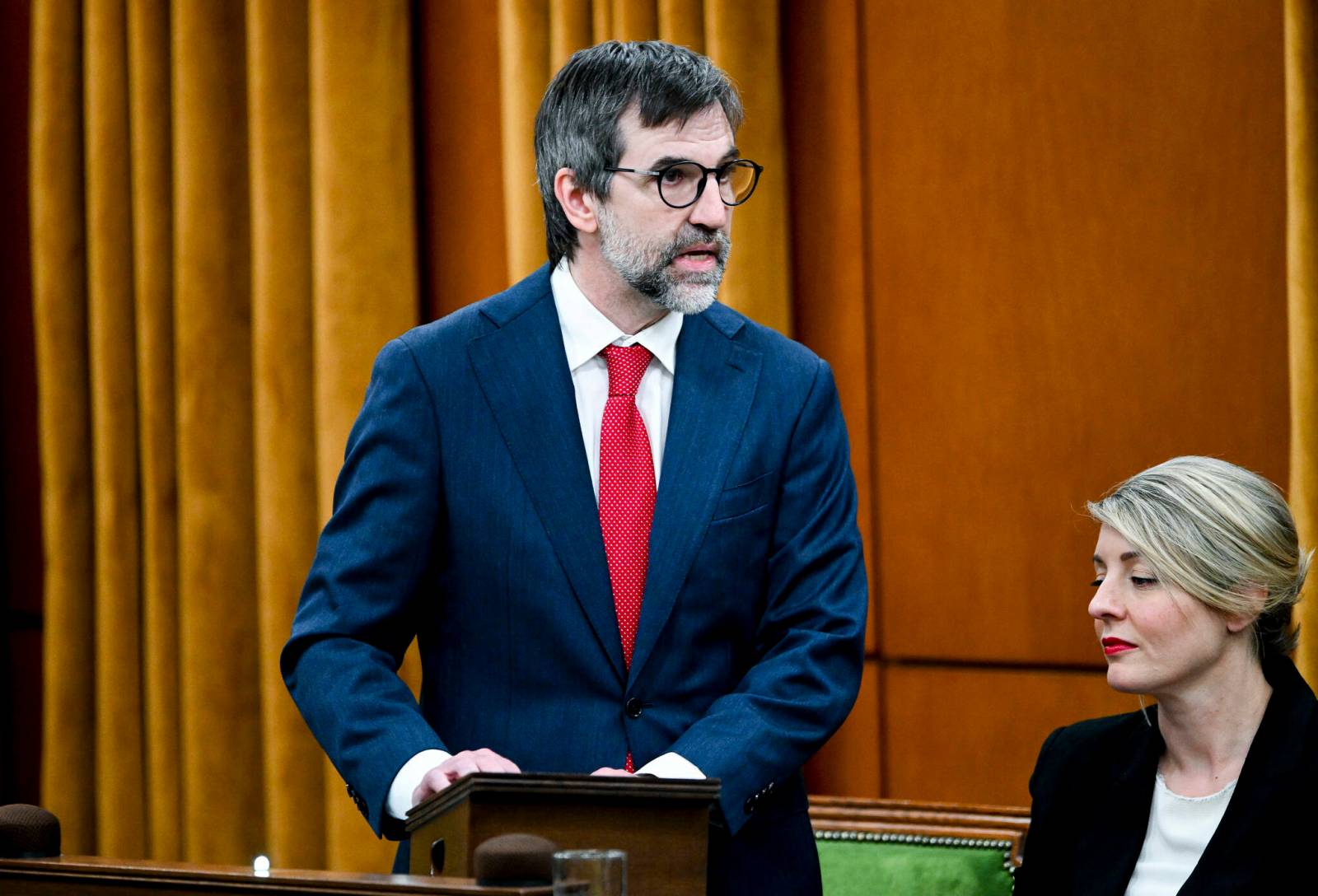
Some environmental advocates are calling former environment minister Steven Guilbeault’s exit from federal politics a crisis for climate action in Canada. Others argue it shows the Liberal government has given up on its environmental values in favor of pipelines and economic growth.
However, that’s not the whole story.
What Guilbeault’s resignation really illustrates is something much less dramatic, yet more significant about democratic politics: compromise isn’t a weakness in the system; it’s essential to the system itself.
SPENCER COLBY/ THE CANADIAN PRESS FILES
Liberal MP Steven Guilbeault announced Wednesday that he will leave Parliament this summer after seven years of service in federal politics.
Politicians who find it hard to deal with this reality usually don’t last long in office.
Guilbeault said on Wednesday that he plans to step away from Parliament this summer after seven years, expressing his desire to continue fighting against climate change and environmental harm outside of government.
His frustration was clear.
Since Mark Carney took over as prime minister in 2025, the Liberals have changed their stance on several climate issues, including consumer carbon pricing, industrial regulations, and energy development. Guilbeault publicly opposed Ottawa’s deal with Alberta, especially regarding pipeline development and exemptions related to clean electricity regulations, leading him to resign from cabinet last November.
For many environmental groups, his choice to leave politics represents defeat.
But politics was never going to provide Guilbeault – or anyone else – with a straight path toward ideological purity.
This is because politics, especially in a party-based liberal democracy like Canada’s, is inherently a team sport.
This has always been true.
This reality frustrates idealists across both sides who enter public life believing they hold the one right answer for society’s challenges. Yet elected government doesn’t operate as a debating forum where the strongest moral argument always wins. Nor should it operate that way.
Society consists of competing interests, values, and priorities. Effective governance involves recognizing that fact rather than ignoring it.
The climate policy debate serves as an excellent example of this dynamic.
A large segment of the public supports reducing emissions and addressing climate change. However, there are also widespread concerns about affordability, jobs, energy security, and regional economic stability.
The economy of Alberta remains heavily dependent on oil and gas production. Many families rely on that sector for their income. Provincial governments staunchly defend these industries because voters expect them to do so.
This doesn’t mean that climate issues are invalid; rather they exist alongside other valid concerns.
The political arena is where these competing demands clash.
And compromise is how democratic governments navigate those conflicts.
The energy agreement between Carney and Alberta illustrates this political reality regardless of one’s stance on the deal itself.
The prime minister didn’t hide his view when asked whether he thought the agreement justified Guilbeault’s departure.
“Absolutely,” he responded.
.
 p >Instead it’s reminds us that engaging in politics demands something challenging from all who enter particularly passionate believers It asks them share fields embrace imperfect results plus function amidst relentless competing demands This isn’t flaw within democracy It exemplifies precisely how democracy operates.
tom. brodbeck@freepress. mb. ca p >
p >Instead it’s reminds us that engaging in politics demands something challenging from all who enter particularly passionate believers It asks them share fields embrace imperfect results plus function amidst relentless competing demands This isn’t flaw within democracy It exemplifies precisely how democracy operates.
tom. brodbeck@freepress. mb. ca p > Tom Brodbeck
ist Tom Brodbeck enjoys distinction as award-winning author ist boasting over thirty years worth experience working within print media He became part Free Press team back 2019 A Montreal native Tom graduated University Manitoba during 1994 earning himself Bachelor Arts degree economics commerce Read additional details surrounding Tom Tom provides thoughtful commentary analysis various political related matters whether municipal provincial federal levels His s grounded research coverage local events Free Press editing crew reviews Tom’s writings prior publication either online or print form – adhering tradition reliable independent journalism since eighteen seventy-two Read further information regarding history mandate along learning functioning newsroom operations Our newsroom relies upon continuously growing audience readers sustain quality journalism If you aren’t currently subscribed consider becoming one now
Source link