





Smoke from wildfires in northwestern Ontario continues to linger over the Waterloo region, Guelph, and surrounding areas as the community remains under an orange-level weather warning for air quality.
Environment and Climate Change Canada indicates that the smoke is expected to persist throughout the day.
“Conditions may improve Friday morning,” the weather alert states.
The Air Quality Ontario website reported that Kitchener and Guelph were both at 10+ on Thursday morning, indicating a “very high risk.” The forecast suggests that this could drop to eight by evening.
WATCH | Expect smoke Thursday in Waterloo region: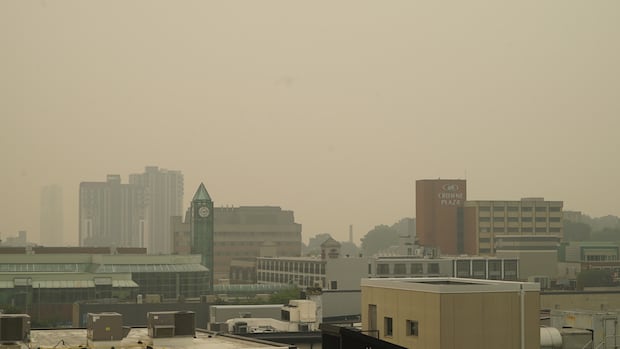
Wildfire smoke reaches Waterloo region and area
Thick haze covered the Waterloo region, Guelph, and nearby areas Wednesday morning. This comes after Environment and Climate Change Canada raised the local air quality alert from yellow to orange. These conditions are expected to continue until Friday. CBC K-W’s Carmen Groleau reports.
The situation has prompted local municipalities to take some precautions for public safety, including:
A burn ban in North Dumfries Township and Woolwich Township. Backyard fires and open burning are prohibited in Cambridge or Kitchener. Outdoor pools in Cambridge and Kitchener have been shut down. Some sports leagues are canceling practices and games. Outdoor pools, adult recreational leagues, and movies in the park in Waterloo have also been closed or canceled.
People are advised to limit their time outdoors and be alert for symptoms related to smoke exposure, such as irritation of the eyes, nose, or throat, headaches, or a mild cough.
Wildfires near Thunder Bay in northwestern Ontario have led to mandatory evacuations, forcing hundreds of people from their homes. Some residents have been flown to Toronto until it’s safe again.
Poor Air Quality Alerts May Become Common This Summer
Poor air quality advisories might become a regular aspect of our summers as climate change significantly influences these conditions.
Rebecca Saari is a professor of civil and environmental engineering at the University of Waterloo. She mentioned that wildfire smoke along with pollution are major factors contributing to deteriorating air quality.
“One thing [climate change] can do is increase the emissions from some sources; wildfires are one specific source,” she told CBC Kitchener-Waterloo’s The Morning Edition Thursday.
“Additionally, having more hot days with little wind can allow pollutants in the air to mix together and accumulate into extreme levels.”
Her research suggests that if climate change isn’t addressed promptly, we might need to get used to seeing more poor air quality advisories frequently.
Saari holds a Canada Research Chair position focused on global change, atmosphere, and health. She noted that while current conditions aren’t typical for Canada since we usually enjoy good air quality overall; what we’re experiencing now isn’t very common.
“Only one percent of the time at most would we see air that’s categorized as high risk or very high risk level; right now we’re at a very high-risk level with this orange warning,” she said.
“That said, we’re currently in active wildfire season along with typical smog season so yes-more days like this could happen again this summer though maybe not quite so extreme.”
Source link