


A parent advocacy group believes that French immersion programs in New Brunswick need legal protection to ensure their future, no matter which government is in charge.
“It should be a given that it’s available for students and for parents in an officially bilingual province,” Jane Keith, president of the group Parents for Bilingual Education New Brunswick, said.
“They don’t have any, really, rights to it and we feel they should.”
This group supports linguistic duality in anglophone schools and was one of 13 interveners who presented before the legislature’s committee on the Official Languages Act on Tuesday in Moncton.
Jane Keith, president of Parents for Bilingual Education New Brunswick, said a third of students in anglophone schools are enrolled in French immersion programs, and it has stayed that way for about the 10 years. (Katelin Belliveau/ )
The standing committee on official languages is touring the province to gather input from New Brunswickers about what changes they want regarding the act that safeguards their rights to communicate and receive services in both French and English.
A report from 2021 suggested a five-year review of the act and also recommended strengthening governance as well as linguistic responsibilities within health care and long-term care sectors, among other things.
Parents for Bilingual Education focused on issues they say are preventing French immersion from growing and succeeding in the province.
Brunswick has offered programs within its anglophone school sector for 57 years, Keith noted.
WATCH | ‘It should be a given … in an officially bilingual province’: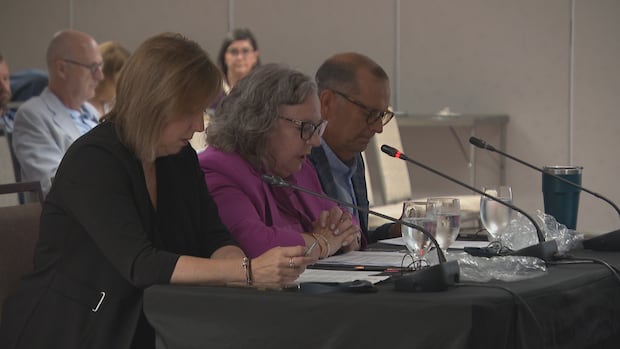
Group calls for N. B. French immersion programs to be legislated, better protected
During a public consultation concerning adjustments to the Official Languages Act, an advocacy group requested that legislation be enacted around French immersion programs so they remain secure regardless of governmental changes.
However, since it’s not currently backed by legislation, it has faced threats from administrations wanting to dismantle it previously.
“During the last French immersion debate in 2022 and 2023, there are dozens of francophone teachers that left the anglophone system for the francophone system because of stability,” said Chris Collins, who serves on the group’s board.
“You can’t blame them.”
The group believes that legally securing these programs would grant parents their right to linguistic duality for their children’s education.
The program exists as a policy right now; however, policies can change based on cabinet decisions or departmental preferences,” Collins pointed out.
If it were legislated, then government officials would need to discuss its future openly within legislative sessions.
Recruitment, standards are factors
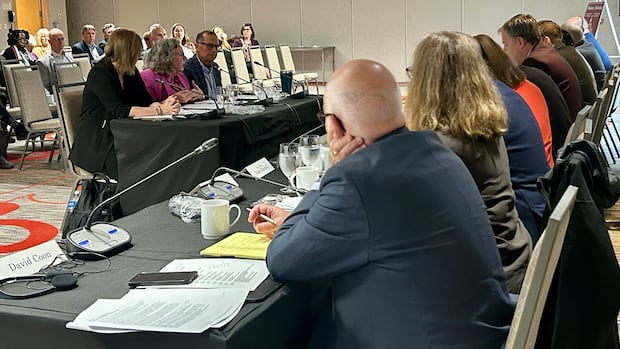
About 30 people gathered before an 11-member legislative committee in Moncton on Tuesday to discuss the Official Languages Act. (Katelin Belliveau/ )
Keith stated that around one-third of students enrolled in anglophone schools participate in French immersion programs.
“In an officially bilingual province we’d like to see those numbers increase.”
The group thinks addressing teacher shortages along with clearly defining access criteria could help raise those enrollment figures.
Language Act review urges clarifications to law; go-slow approach on nursing homes
N. B. begins year-long review of official languages act
The organization is also requesting that recommendations be added into the Education Act which outlines more specific regulations for schools.
The group advocates establishing formal recruitment efforts aimed at hiring more francophone teachers within anglophone communities.
Keith feels incentives-financial or otherwise-could assist with retaining teachers particularly in rural regions.
“We have a shortage right now,” she said. “They don’t always feel welcome there or comfortable,” she expressed.
The organization further seeks annual reports concerning enrollment statistics along with teacher capacity and student performance outcomes shared publicly.”
</body And it wants uniformity across all four anglophone school districts detailing how these programs function as well as which students qualify.”
< p>" Rather than just saying," No you need twenty students but you only have eighteen so you can’t have a program," let’s figure out how we can make it work."
</body
PUBLI CONSULATIONS END THIS WEEK
nn Six consultations already concluded at Grand Falls Campbellton Petit-Rocher Caraquet Rogersville.nn Final meetings set Wednesday Thursday Friday Saint John Fredericton Woodstock.n Residents wishing speak committee had advise June eight according assembly site.<n The committee chaired Liberal MLA Benoît Bourque will until end year present recommendations legislature.
Source link