





The BDN Opinion section operates independently and does not set news policies or contribute to reporting or editing articles elsewhere in the newspaper or on bangordailynews. com
Mark D. Brewer is a professor and chair of the Department of Political Science at the University of Maine. The views expressed here are his own.
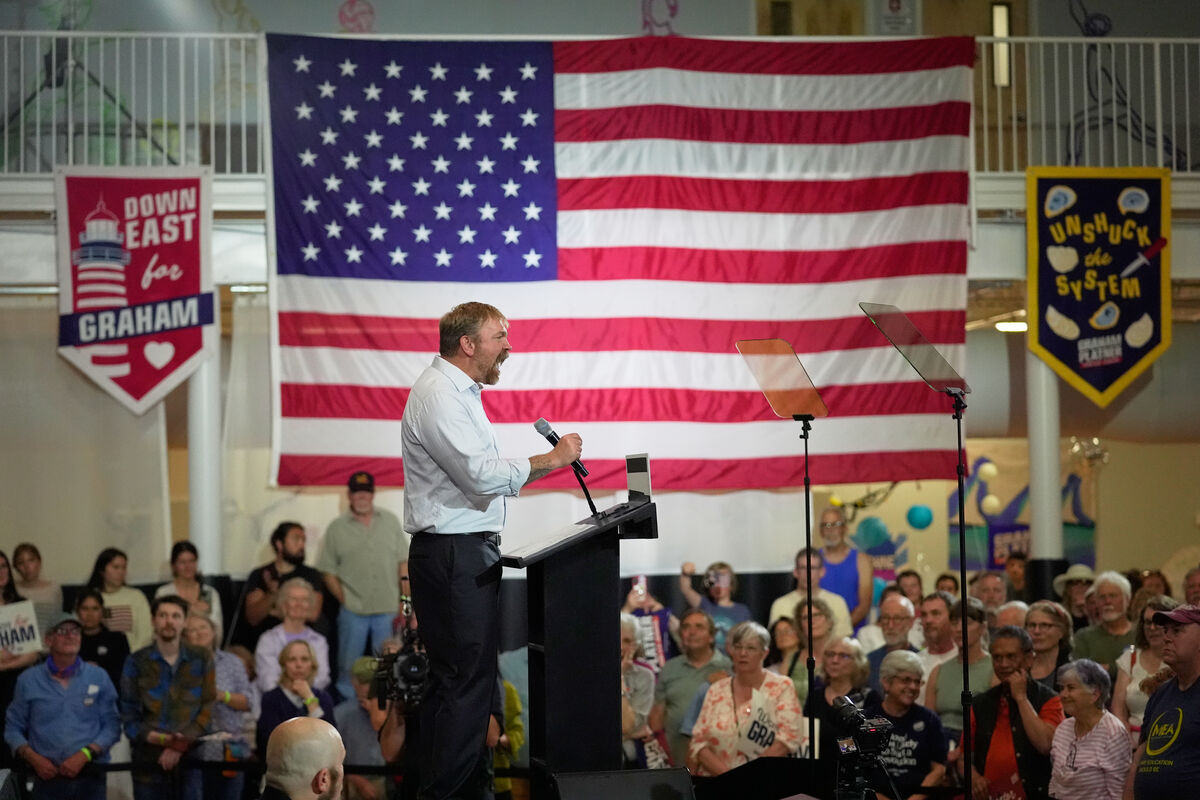
A lot of political focus in Maine, and across the U. S., this election cycle has been on Graham Platner. Since he made a splash on the state and then national scene in August 2025, Platner has received strong support from Democrats across the board. This isn’t particularly surprising.
Platner’s charisma and public speaking skills stand out. His personal journey of growth and redemption resonates with many people. Additionally, his tough-guy image and straightforward attitude align well with what many Democratic Party members are seeking-someone who can disrupt traditional politics and promote what they believe serves the common good.
While Platner’s appeal as a candidate accounts for some attention, most media coverage around him stems from several controversies linked to his openly complicated personal life. Just months after launching his Senate bid with an eye-catching video, negative incidents related to Platner’s past began to surface.
First came old social media posts, followed closely by reports about a tattoo resembling a Nazi skull-and-crossbones symbol known as a Totenkopf. In recent weeks, there was a Wall Street Journal article detailing Platner sending inappropriate text messages to women who were not his wife, along with a New York Times piece where some former girlfriends accused him of unsettling behavior.
This is where things get interesting. In American politics just years ago, an untested candidate suddenly facing accusations like derogatory comments about women or minorities-or all those groups together-would have faced serious political consequences. The same applies to revelations about sexual messages sent to women outside their marriage or claims of troubling relationships with multiple partners. A Nazi tattoo would have likely disqualified someone immediately for office. Yet despite extensive media coverage on these controversies, Platner remains politically viable and is now the Democratic nominee for U. S. Senate from Maine.
How did this happen?
The quick answer is that American politics has transformed dramatically. Specifically, public expectations regarding what’s acceptable for candidates have shifted significantly compared to 20 or 30 years ago. Understanding this change involves various factors but one major influence comes from the White House.
Donald Trump has fundamentally altered what Americans consider acceptable behavior in political candidates and officials. From day one of his entry into politics, he expanded those boundaries by labeling immigrants from Mexico as “rapists” bringing “crime” and “drugs” during his campaign launch speech at Trump Tower in June 2015.
Trump went beyond pushing boundaries; he broke them entirely by making statements that would’ve previously been viewed as too crude or offensive for anyone seeking public office-let alone running for president. While it would take too long to list all such remarks here, examples include Trump’s comments about former Arizona senator John Mc Cain-a POW-or his responses towards then-Fox News journalist Megyn Kelly during an early Republican debate, not forgetting how he mocked a disabled New York Times reporter. These moments raised eyebrows when first said; today they barely register.
The moment it became clear that traditional standards no longer applied was when the infamous Access Hollywood tape surfaced-it could easily have ended any other campaign or career-but not Trump’s campaign survived it intact and he won the presidency just weeks later.
During that first presidential run, Trump infamously claimed he could shoot someone on Fifth Avenue without losing supporters-and so far, it’s proven true in metaphorical terms.
I’ve often shared with my students that Donald Trump represents something unique in American politics-a unicorn we should be cautious about drawing broader conclusions from. I still believe that’s true; however, it’s also evident that Trump’s conduct has reshaped expectations for all political candidates today. With everything he’s done over the past decade raising questions about any remaining standards in American politics-the landscape has become undeniably Trumpified.
Public response to Graham Platner’s ongoing controversies serves as yet another example of this trend-and likely won’t be the last we see either.
Source link
Source link