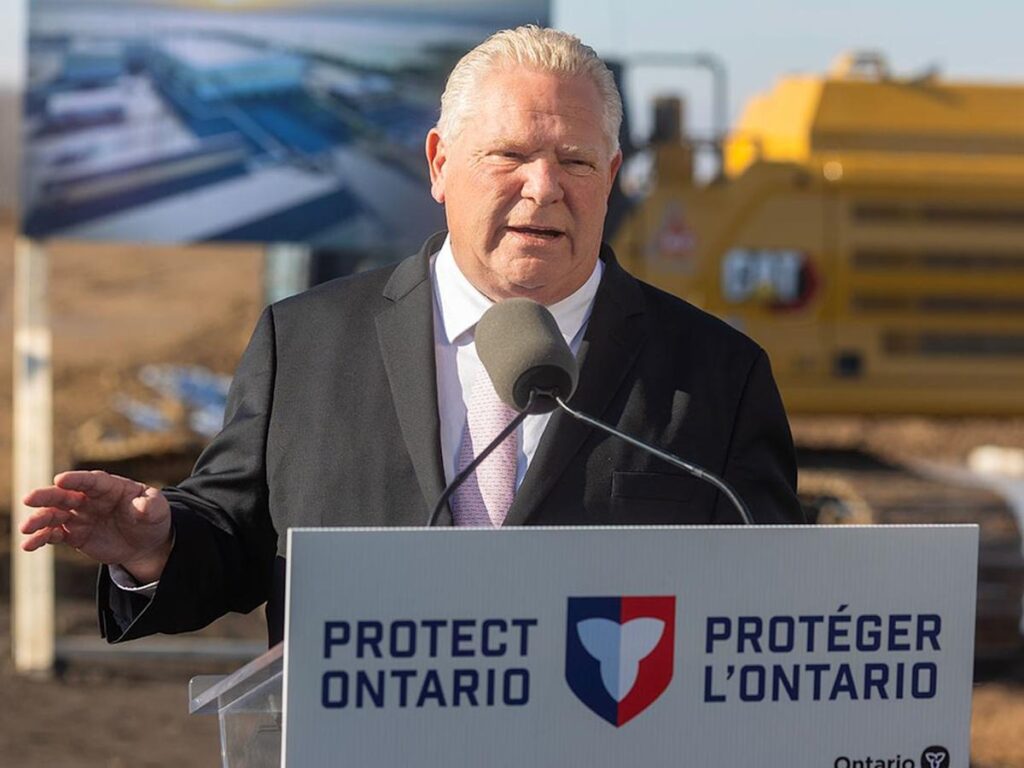
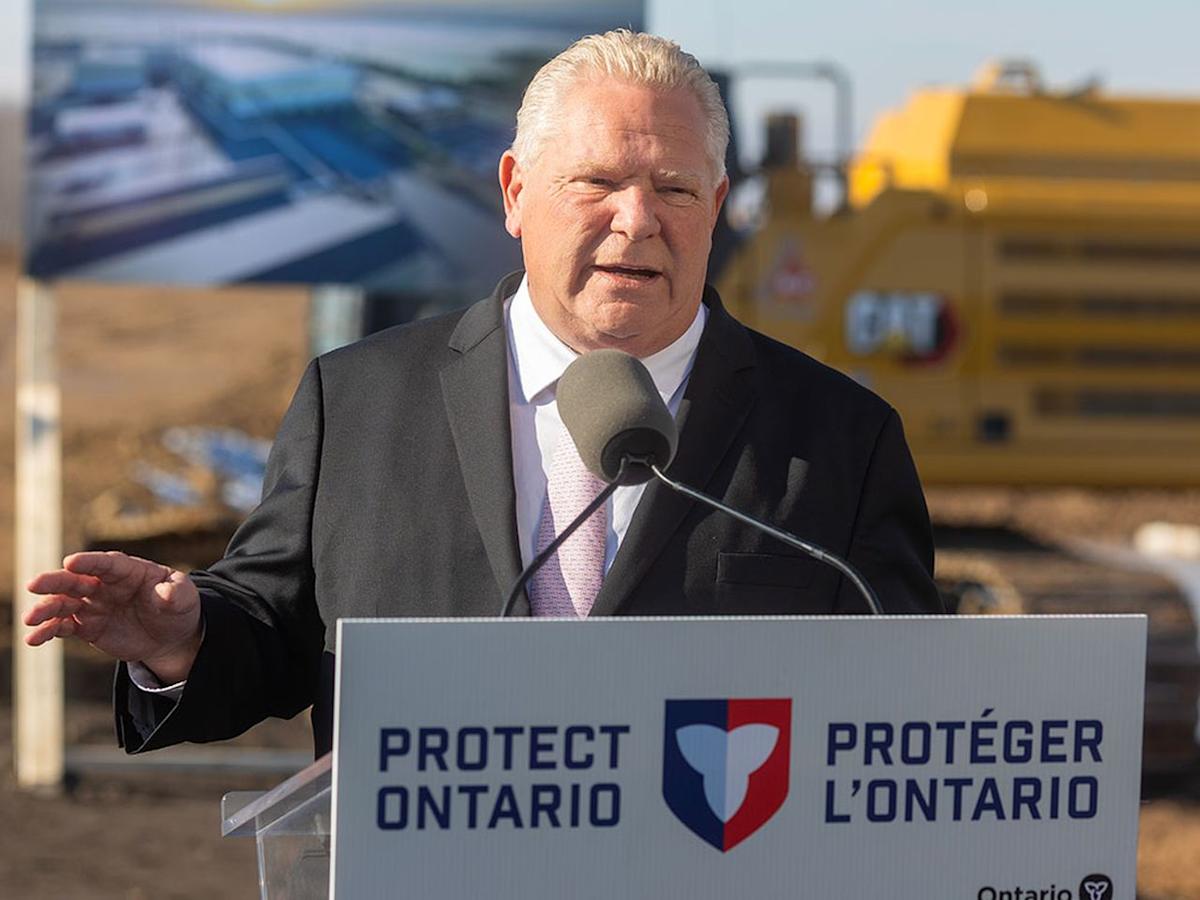
[ad_1]Doug Ford speaks at the groundbreaking for the new Vianode $3.2 billion synthetic graphite factory in St. Thomas on Thursday. (Credit: Mike Hensen/The /Postmedia Network)A Norwegian battery materials company has announced plans to build its first large-scale synthetic graphite plant in St. Thomas, Ont., with an investment of $3.2 billion, which includes a $670-million loan from Ontario and additional support from the federal government.Synthetic graphite is essential for batteries, semiconductors, nuclear reactors, steel production, and various defence and aerospace uses, all of which are increasingly in demand.The Vianode AS facility is expected to create 300 jobs initially and could generate up to 1,000 jobs as it reaches its full production capacity of 150,000 tonnes per year. A representative from the company mentioned that the choice to establish operations in St. Thomas was made well before the trade tensions between Canada and the U. S., following a thorough evaluation process over several years.“A huge reason for choosing St. Thomas is the location in what they call ‘Automotive Alley,’ close to customers,” Caroline Schmailzl said. “But also there is clean energy available in St. Thomas, green energy which is really important.”Since graphite has been recognized as a critical mineral by both Canada and the U. S., it hasn’t been significantly impacted by trade disputes between the two nations, she noted.St. Thomas has become a key player in Canada's developing electric vehicle supply chain, with Volkswagen AG’s subsidiary Power Co Canada Inc. already laying foundations for its significant battery cell manufacturing plant there.The city is conveniently located about midway between Windsor, Ont., historically known as Canada's auto industry hub, and Oshawa, Ont., another prominent automotive center.Vianode also has a partnership with General Motors Co., which until recently was producing electric delivery vans in Ingersoll, Ont., roughly a 40-minute drive east of St. Thomas. GM halted production of these vans due to low sales figures and has engaged with workers and government officials recently to discuss future options for that facility.Producing synthetic graphite-unlike mining natural graphite-requires heating feedstocks at extremely high temperatures that need substantial electricity consumption.Vianode's business model focuses on generating synthetic graphite with carbon emissions that are 90 percent lower than industry standards. Schmailzl pointed out that Ontario's power grid sources nearly 90 percent of its energy from nuclear power, hydroelectricity, wind energy, solar power, and biofuels which makes it an attractive location.In October, the company stated that front-end engineering designs for the plant are complete and aims to begin production by 2028; initially targeting an output of 35,000 tonnes annually.Last month, the federal government indicated that Export Development Canada had issued a letter of interest for financing up to $500 million for this project while the Canada Infrastructure Bank had also provided a letter of interest regarding financing although specific amounts were not disclosed. Additionally, Germany may provide support amounting up to $300 million for this initiative.“North American supply chains are heavily reliant on graphite sourced from China,” Burkhard Straube, chief executive of Vianode said in October. “This scalable project is a key building block that aligns with recent shifts in trade policy.”Tim Hodgson, minister of energy and natural resources remarked that this project aligns perfectly with federal plans aimed at creating a resilient critical minerals supply chain so Canada can become a supplier for other countries.Vianode operates two smaller facilities in Norway producing synthetic graphite battery anodes since 2021 and another one since 2024 respectively.“Look at the field behind us. This is going to be a booming area,” Ontario Premier Doug Ford stated during his press conference. “I truly believe in the EV sector. That’s the way we’re going; that's how things are progressing globally too! We’re ensuring we’ll be leaders around the world when it comes to battery manufacturing and electric vehicles-just like we currently lead in nuclear energy.”Ontario Minister of Industry Vic Fedeli mentioned that foreign investors often express appreciation for Ontario due to its reliability.“With China absolutely having a huge grip on our supply chain… amidst all this uncertainty they look across oceans,” he explained further "This is their words now; almost every country we've visited sees Canada as a beacon of hope-a light shining brightly-and specifically that's Ontario."[ad_2]Source link