



Estimated 7 minutes
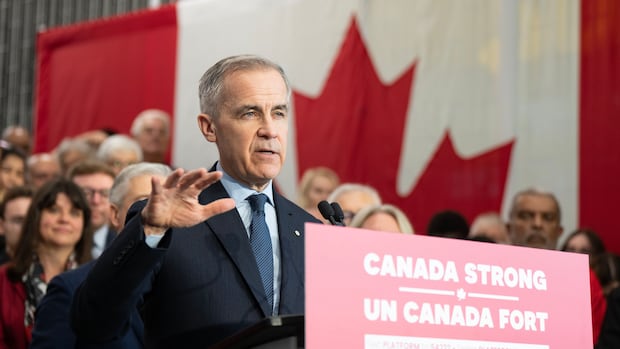
Liberal Leader Mark Carney presented his fiscal and spending plan on Saturday as part of a significant crisis – “the biggest crisis of our lifetimes,” as he described it.
The United States is putting pressure on Canada’s economy and jeopardizing Canadian sovereignty. The American president is “trying to fundamentally restructure the international trading system” and, in doing so, is “rupturing the global economy.”
“And to succeed in a crisis, you have to act with overwhelming force,” Carney stated at an event in Ontario. “In a crisis … the private sector retreats, and government needs to step up. Government must lead and catalyze private investment.”
Shortly after, Conservative Leader Pierre Poilievre held his own event in British Columbia, where he dismissed Carney’s proposal as a “spending bonanza” that Canada can’t afford.
“Mark Carney launched his platform today, announcing $130 billion in new inflationary spending,” Poilievre remarked.
WATCH | Liberal Leader Mark Carney unveils full party platform: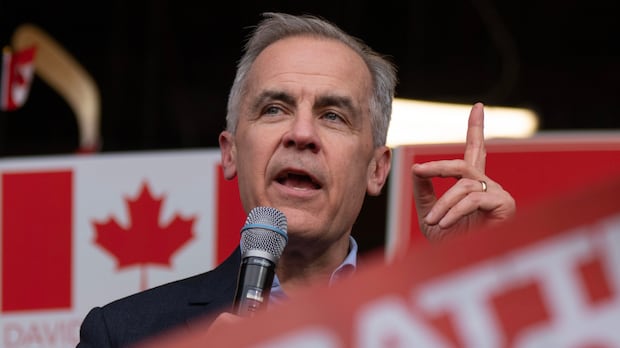 Liberal platform promises $130B in new measures over 4 years
Liberal Leader Mark Carney revealed on Saturday that his election platform includes $130 billion in new initiatives over the next four years which will increase federal debt by $225 billion when combined with existing spending.
There’s been little debate about how much federal spending has played a role in inflation within Canada or what alternatives might have looked like – especially regarding the financial support provided during the COVID-19 pandemic for households, businesses, and other levels of government – neither during this campaign nor in prior months.
However, it’s fair to point out that Canada wasn’t alone in experiencing inflation after the pandemic; numerous global factors contributed to this issue. (A December 2022 analysis from Scotiabank indicated that 85 percent of inflation in Canada stemmed from global influences while only 15 percent was due to government’s pandemic support programs.)
For now, discussions may focus on the specifics of Carney’s $130-billion plan – along with questions about what exactly Poilievre’s Conservatives would do differently.
Liberal platform promises $130B in new measures over 4 years
Liberal Leader Mark Carney revealed on Saturday that his election platform includes $130 billion in new initiatives over the next four years which will increase federal debt by $225 billion when combined with existing spending.
There’s been little debate about how much federal spending has played a role in inflation within Canada or what alternatives might have looked like – especially regarding the financial support provided during the COVID-19 pandemic for households, businesses, and other levels of government – neither during this campaign nor in prior months.
However, it’s fair to point out that Canada wasn’t alone in experiencing inflation after the pandemic; numerous global factors contributed to this issue. (A December 2022 analysis from Scotiabank indicated that 85 percent of inflation in Canada stemmed from global influences while only 15 percent was due to government’s pandemic support programs.)
For now, discussions may focus on the specifics of Carney’s $130-billion plan – along with questions about what exactly Poilievre’s Conservatives would do differently.
Finding these savings won’t likely come easily or without challenges – earlier announced spending reviews had already anticipated refocusing around $15 billion within similar timeframes. (Conversely though, the Business Council of Canada posited that a thorough spending review akin to austerity measures seen during mid-1990s could yield cuts upwards of$90billion across three years.)
WATCH | Carney announces plan to ramp up military spending:
Source link
Liberal platform promises $130B in new measures over 4 years
Liberal Leader Mark Carney revealed on Saturday that his election platform includes $130 billion in new initiatives over the next four years which will increase federal debt by $225 billion when combined with existing spending.
There’s been little debate about how much federal spending has played a role in inflation within Canada or what alternatives might have looked like – especially regarding the financial support provided during the COVID-19 pandemic for households, businesses, and other levels of government – neither during this campaign nor in prior months.
However, it’s fair to point out that Canada wasn’t alone in experiencing inflation after the pandemic; numerous global factors contributed to this issue. (A December 2022 analysis from Scotiabank indicated that 85 percent of inflation in Canada stemmed from global influences while only 15 percent was due to government’s pandemic support programs.)
For now, discussions may focus on the specifics of Carney’s $130-billion plan – along with questions about what exactly Poilievre’s Conservatives would do differently.
How Carney Plans to Use $130 Billion
While Conservatives labeled it as “spending,” that $130 billion also reflects money that the federal government would lose through tax cuts. The largest single expense item listed by the Liberal platform is actually an income-tax cut previously announced at an estimated cost of $22 billion over four years. Another $12.5 billion would be allocated towards reversing capital gains changes proposed last spring by Justin Trudeau’s administration. In light of a crisis context, one might question whether these funds could be better allocated elsewhere. However, Poilievre isn’t really positioned well to critique those specific costs – he’s pledged that under Conservative leadership they too would cancel capital gains changes and promised an income tax cut that’s even more expensive than what Carney suggested. When it comes to actual expenditures, there are three main areas where most new funds will go according to Carney’s plan: defence, infrastructure and housing. For accounting purposes, Carney intends to allocate $18 billion over four years toward defence (the Liberals indicate an additional cash basis expenditure of $32 billion). Various infrastructure initiatives aimed at “nation-building,” trade routes, digital infrastructure development, healthcare projects and community infrastructure account for more than $20 billion. Build Canada Homes, a new agency dedicated to affordable housing development, will receive $11.8 billion across four years. Another $6 billion aims at assisting municipalities with reducing development charges alongside housing-related infrastructure construction. A fresh tax incentive for rental housing creation will cost around $4.1 billion. The extra spending would partially be counterbalanced by reductions elsewhere. The Liberals assert transfers made toward provinces or individuals won’t be touched; however they target saving approximately $28 billion over three years through cutting “wasteful” expenditures and modifying internal operations within government structures including limits on public service size.Finding these savings won’t likely come easily or without challenges – earlier announced spending reviews had already anticipated refocusing around $15 billion within similar timeframes. (Conversely though, the Business Council of Canada posited that a thorough spending review akin to austerity measures seen during mid-1990s could yield cuts upwards of$90billion across three years.)
WATCH | Carney announces plan to ramp up military spending:
Source link