



If there’s one phrase that sums up the situation Canada and its allies are in after the NATO summit, it might just be: Show me the money.
It may sound cliché. It may feel a bit outdated – after all, it’s a nod to the 1996 film Jerry Maguire. But it likely captures an important public feeling.
Recently, Britain learned the hard way that having to explain a huge amount of money being spent on defence and security is a real political issue that can lead to serious consequences.
This raises questions about whether anyone in Carney’s government has taken note of British former Prime Minister Keir Starmer’s swift downfall, which was triggered by a crisis over funding increased defence spending.
If you speak with European diplomats, you’ll find there’s been quite a bit of quiet concern in some allied capitals about how much financial effort will be needed to meet NATO’s new target of five percent investment.
Just Asking wants to know: What questions do you have about Canada’s international defence alliances? What do you want to know about Canada’s defence strategy and spending? Send us your questions and hear the answers on our July 11 show.
To be fair, Canada and the U. K. are in different economic situations. Carney’s government can borrow more easily, while Starmer faces significant state obligations that create political risks.
The turmoil around Britain’s military spending wasn’t truly about tanks, warships or fighter jets. It revolved around whether they could credibly commit to purchasing these items without compromising other areas of government finances.
Ministers pledged to rebuild their armed forces but then argued over how to finance it. When their figures didn’t support a believable plan, the defence secretary stepped down.
WATCH | NATO summit kicks off with military rearmament talks:
NATO summit kicks off with military rearmament talks
Day 1 of the NATO summit included discussions on military upgrades for member nations, like Canada looking into buying new submarines from a German-Norwegian group as well as a pledge from NATO to acquire some Canadian-made Saab surveillance aircraft.
![]() Britain’s former defence minister John Healey arrives for a cabinet meeting at 10 Downing Street in London on June 2. He resigned nine days later. (Alberto Pezzali/The Associated Press)
Britain’s former defence minister John Healey arrives for a cabinet meeting at 10 Downing Street in London on June 2. He resigned nine days later. (Alberto Pezzali/The Associated Press)
![]() Canada’s Defence Minister David Mc Guinty makes his way to speak with media at the NATO Defence Industry Forum in Ankara, Turkey, on Tuesday. (Adrian Wyld/The Canadian Press)
Canada’s Defence Minister David Mc Guinty makes his way to speak with media at the NATO Defence Industry Forum in Ankara, Turkey, on Tuesday. (Adrian Wyld/The Canadian Press)
Source link
The spark that ignited tension
The initial spark came from presenting the U. K.’s defence investment plan ahead of Tuesday’s NATO summit in Ankara, where allies were expected to outline how they would reach five percent spending. “There was the need to present something credible on behalf of the U. K. so as to avoid basically getting beaten up at that summit,” said Matthew Savill, who used to work as a British civil servant and now directs military sciences at London’s Royal United Services Institute think tank. NATO’s defence spending agreement breaks down into categories: 3.5 percent for direct military investments and 1.5 percent for infrastructure related to defence. Both must be met by 2035. A lot of criticism aimed at the U. K.’s plan focused on its military portion; although they promised they’d meet targets, supporting figures either didn’t add up or weren’t provided at all. At best estimates, Savill stated that the U. K. could reach three percent “sometime in the next Parliament.” An additional £15 billion was anticipated for inclusion in Britain’s defence budget over four years-“which takes us to 2.7% by decade’s end,” he added. “What this means is there isn’t really clarity on a path forward; I believe there’s also skepticism regarding whether there is any credible path because it would need significant increases post-2030. I don’t think it passes as credible.”Crisis among ministers
According to Savill’s estimation, reaching NATO goals by 2035 would require an extra £25 billion each year from Britain. When people realized this wouldn’t happen smoothly, it triggered resignations among ministers. John Healey stepped down last month as defence secretary due what was referred to as a stalemate over funding issues; this sparked further resignations within Starmer’s cabinet leading ultimately even affecting his position as Prime Minister. U. K ministers have had an interesting history filled with principled resignations; however that’s not quite true for Canada. Differently from Starmer’s situation, Carney’s administration isn’t experiencing credibility problems – at least not right now. That’s largely because aside from announcing staggering high-level numbers, they’ve kept specific estimates under wraps. The federal budget released last year suggested an $81.8-billion investment towards defense but allocated only $17.9 billion specifically for core military needs; most went toward pay raises and building northern bases along with enhancing cyber infrastructure among other initiatives. The upcoming decade promises an injection of $540 billion into defense-that will be when credibility starts facing scrutiny! In an unusual move last autumn during budget discussions no five-year forecast was presented for defense expenditures; plus National Defence has consistently declined requests for detailed year-by-year data! If critics lack numbers they can argue against then their voices get muffled!Carney makes promise on transparency
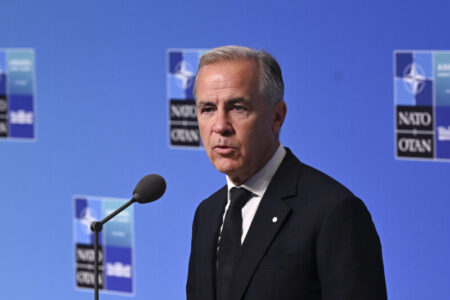
The stakes got even higher recently since Canada agreed negotiations with contractors regarding major investments like new submarines along with early warning surveillance planes worth tens of billions! Keenly aware Carney made an understated yet impactful commitment during Ankara concerning improved transparency around future defense budgets coming out this fall! “We will lay out in the budget an update regarding decisions we’re making-including fiscal pathways plus specifics surrounding one-and-a-half percent allocated toward defense-related expenses,” he mentioned upon concluding his remarks post-summit! “That’ll be timely.” Additionally he emphasized intentions geared towards achieving five percent by twenty thirty-five-“which is still nine years away”-implying considerable time lies ahead till then! Keenly pointed out too that there’s set review scheduled within NATO come twenty-twenty-nine assessing shifting “global strategic threat landscapes”. Diving deeper into submarines announcement Monday he declared confidently forecasting Canada will hit four percent overall (comprising two-point-five direct expenditures alongside one-point-five infrastructural allocations) before review occurs! This indicates attaining remaining one-percent strictly meant exclusively towards militaristic aspects won’t materialize until beyond twenty-thirty-a substantial challenge requiring tough choices possibly lying ahead!The upcoming challenge?
A top economic think-tank warned last spring saying federal authorities oughta craft themselves “credible fiscal plans” tackling ramifications stemming higher overall national spends related entirely upon military sector impacting wider governmental financial health extensively! The C. D Howe Institute suggested modest GST hikes while curbing growth rates amongst non-defense outlays alongside provincial transfers providing practical pathways forward! Government representatives quietly dismissed tax increase options however during current week Defense Minister David Mc Guinty asserted rising economic conditions would cover these costs without added burdens! “We’re growing our economy actively investing significantly across sectors generating wealth while creating jobs supplying required resources accomplishing stated goals,” expressed Mc Guinty during discussions following summits! “Furthermore we’ve achieved various milestones lately which I believe resonate positively amongst Canadians!” The next crucial political debate inside Canada doesn’t seem centered anymore solely around increasing defense budgets rather emerging consensus exists across party lines favoring higher allocations needed quickly ! Instead focus shifts onto ensuring Canadians witness clearly flow paths showing hundreds upon billions utilized adequately ! Similar circumstances face UK officials wherein monetary trustworthiness faces rigorous tests !Source link