





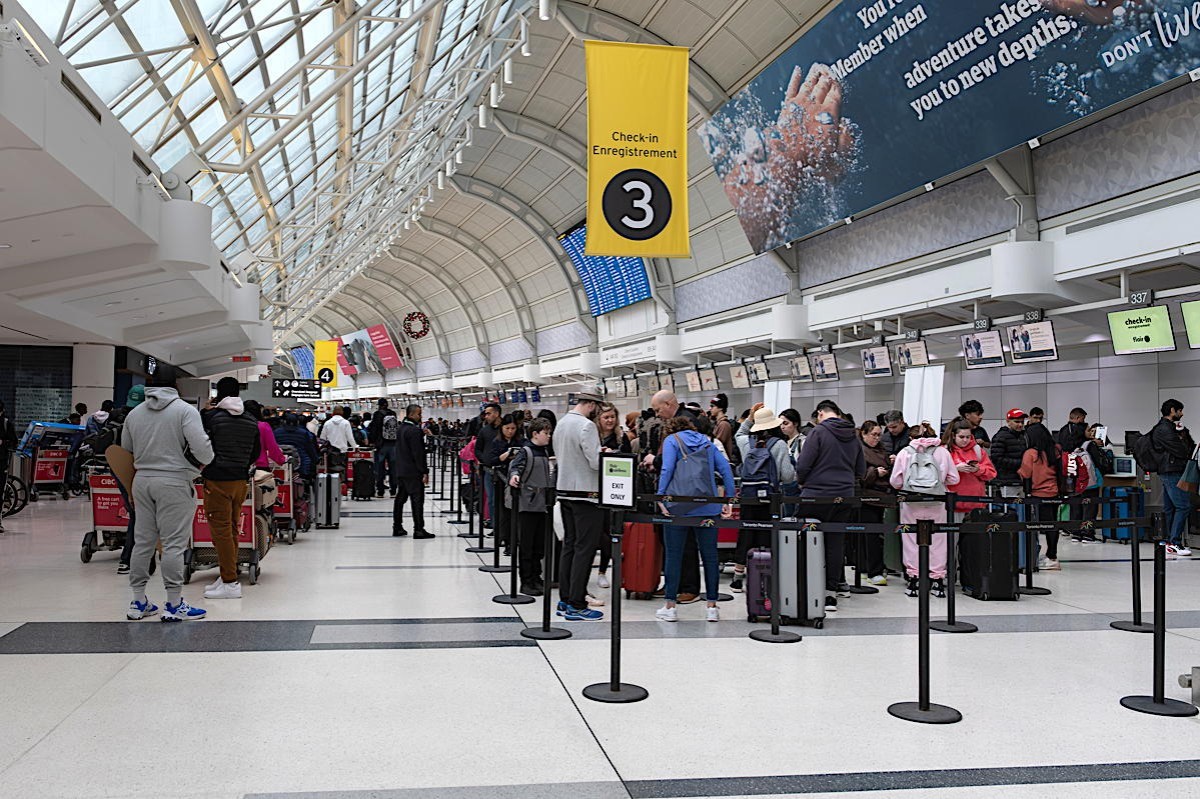
Airports in Canada are advising travelers to be cautious about sensational headlines they find online. They warn that more and more artificial intelligence-created “news” articles are spreading incorrect or misleading information regarding flight delays.
According to City News, Toronto Pearson airport has noticed an uptick in travel-oriented websites sharing alarmist claims about extensive operational problems.
These AI-crafted articles often feature phrases like “travel chaos” or “air traffic gridlock” in their headlines to grab attention.
At first glance, many of these pieces seem credible. However, airport representatives state that the content is frequently generated by AI, lacks adequate context, and can mislead passengers into thinking there are significant disruptions when there aren’t any.
“Some ‘authors’ on these websites (are) writing up to 100 articles a day so it’s clearly done by A. I.,” Sean Davidson, a Pearson Airport spokesperson, told the news outlet.
“And we’re concerned about it because we don’t want passengers to either have to show up when it’s not necessary or maybe they’re cancelling or rebooking a flight because they’re concerned about what’s going on at the airport.”
Five websites flagged
Pearson has publicly named five websites it claims are producing misleading AI-generated travel content: The Traveler. org, Toronto Digest, Travel and Tour World, Nomad Lawyer and Travel Tourister.
Examples of flagged headlines include stories claiming a “Canadian Air Traffic Gridlock,” and “Canadian Flight Disruptions Hit Major Domestic Carriers.”
Another article carries the headline “Toronto Pearson International Airport Disruption: 26 Flights Suspended and 162 Delayed Across North America and Europe in 2026.”
However, this article dated July 9, 2026 does not clarify when the reported delays happened.
Cybersecurity expert Ritesh Kotak explains that the motive behind many of these sites is straightforward: advertising income.
“The way these websites make money is if they’re able to generate traffic, if they’re able to get people to click on things, then guess what? They can sell advertising space on it. And by selling that advertising space, they’re able to generate revenue,” Kotak told City News.
Other Canadian airports such as Ottawa, Montreal and Vancouver report similar concerns regarding this trend.
Airport officials recommend travelers check flight information through official airport sites or verified social media channels instead of relying on third-party sources with sensational titles.
Don’t miss a single travel story: subscribe to PAX today! Click here to follow PAX on Facebook.
Source link