


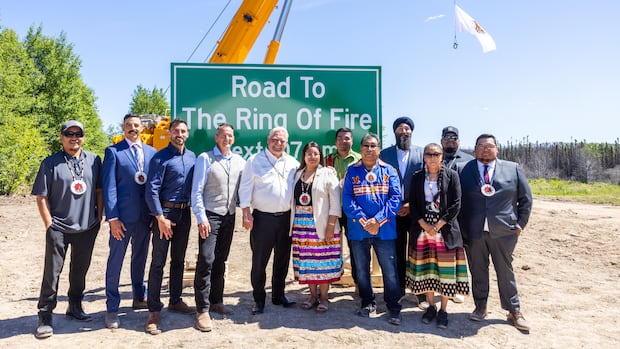
The Ontario government has given the green light for an environmental assessment of a road deemed essential for accessing important minerals in the Ring of Fire.
The Webequie Supply Road will link Webequie First Nation to the Ring of Fire mineral deposit located in the James Bay lowlands. The Impact Assessment Agency of Canada approved the project’s impact assessment on Thursday.
“Ontario’s Ring of Fire is a once-in-a-generation opportunity to create 70,000 good-paying jobs, access the critical minerals the world wants to buy, add $22 billion to our provincial economy and help northern Ontario reach its full economic potential,” Ontario Premier Doug Ford said in a news release Thursday.
“We’re delivering on our promise to protect Ontario, and we are doing so in partnership with First Nations to support true economic reconciliation.”
The province states that the 107-kilometre Webequie Supply Road is set to open by November 2030. It will eventually connect with other proposed roads in the area:
Construction on the Marten Falls Community Access Road is planned to start in August and be completed by November 2031. Upgrades for Anaconda and Painter Lake Roads are expected to finish by November 2030. Construction for the Northern Road Link – which will connect Marten Falls Community Access Road and Webequie Supply Road at the north end, crossing over Attawapiskat River – is set to begin in spring 2028, aiming for completion by November 2031. Chief Lorraine Whitehead of Webequie First Nation speaks during an event marking the approval of the Webequie Supply Road’s environmental assessment. (Ontario government photo)
The Ontario government signed agreements worth $39.5 million with both Webequie First Nation and Marten Falls First Nation last fall to support road construction efforts. They also established a shared prosperity agreement with Aroland First Nation earlier this year.
In addition, work has started on rehabilitating Geraldton Main Street in Greenstone, which Ford mentioned would “be the gateway to the Ring of Fire” further north. The province allocated $61.8 million for this project back in September.
“Our community has been clear from the outset that any development in our territory must proceed thoughtfully, responsibly, and with our people at the table,” Webequie’s Chief Lorraine Whitehead stated Thursday.
“We have worked hard to ensure this project is informed by our knowledge, guided by our values, and aligned with our vision for a healthier, stronger, and self-determined future.”
Neskantaga First Nation criticizes province’s approach
The plans from Ontario aimed at speeding up development within Ring of Fire have faced backlash from numerous First Nation leaders and environmental advocates concerned about protecting ecologically sensitive areas located on Indigenous lands.
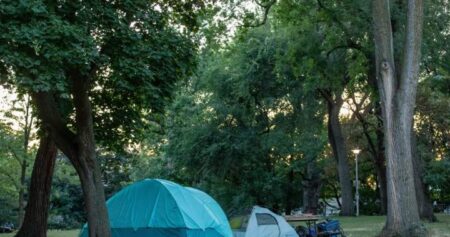
Neskantaga First Nation has set up a land defense camp along Attawapiskat River “because we will not accept a road crossing imposed on our territory without our free, prior, and informed consent.”
Coun. Lashaunda Waswa wears a beaded medallion that features Neskantaga First Nation’s flag design. (Sarah Law/CBC)
“Neskantaga calls on Ontario to stop treating the Ring of Fire mining region as a foregone conclusion when they do not have consent from affected communities. They must continue meaningful nation-to-nation dialogue with all impacted First Nations before construction moves forward,” Neskantaga stated Thursday.
Neskantaga remains under Canada’s longest-running boil water advisory lasting over 31 years now. Meanwhile, Marten Falls has been under such an advisory for nearly 21 years.
As Indigenous communities face ongoing social challenges, “it is unacceptable for Ontario to move quickly when industry needs roads while treating life-sustaining community infrastructure as optional or delayed,” Neskantaga expressed.
Despite these tensions, Neskantaga emphasizes it doesn’t oppose development decisions made by Webequie or Marten Falls.
“Every First Nation has the right to determine its own priorities and pursue necessary infrastructure and economic opportunities,” Neskantaga commented.
“But Ontario and project proponents cannot treat involvement from some First Nations as consent representing all Nations whose lands, waters rights are affected.”
Source link