



Ontario is working on a feasibility study for a 3,300-kilometre pipeline that would link Alberta’s oil fields to refineries in Sarnia.
CALGARY – The governments of Alberta and Ontario have introduced a potential route for a proposed oil pipeline between the two provinces.
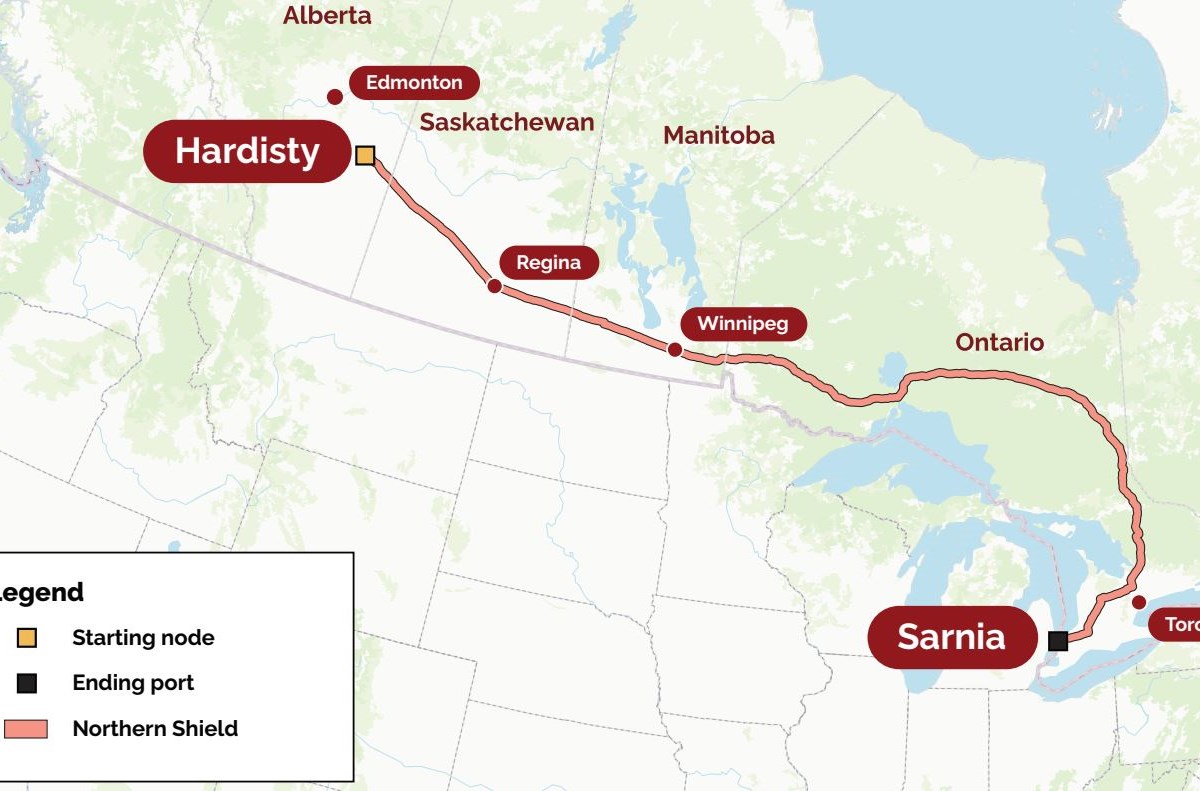
The pipeline is set to be built along what Premiers Danielle Smith and Doug Ford are calling the Northern Shield Energy Corridor, stretching from Hardisty, Alberta to refineries in Sarnia.
A map shared during a news conference on Monday in Calgary indicates that the line will follow a path similar to an existing natural gas pipeline through Northwestern Ontario, going just north of Thunder Bay and running parallel to Highway 11 through Greenstone and Northeastern Ontario before heading south.
The two leaders mentioned that this line could transport between 500,000 and 800,000 barrels of oil each day for both domestic consumption and export markets, potentially helping to stabilize oil prices across Canada while enhancing national security.
No timeline for construction has been established yet.
Ford and Smith characterized it as a historic project aimed at nation-building, which arises from a memorandum of understanding signed last year by Ontario, Alberta, and Saskatchewan. This agreement commits the three provinces to seek out areas for collaboration, including new energy and trade infrastructure.
The officials also noted that this initiative would give Manitoba the chance to investigate the possibility of extending the pipeline to the Port of Churchill.
The Ontario government is currently working on estimating costs and exploring commercial models along with related development opportunities for the energy corridor.
The government anticipates that an ongoing feasibility study will wrap up by the end of 2026. They are also dedicated to consulting with Indigenous partners and communities that may be affected by this project.
The Northwestern Ontario Municipal Association expressed support for this announcement. They stated that identifying a possible route for the corridor is crucial for strengthening national energy security as well as advancing critical minerals development.
Rick Dumas, mayor of Marathon and president of NOMA, emphasized its significance as part of the nation-building effort but pointed out that success hinges on complementary investments throughout Northwestern Ontario.
“Reliable highways, skilled workers and strong communities will be essential to unlocking the full economic potential of this corridor,” he said.
Dumas also mentioned that NOMA acknowledges how vital meaningful partnerships with Indigenous communities are.
He noted that using a route close to the existing Trans Canada natural gas pipeline should help speed up environmental approvals for this project.
Source link