





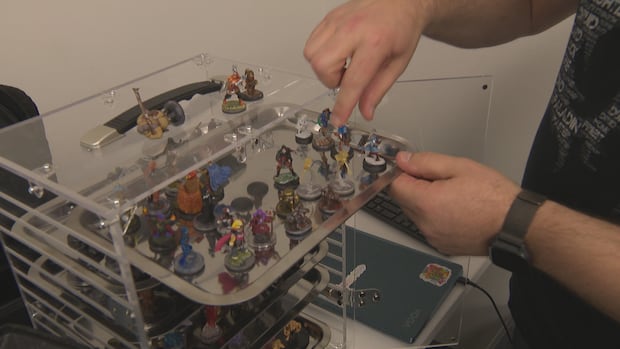
Elliot Schroeder has struggled to make friends for as long as he can remember.
This 17-year-old from Durham Region, just east of Toronto, was often bullied during his childhood and spent years searching for support.
Things took a turn when his mom enrolled him in the Oshawa Dungeons and Dragons (D& D) club three years ago. It gave him a chance to express himself in ways he hadn’t been able to before, he says.
Before long, Schroeder found himself making friends in the group and feeling more at ease with who he truly is.
“It kind of challenged my view that I’m just a weird, little kid,” Schroeder told .
His story reflects that of many neurodivergent youth who’ve shared feelings of happiness and better relationships since joining the Oshawa D& D club. Neurodivergent refers to individuals living with conditions like autism, dyslexia, or ADHD.
The club was started by Jonathon Smith, a master’s student in psychology at Trent University, three years ago to provide neurodivergent teens with better chances to develop their social skills.
“Typically, right now, what’s available for them is social skills training,” Smith said. “Whereas, we’re just saying maybe they need a space where they can come in and be themselves.”
![]() Jonathon Smith, researcher and master of psychology student at Trent University, mentions that youth described increased belonging, autonomy and meaningful peer engagement through the first part of his Dungeons and Dragons study. (Michael Cole/ )
Smith explained that the game encourages teamwork among players which fosters a more social atmosphere.
Additionally, it’s a safe environment where they can express disagreements; its low stakes make it easier for them to tackle various challenges together.
He sought support from Trent University for the program and was encouraged by his research supervisor to conduct a qualitative study.
A qualitative study focuses on non-numerical data such as interviews and observations to gain insights into people’s experiences.
During interviews with participants aged 14-18, Smith reported that young people noted feelings of increased belongingness, autonomy and genuine peer interactions.
This work has gained backing from the City of Oshawa which provided him with funding to help grow the program further.
Currently acting as the club’s dungeon master – essentially serving as both narrator and referee – Smith has begun training others so more groups can form.
He also established an adult group so participants don’t have to “age out.”
Jonathon Smith, researcher and master of psychology student at Trent University, mentions that youth described increased belonging, autonomy and meaningful peer engagement through the first part of his Dungeons and Dragons study. (Michael Cole/ )
Smith explained that the game encourages teamwork among players which fosters a more social atmosphere.
Additionally, it’s a safe environment where they can express disagreements; its low stakes make it easier for them to tackle various challenges together.
He sought support from Trent University for the program and was encouraged by his research supervisor to conduct a qualitative study.
A qualitative study focuses on non-numerical data such as interviews and observations to gain insights into people’s experiences.
During interviews with participants aged 14-18, Smith reported that young people noted feelings of increased belongingness, autonomy and genuine peer interactions.
This work has gained backing from the City of Oshawa which provided him with funding to help grow the program further.
Currently acting as the club’s dungeon master – essentially serving as both narrator and referee – Smith has begun training others so more groups can form.
He also established an adult group so participants don’t have to “age out.”
![]() Gina Narvaez, mother of two boys who are neurodivergent said there were few options available for her sons seeking social interaction especially growing up. (Michael Cole/ )
Persistently she managed to convince Mateo to join too which she appreciates greatly.
Gina Narvaez, mother of two boys who are neurodivergent said there were few options available for her sons seeking social interaction especially growing up. (Michael Cole/ )
Persistently she managed to convince Mateo to join too which she appreciates greatly.
“Now they can’t get out of the house fast enough,” Narvaez said.
Narvaez expressed pride watching how much her sons have grown since joining this program adding she’s thrilled they’ve finally found somewhere they feel comfortable being themselves.
Before becoming involved in this club it had been challenging finding suitable programs for them.
“This program is a bit of a lifesaver,” she added.
A new phase of research is currently underway aimed at assessing social improvements among youth using numerical data.
This will carry on into fall according to Smith.
Source link
Youth expressed greater belonging: group founder
Dungeons and Dragons is a well-known tabletop roleplaying game where players create characters and embark on fantasy adventures together through storytelling and imagination. Smith, who previously worked as an aerospace technician in the Canadian military and identifies as neurodivergent himself, believed the game would serve as an excellent outlet for those who often find it hard to connect socially while dealing with anxiety and depression.‘They can’t get out of the house fast enough’
Gina Narvaez feels grateful that her two sons Mateo and Gabriel will be able to keep playing in this group as they get older. Narvaez discovered this program through Autism Ontario two years back. Straight away her eldest son Gabriel got on board at age 18 while her younger son needed some encouragement.“Now they can’t get out of the house fast enough,” Narvaez said.
Narvaez expressed pride watching how much her sons have grown since joining this program adding she’s thrilled they’ve finally found somewhere they feel comfortable being themselves.
Before becoming involved in this club it had been challenging finding suitable programs for them.
“This program is a bit of a lifesaver,” she added.
A new phase of research is currently underway aimed at assessing social improvements among youth using numerical data.
This will carry on into fall according to Smith.
Source link