





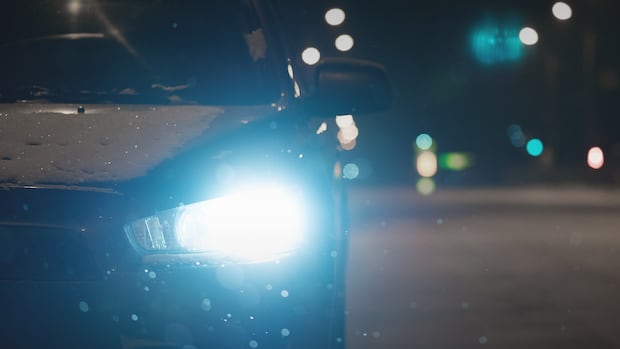
Alec Hodgson, a high school student, has been driving for about four months, but there’s still something that makes him feel uneasy.
“Especially when driving at night, the headlights – especially the white ones – can make it very hard to see,” said Hodgson, a Grade 11 student from London, Ont. “Sometimes I get scared or nervous while I’m driving.”
“As a new driver, it can be nerve wracking when all you can see is headlights coming at you.”
Talks about headlight brightness have led Transport Canada to gather information on Canadians’ experiences with headlight glare through a survey on its website.
The survey is open to drivers, pedestrians and cyclists and includes questions about nighttime travel, driver behavior, and possible changes.
According to an emailed statement from the government, over 142,000 Canadians have taken part in the survey so far.
Dr. Christina Schropp is an optometrist with West 5 Optometry and says her patients often mention difficulties driving in the dark because of bright vehicle headlights. (West 5 Optometry)
Dr. Christina Schropp, an optometrist at West 5 Optometry in London, mentioned that she’s hearing more complaints from patients about vehicle headlights than ever before in her 35-year career.
“The chief complaint is that the headlights seem brighter than we’re used to,” Schropp said. “We have a lot of new types of car manufacturing happening and the light technology has changed. There’s LED, there’s halogen, and both of those formats of lighting have definitely brightened the headlights on vehicles.”
Schropp shared that some patients report having trouble driving due to headlight glare specifically at night and while on highways.
Drivers and Pedestrians Affected
Apart from brightness issues, Schropp noted that how lights are aimed can also create problems.
“Historically, car lights were designed to light up the road ahead; however vehicles have grown larger,” she explained. “It sometimes seems like the headlights are focused directly ahead in front of cars.”
WATCH | Why vehicle headlights are brighter than ever: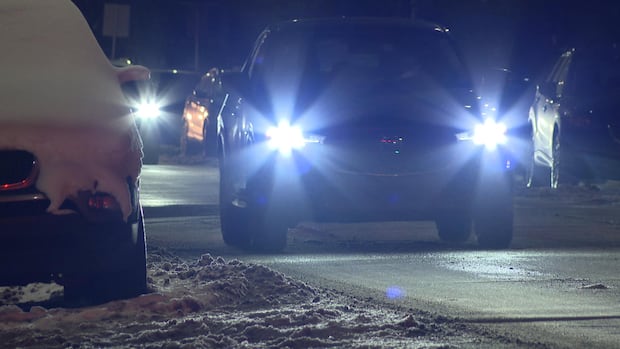
Headlights are brighter than ever. What’s changed?
The bulbs used in headlights have evolved over time. CBC’s Jo Horwood discusses why newer headlights appear uncomfortably bright and what measures are being taken regarding this issue.
Carter Smith, a new driver himself, remarked that sharing roads with large cars poses challenges because of their headlight angles.
“I drive a smaller car so it’ll shine right into your eyes when you’re driving,” he said.
Others mentioned it’s not just drivers who feel impacted by bright headlights; pedestrians do too.
“When I’m walking, I have to look away to my right. Anytime I go up a hill the lights are always too bright,” Praise Soewu stated.
The good news according to Schropp is that while bright headlights don’t harm eye health since drivers are shielded by their windshields; they do raise safety concerns.
Alec Hodgson, Carter Smith, Finn Maisonville, Fola Adu, Praise Soewu, and Iain Naudie are high school students either learning how to drive or who just got their licenses. Some say modern headlight brightness makes them hesitant about getting behind the wheel.(Kendra Seguin/)
“We call it ‘the startle.’ A bright light can surprise your visual system causing it momentarily lose its ability to focus because of that sudden intense light,” she explained.
“Then you get into what happens as a reaction? Do they pull their steering wheel suddenly or hit brakes leading them into erratic patterns or could they handle re-focusing?”
Aiming for New Guidelines
The Transport Canada survey represents another step in ongoing research regarding headlight glare issues. A year ago, researchers conducted tests examining connections between modern headlights and driving performance. Results should come out next May according to Transport Canada.
Once current surveys wrap up, the government plans on posting feedback summaries online.
Some expressed hope findings will result in updated guidelines concerning headlights.”Through regulations, we might revert back older types from early 2010s-2015 era where brightness levels allowed for safer nighttime drives,” commented Smith.
LISTEN | Throwing shade on super bright headlights :
The Current24:42Throwing shade on those super bright headlights
Recently, Vancouver city council unanimously urged Transport Canada address LED glare. Saskatoon optometrist Rachael Berger supports this call since she’s observing increasing numbers among younger patients struggling during night-time drives. Vehicle lighting specialist Daniel Stern believes it’s time for adjustments as existing regulations only accounted for halogen bulbs rather than today’s LEDs.
However, some disagree stating these strong lights enhance safety levels.”I think there’s no need changing these lights. I find they’re beneficial keeping visibility high ahead,” commented high schooler Iain Naudie.
For now, Schorpp advised both drivers, pedestrians should avoid staring directly into car’s beams, instead shifting gaze slightly aside while ensuring they track roadway lines or sidewalk paths.
Transport Canada’s survey remains open until April 20.
Source link