

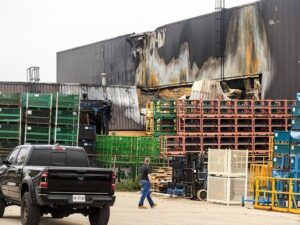


According to Ontario’s Ministry of the Environment, Conservation and Parks (MECP), emissions from Birla Carbon were “a primary source” of the soot that fell on neighborhoods in Hamilton last month.
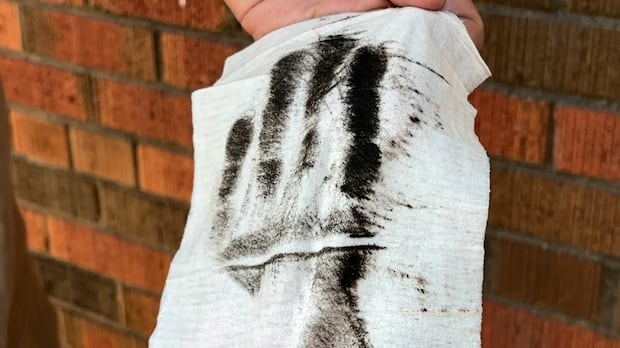
The black dust that settles over areas in Hamilton has been a long-standing concern, especially near the eastern industrial zone. However, residents and local officials noted that the soot fall in early July was particularly severe and impacted regions not typically affected.
The accumulation of soot was so extreme – covering homes and getting onto pets and children – that many residents urged their elected representatives to take action on this issue.
On Tuesday evening, ministry spokesperson Lindsay Davidson informed CBC Hamilton that officials have “referred Birla for formal investigation by the ministry’s environmental investigations and enforcement branch for potential violations of Ontario’s environmental laws.”
WATCH | Hamiltonians wonder what’s in the soot:
People in several Hamilton neighbourhoods still don’t know why black soot has been falling on their homes
Residents living around Hamilton’s east end reported their homes being covered in black soot this week. While soot isn’t a new problem for locals, Ward 4 councillor Tammy Hwang mentioned that this occurrence was different because it affected people further away.
Carbon black producer claims it’s cooperating with authorities
Birla Carbon told CBC Hamilton they are “co-operating fully” with the ministry.
CBC asked what might have caused these emissions and what substances could have been released.
Spokesperson Roysten Dmello didn’t answer those questions directly but stated, “the company has not received any communication or copy of the report from MECP with regard to the ministry’s findings.”
The Parkdale Avenue N. factory is Birla Carbon’s only location in Canada, as noted on its website. The company produces carbon black and operates in 14 countries.
Carbon black is a fine powder used to manufacture various products like rubber and plastics.
The government shared its analysis results with Hamilton Public Health, according to Davidson, who serves as a ministry spokesperson.
The ministry will require Birla Carbon “to take all necessary action to prevent future incidents,” Davidson stated.
Public health staff are currently reviewing the ministry’s findings while consulting toxicological experts. Dr. Bart Harvey, Hamilton’s associate medical officer of health, mentioned via email:“Hamilton Public Health will be commenting publicly on our assessment in the coming days, including any potential health impacts identified through our review,” Harvey said. Emissions from carbon black linked to health concerns While officials haven’t specified what was found in July’s emissions connected to Birla Carbon, a proposed government standard for carbon black facilities notes that “Ontario’s carbon black facilities are a significant source of sulphur dioxide air emissions, particularly in Sarnia and Hamilton where the facilities are located.” p >
The standard states that short-term exposure to sulphur dioxide can lead to respiratory issues.
In some situations it indicates exposure “can cause effects on the heart which may result in hospital admissions or even premature death.”
It also mentions “sulphur dioxide emissions are a source of fine particulate matter” associated with “various negative health impacts especially affecting respiratory and cardiovascular systems.”
Councillor suggests penalties for the company
Coun. Tom Jackson told CBC Hamilton he received complaints about soot from around 45 residents within his Ward 6 area-an unusually high number. Many complainants suspect Birla Carbon is responsible,
He urged company leaders to engage with his constituents directly, offering to organize a town hall meeting.
Jackson hopes for an “extremely substantial” penalty against the firm and mentioned he is working on a proposal directing any funds raised from such fines back to residents so they can cover cleaning expenses.
Industrial jobs have always played an essential role in Hamilton; however Jackson wants companies to assume “a heck of a lot more responsibility.”
“Darn it all,” he added,” these companies just need do much better…to ensure this black soot doesn’t happen again.”
The same day CBC Hamilton reported these developments; The ministry revealed its findings following research conducted by Mc Master University scientists who sampled soot at 50 homes across Hamilton between 2024-2025.
br > br >
Sara Styler-a professor specializing environmental chemistry-and Grace Yao, a Ph D candidate working under her supervision found hazardous chemicals tied specifically coal combustion within samples collected near northeast industrial zones within hamiton.
This study had resource limitations preventing thorough examination hence other sources could still contribute however according , Yao confirmed coal combustion significantly influenced PAHs present.< br >
Styler’s team couldn’t pinpoint exact industrial sources generating PAHs due lack sufficient monitoring capability but emphasized increased scrutiny would help clarify origins going forward. br >
Source link