



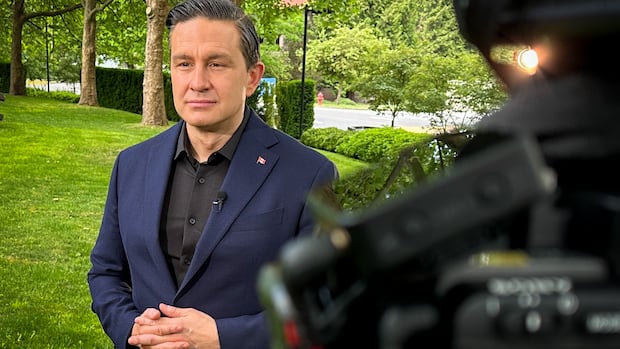
Conservative Leader Pierre Poilievre is calling on Prime Minister Mark Carney to intervene and stop the Canadian Radio-television and Telecommunications Commission (CRTC) from making mostly American tech companies pay more to support local media content.
In a chat with , Poilievre expressed that the CRTC’s move to increase the revenue streaming services like Netflix, Disney+, and Amazon Prime must contribute for Canadian programming is essentially a tax on consumers and shouldn’t be allowed.
“This will be a consumer tax; it will all be passed on. Let’s not fool ourselves into thinking that the web giants or streamers will just absorb it. Of course, they’re going to charge Canadians more,” Poilievre stated.
“For heaven’s sake, let people come home and unwind without having to pay another tax for their favorite binge-watching.”
Poilievre added that this CRTC decision could also hurt Canadian workers if the Trump administration retaliates by increasing tariffs due to its long-standing opposition against requiring American firms to contribute towards Canadian cultural content.
“We might see more steel, auto, aluminum and lumber jobs lost because of the retaliation caused by this Liberal tax increase,” Poilievre warned.
WATCH | Poilievre says U. S. could retaliate against Canada over ‘Netflix tax’:
Poilievre says U. S. could retaliate against Canada over ‘Netflix tax’
Conservative Leader Pierre Poilievre cautioned that the Trump administration may impose additional tariffs on Canada’s steel, auto, aluminum, and lumber sectors as retaliation for the CRTC’s decision demanding greater funding from U. S. streaming giants for Cancon.
In a letter shared with addressed to the prime minister, Poilievre highlighted potential U. S. trade risks associated with this new Cancon policy as justification for scrapping it.
“Keeping this tax in place signals to investors and trading partners that Canada is becoming more expensive, less predictable, and tougher to conduct business in,” he wrote.
The Price of ‘Cultural Sovereignty’
The previous Liberal government enacted the Online Streaming Act in 2023 aimed at ensuring mainly American streaming services contribute more to support Canada’s media landscape amidst fierce competition from foreign content.
Established Canadian broadcasters have been paying into various funds for years to create local television shows, movies, and news programs. They argue that new American entrants should also share this responsibility if they wish to operate here.
The government subsequently tasked the CRTC with determining how much these foreign companies should contribute toward what it terms Canadian “cultural sovereignty.”
After lengthy consultations, last week the CRTC decided on a rate: 15 percent of all revenue collected by these firms in Canada should go toward creating Canadian content-up from a previous interim rate of 5 percent imposed earlier by the CRTC.
The contributions aren’t exactly a direct “tax” on consumers; however critics like Poilievre contend that these companies will inevitably raise prices for subscribers to cover their newly mandated expenses related to Canadian programming.
The logos for streaming services Netflix, Hulu, Disney+ and Sling TV are pictured on a remote control. (Jenny Kane/The Associated Press)
This situation has sparked frustration within the Trump administration as its trade envoy indicates that the Online Streaming Act is creating significant tension in ongoing trade discussions between Canada and the U. S.
As both parties aim for an updated version of the Canada-U. S.-Mexico Agreement (CUSMA) before July 1 deadline approaches, U. S. Trade Representative Jamieson Greer mentioned that Canada needs to eliminate this law which he believes discriminates against American tech and media companies if there’s any hope of reaching an agreement.
Dropping that act has consistently been one of Greer’s top demands from Canada alongside addressing supply management changes needed in certain agricultural sectors and stopping provincial boycotts of American alcohol products.
‘Making A Bad Situation Worse’: U. S. Ambassador
The CRTC’s choice to extract even more money from American media companies could complicate trade negotiations further.
In fact late Friday afternoon Pete Hoekstra-the U. S ambassador in Canada-stated that “the CRTC is making a bad situation worse.”
“The CRTC is targeting and taxing U. S. companies while establishing new discriminatory trade barriers which only worsens investment conditions for American businesses.”
U. S. Ambassador to Canada Pete Hoekstra participates in an interview at Ottawa’s United States Embassy in December 2025. (Justin Tang/The Canadian Press)
The Motion Picture Association representing those firms facing increased costs also criticized the CRTC’s decision as problematic. The association’s chairman Charles Rivkin stated that “this regulator creates a burdensome framework unfairly impacting global streamers through requirements directly violating Canada’s commitments under [CUSMA].”
“This choice triples operational costs within Canada while likely causing additional inflationary pressures making further investments less appealing,” he noted.
Potential Retaliation Could Bring Double Trouble
If Americans respond with higher tariffs according to Poilievre Canadians could face a “double whammy” consisting of rising streaming service taxes along with job losses too.
“We’re already dealing with unjustified tariffs,” he remarked.
“Answering one tariff coming from abroad shouldn’t mean adding another domestic tax by Liberals here at home.”
Acknowledging there’s been considerable strain between Canada-U. S relations following Trump’s trade disputes Carney has pointed out but still urges Trudeau’s government push forward negotiating a deal regarding CUSMA boosting economic links between nations moving ahead together.
</blockquotesA Netflix sign alongside their logo displayed atop buildings Los Angeles during December 2025 photo session (Jae. C. Hong/The Associated Press)
C RTC operates independently yet retains authority forcing major web platforms comply following its directives according regional Broadcasting Act expectations set forth where governments can request regulations adjustments via feedbacks directed back regulators prompting reassessment decisions made publically available.</blockquotesP o il iev re insisted saying ,“We won’t let Mark Carney shift responsibilities onto his preferred bureaucrats allowing them take blame resulting decisions passing ultimately.”</blockquotesP o liticians highlight earlier laws enabled such measures taken without accountability reflecting political interests behind them leading up current situations faced today.”</blockquotesM ar c Miller serving Heritage Minister remains uncertain responding overall implications emerging soon after review process initiated since questions arose once announcements made publically accessible therefore advocates ensure representation supporting local identities echoed across screens including hearing voices resonating unique aspects defining our nation identity collectively ” concluded official statements released later thereafter>.
Source link