

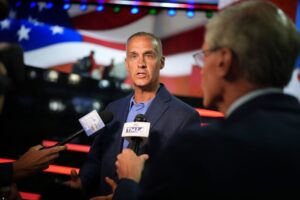

Canada’s Justice Minister Sean Fraser expressed serious concerns about how provinces are bypassing Charter rights by using the notwithstanding clause, and he’s ready to set some limits on its application at the federal level as the document reaches its 44th year.
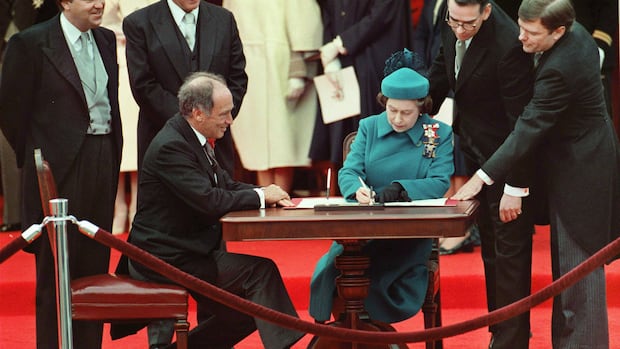
Fraser shared these thoughts with during a visit to Library and Archives Canada’s preservation centre in Gatineau, Que., where he viewed the original proclamation of the Constitution Act for the first time. This act was signed on April 17, 1982, bringing the Charter of Rights and Freedoms into effect.
“If the rights outlined in the Charter of Rights and Freedoms exist only on paper but aren’t experienced in our communities, is the Charter worth more than just ink on paper?” Fraser asked.
“We must aim not just to preserve this document perfectly tucked away in archives but actually work to infuse those principles with real meaning.”
The notwithstanding clause is a constitutional element in Section 33 of the Charter that lets federal, provincial, and territorial governments temporarily set aside certain Charter rights for up to five years unless renewed. When used, this clause blocks court challenges regarding issues like freedom of expression, equality rights, and religion.
Section 33 was included in the 1982 Constitution as a political compromise designed to act as a democratic safety net against judicial overreach. It was intended to be a last-resort option for exceptional situations; however, provinces frequently resort to it now.
WATCH | Justice Minister Sean Fraser on the Charter’s anniversary:
Justice Minister reflects on Charter at 44
Justice Minister Sean Fraser talks about whether the Canadian Charter of Rights and Freedoms has fulfilled its promises.
“I have major concerns-both legal and public policy-related-about how often governments are invoking this notwithstanding clause to pass laws that I believe infringe or could infringe upon Canadians’ rights,” Fraser stated.
“We’ll do everything we can to uphold our Constitution and ensure Canadians can live freely here under full protection from what the Charter intends.”
Fraser mentioned he isn’t looking at making constitutional changes but is open to clarifying how this controversial clause should be applied after hearing from Canada’s Supreme Court.
The top court is expected soon to release a decision regarding Quebec’s invocation of the notwithstanding clause aimed at preempting challenges against its secularism law, Bill 21. This law prohibits certain public employees-including teachers-from wearing religious symbols while working.
The Charter’s ‘slow death’
Quebec has utilized this notwithstanding clause more than any other province; however, Saskatchewan, Alberta, Ontario, and Yukon have also made Section 33 declarations.
Fraser indicated he’s interested in creating guidelines for appropriate use of this clause federally but would prefer clarity from the Supreme Court concerning Bill 21 first.
Errol Mendes, a law professor at University of Ottawa, believes waiting isn’t advisable.
“The sooner they act on it, the better; they shouldn’t just wait around for a ruling that might disappoint people,” Mendes said. “I’m genuinely worried that we’re witnessing what seems like a slow death of the Charter due to excessive reliance on this clause.”
Fraser noted he’s considering supporting legislation proposed by Ontario Senator Peter Harder-Bill S-218-which seeks amendments to establish conditions surrounding Ottawa’s use of this notwithstanding clause.
Sen. Peter Harder has introduced a bill in Senate aiming to clarify conditions under which Parliament may invoke notwithstanding clause. (Jean-Francois Benoit/CBC)
No parliament has ever invoked Section 33 of this Charter; nevertheless Conservative Leader Pierre Poilievre said he would do so if necessary.
“We need to tread carefully when overriding individual rights and freedoms protected by our Charter,” Harder cautioned. p >
“Canada has always stood out as an advocate for human rights protections for minorities; when those are challenged or attacked within various legislatures, I think it’s essential for our Government to clearly affirm that Canada’s Charter of Rights and Freedoms is foundational.” p >Every time Section 33 is invoked , that’s another blow against the Charter.- Martha Jackman , professor emeritus , University of Ottawa
Manitoba recently introduced legislation mandating that any provincial laws invoking Section 33 automatically go before the Manitoba Court of Appeal to assess whether they violate Charter rights. Harder hopes other provinces will follow suit. p >
“The Charter really stands at a pivotal moment ,” said Martha Jackman , an emeritus professor specializing in constitutional law at University of Ottawa. “Every time section 33 gets used , it’s another nail in its coffin.” p >
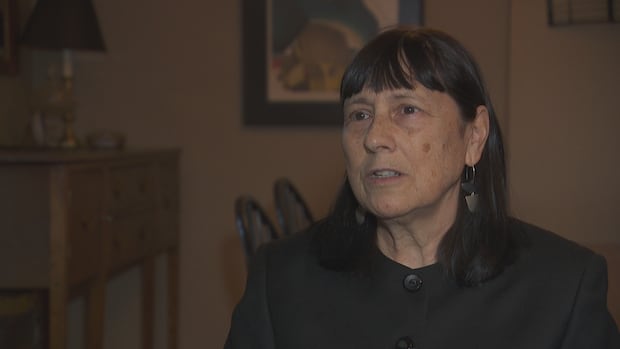 Challenges with the Charter p >Martha Jackman, a Professor Emeritus affiliated with University Of Ottawa highlights risks posed affecting validity associated mainly towards pertinent provisions spelled out therein especially given recent legislative drafts proposed limiting scope around anti-hate efforts undertaken!
This situation brings criticism not only from religious groups & Conservative Party alike regarding implications stemming forth seen arising through current government’s directed focus towards new proposed anti-hate measures namely labelled “Bill C-9” which aims curbing hate speech altogether – something Mr. Fraser firmly denies accusations surrounding infringement upon freedoms guaranteed under existing guidelines outlined previously too! span >
While contemplating ways forward establishing clearer parameters attached directly involving their usage concerning “notwithstanding” clauses being deployed throughout various areas -Mr. Fraser expressed sentiments suggesting cannot play babysitter enforcing proper regulations observed amongst differing levels governing local jurisdictions anytime soon either personally intervening required either way should such actions continue unfolding presently across boarders found here locally.”<p ”As Justice minister concurrently serving office,”he noted,“effective remedies resulting final verdicts reached during proceedings typically arise via citizens exercising fullest amount available pursuing means thereof intended protecting whilst utilizing powers reserved solely protected beneath auspices governed protecting foundational beliefs underlying which sits whole framework established since inception founding documents thus leading ourselves living free lives overall.”
Challenges with the Charter p >Martha Jackman, a Professor Emeritus affiliated with University Of Ottawa highlights risks posed affecting validity associated mainly towards pertinent provisions spelled out therein especially given recent legislative drafts proposed limiting scope around anti-hate efforts undertaken!
This situation brings criticism not only from religious groups & Conservative Party alike regarding implications stemming forth seen arising through current government’s directed focus towards new proposed anti-hate measures namely labelled “Bill C-9” which aims curbing hate speech altogether – something Mr. Fraser firmly denies accusations surrounding infringement upon freedoms guaranteed under existing guidelines outlined previously too! span >
While contemplating ways forward establishing clearer parameters attached directly involving their usage concerning “notwithstanding” clauses being deployed throughout various areas -Mr. Fraser expressed sentiments suggesting cannot play babysitter enforcing proper regulations observed amongst differing levels governing local jurisdictions anytime soon either personally intervening required either way should such actions continue unfolding presently across boarders found here locally.”<p ”As Justice minister concurrently serving office,”he noted,“effective remedies resulting final verdicts reached during proceedings typically arise via citizens exercising fullest amount available pursuing means thereof intended protecting whilst utilizing powers reserved solely protected beneath auspices governed protecting foundational beliefs underlying which sits whole framework established since inception founding documents thus leading ourselves living free lives overall.”