




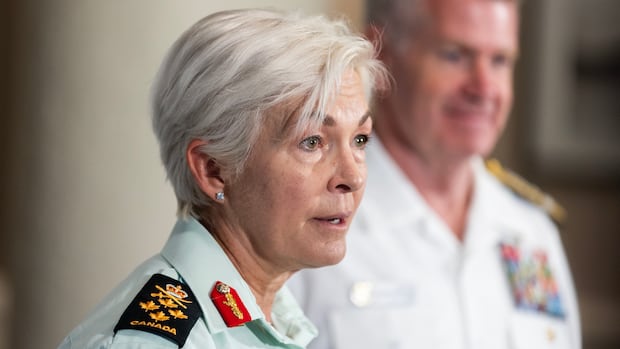
On Saturday, military leaders from 32 Western countries will decide whether they prefer Canada’s chief of the defence staff or her German counterpart to head a key NATO committee.
Gen. Jennie Carignan and Gen. Carsten Breuer are competing for the top position at the NATO Military Committee, which hasn’t been held by a Canadian in nearly twenty years.
The Liberal government under Prime Minister Mark Carney is backing her nomination. This election occurs as Canada and Europe seek to enhance political, economic, and defense cooperation.
If she wins, Carignan would be the first woman to lead the military committee in NATO’s 77-year history.
In an interview with , Carignan expressed that it’s “a privilege to be considered,” especially when tensions with Russia are high due to hybrid attacks and the ongoing war in Ukraine.
“Don’t get me wrong. I absolutely know what I’m getting myself into, but such an important time to work with NATO as partners,” Carignan said. “And I think I can make a difference in that way.”
Carignan mentioned that some fellow defense chiefs encouraged her to put her name forward.
The chair of NATO’s Military Committee serves as the senior military officer within the alliance and acts as a link between NATO’s political leaders and its military commanders.
This committee evaluates threats, capabilities, and operational needs while providing military advice to the North Atlantic Council. Currently, Italian Admiral Giuseppe Cavo Dragone holds this position after taking office in January 2025.
WATCH | More about the new EU alliance: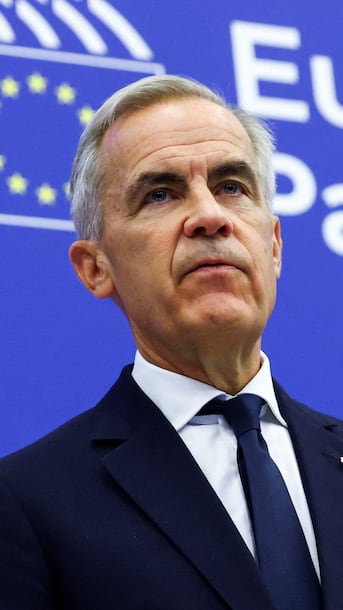
Is Canada becoming an ‘associate member’ of the European Union?
Associate membership? Strategic alliance? No matter how you label it, Prime Minister Mark Carney’s initiative for stronger ties with Europe is moving forward. The CBC’s Marina von Stackelberg outlines some changes Canadians could face if Ottawa and Brussels finalize this agreement.
The chair position differs from the more prominent Supreme Allied Commander Europe (SACEUR), who oversees operations and potential warfare activities.
This vote follows Carney’s trip to Strasbourg, France this week where European Commission President Ursula von der Leyen suggested Canada could become the EU’s first “associate member.” The exact implications of this status remain unclear but could significantly deepen economic and political connections.
Carney supported this proposal; Donald Trump did not agree.
The U. S. president referred to it as “laughable,” yet also labeled it a potentially “hostile act” that might lead to increased tariffs.
Steve Saideman, a defense expert at Carleton University who has extensively studied NATO issues, stated that Carignan “absolutely has a shot” at securing the committee chair role.
“I think that Carney probably did his homework and wouldn’t have put her name forward if she didn’t stand a chance,” Saideman noted while emphasizing how extraordinary this geopolitical moment is.
“I also believe Canada is currently highly sought after by Europeans wanting them anchored in various European structures. So yes, there’s potential.”
However, there’s also a chance that Trump’s administration might try to block consensus on this issue,, he added..A Canadian last held the role of NATO’s Military Committee chair two decades ago. (Alexander Quon/CBC)“Trump won’t let either a Canadian or woman take charge ofnnnn<nor let him go over anyone around him without paying attention," he remarked..
“His irritation towards Canada for asserting its own agency suggests he’ll seize any chance-especially one that’s relatively low-cost-to hinder whatever ambitions Canada might have.”
The chair election will be determined by majority vote through secret balloting among defense chiefs during a closed session of their committee meetings.
<!—->
Source link