




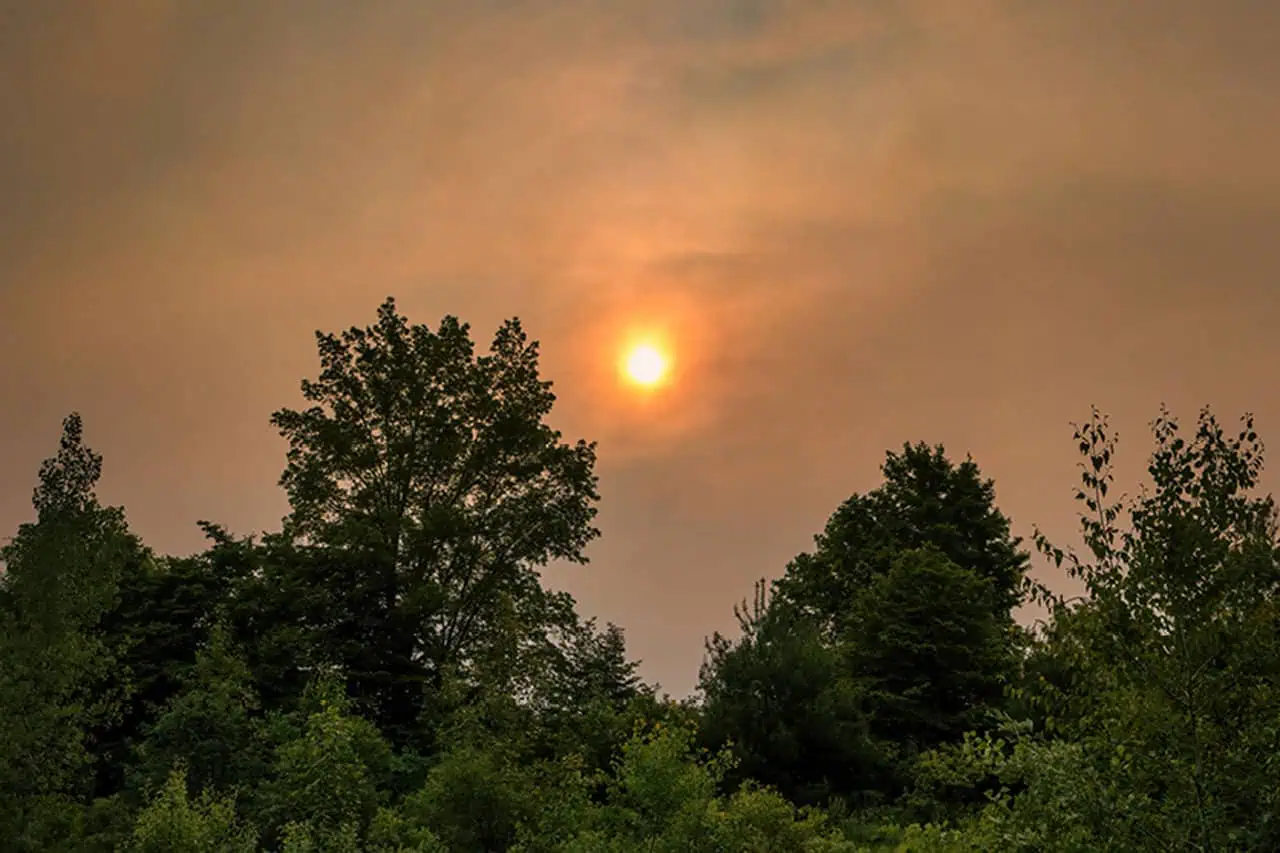
Residents in Mississauga, Brampton and Caledon are being advised to take safety measures as smoke from wildfires in Northwestern Ontario drifts into the area, leading Peel Public Health to issue an Orange Air Quality Alert.
The alert was released on Wednesday, July 15, indicating that the Air Quality Health Index (AQHI) is likely reaching – or has already reached – the very high risk level, with a reading of 10 or more.
But what does this actually mean?
The AQHI is a scale created by Environment and Climate Change Canada that assesses how air pollution can impact health. Instead of just measuring pollution levels in the air, this index evaluates the health risks associated with breathing that air.
The scale ranges from 1 to over 10:
1 to 3 – Low risk: Enjoy outdoor activities as usual. 4 to 6 – Moderate risk: Those at risk should think about limiting extended outdoor exertion. 7 to 10 – High risk: Individuals at greater risk should minimize or postpone demanding outdoor activities. 10+ – Very high risk: Everyone should think about reducing exposure, particularly during strenuous outdoor tasks.
An Orange Air Quality Alert represents the highest level of warning under Ontario’s air quality alert system.
This program includes two warning categories:
Yellow Air Quality Warning: Issued when the AQHI is predicted to reach the high-risk category (7 or higher). Orange Air Quality Warning: Issued when the AQHI is expected to reach, or has reached, the very high-risk category (10+).
Peel’s Medical Officer of Health issues Orange alerts when Environment and Climate Change Canada predicts very poor air quality conditions, especially during wildfire smoke events.
Why Wildfire Smoke Is Harmful
Wildfire smoke contains tiny particles that can penetrate deep into the lungs and even enter the bloodstream. Even healthy individuals might experience symptoms when smoke levels rise.
Health effects may include:
Eye, nose and throat irritation Headaches Runny nose Coughing Wheezing, including asthma attacks Dizziness Difficulty breathing Chest pain
Peel Public Health mentions that wildfire smoke can affect everyone, even at lower concentrations.
However , some individuals are more likely to face health impacts , such as : p >People with respiratory or heart issues Older adults Infants and small children Pregnant individuals Indigenous Peoples People working outdoors
What To Do During An Orange Alert
Public health experts recommend residents modify their activities based on their health needs while regularly checking air quality levels. p >
Those at heightened risk should : p >Avoid or delay intense outdoor activities if possible. Limit time spent outdoors when smoke levels are high. Keep track of AQHI updates throughout the day via Air Quality Ontario.
Residents can also lessen their indoor exposure by : p >Keeping windows and doors shut if it’s comfortable indoors and below 26 C. Utilizing community areas like libraries or recreation centers that provide clean , cool air. Steering clear of actions that contribute to indoor pollution , such as smoking , burning candles or incense , frying food , using wood stoves , and vacuuming. Ensuring HVAC filters are clean while using top-rated filters suitable for your system.
Health officials highlight that if there’s a heat event coinciding with poor air quality , residents should focus on staying cool. Closing windows may not be advisable if it leads to unsafe temperatures inside. p >
The Orange Air Quality Alert stays active as long as conditions continue posing a very high health threat. Residents are urged to check forecasts frequently since wildfire smoke situations can shift rapidly based on wind direction and fire activity. p >INsauga’s Editorial Standards and Policies
Last 30 Days : 45 ,619 Votes p >
All Time : 1 ,432 ,877 Votes p >2257 VOTES