





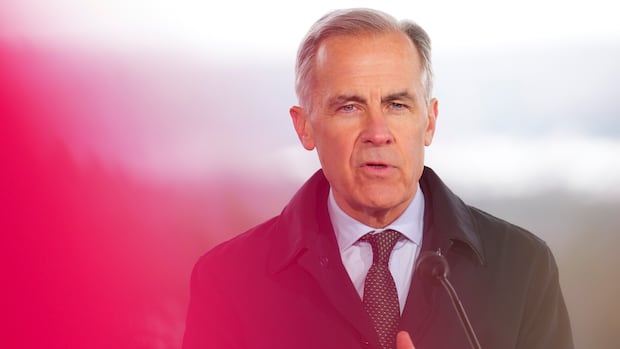
A group of young people and environmental organizations are taking legal action against the Carney government, claiming it’s reversing Canada’s climate strategy and violating federal law in the process.
Three youths along with two environmental groups are urging the Federal Court to mandate Ottawa to create a climate plan that meets Canada’s legally binding targets for 2030.
“When political leaders claim they’re committed to climate action while actually dismantling essential policies, young people take notice,” said Sophia Mathur, one of the youths involved in the judicial review application.
“We’re the ones who will have to deal with the consequences.”
The lawsuit argues that recent changes in climate policy by the federal government violate Canada’s climate accountability act – officially known as the Canadian Net-Zero Emissions Accountability Act.
Since the emissions-reduction plan (ERP) for 2030 was established, “the government of Canada has eliminated, weakened and/or significantly altered [its] key measures,” according to the application filed on Monday in Federal Court.
A spokesperson for the environment minister stated that they remain committed to Canada’s mid-century climate goal.
“We are aware of the recent court challenge,” said Keean Nembhard, press secretary for the minister. “The government of Canada is dedicated to combating climate change and achieving net-zero emissions by 2050. We will continue our efforts towards building a clean, low-carbon, and resilient country.”
“As this matter is before the courts, we cannot comment further.”
The Trudeau administration enacted the climate accountability act in 2021. This law requires them to set credible science-based targets for climate change and create plans to meet those goals.
“Over this past year, we’ve seen how the Carney government has weakened, postponed, and repealed essential climate policies without proposing valid alternatives while pushing forward a fossil fuel-driven future,” remarked Charlie Hatt, Ecojustice’s director focused on climate issues.
Ecojustice, an organization specializing in environmental law, represents those bringing forth this case.
“In essence, we’re asking for a proper plan that meets our targets – not one destined for failure,” Hatt stated.
WATCH | Climate groups take Carney government to court: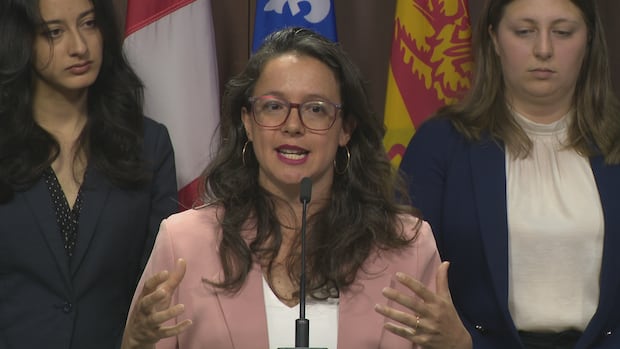
Carney’s taken a ‘wrecking ball’ to Canada’s climate progress plan: Environmental Defence p>Environmental groups are suing Carney’s administration hoping to compel them into creating a comprehensive climate plan that aligns with Canada’s legally mandated targets. Julia Levin from Environmental Defence Canada described Carney’s recent actions as ‘deeply irresponsible and cynical.’
“Under Prime Minister Mark Carney’s leadership, we have witnessed a significant rollback of vital climate policies without any viable strategy for reducing emissions or reaching Canada’s target for 2030,” said Dr. Samantha Green, a family physician and president of the Canadian Association of Physicians for Environment – one of those applying alongside Environmental Defence.
The rollbacks in environmental policy since Carney took office over a year ago include: p >Eliminating consumer carbon tax. Reversing oil and gas emissions cap implementation. Scrapping electric vehicle sales mandates. Increasing fossil fuel subsidies for LNG and enhanced oil recovery. Planning initiatives aimed at making Canada one of the largest LNG suppliers worldwide. Supporting potential construction of bitumen pipelines heading toward West Coast.
“The prime minister has swung a wrecking ball at our hard-won progress on climate,” noted Julia Levin from Environmental Defence Canada.
The Carney administration has vaguely outlined its approach toward lowering emissions through its competitiveness strategy related to climate change. This includes finalizing regulations regarding methane emissions at federal levels; advancing investment tax credits; offering rebates on electric vehicles; and crafting an electricity strategy.
However, so far there’s been no clear indication showing how these initiatives will collectively help meet Canada’s legally mandated targets – both governmental analysis as well as independent studies indicate they’re falling further out of reach.
Source link