





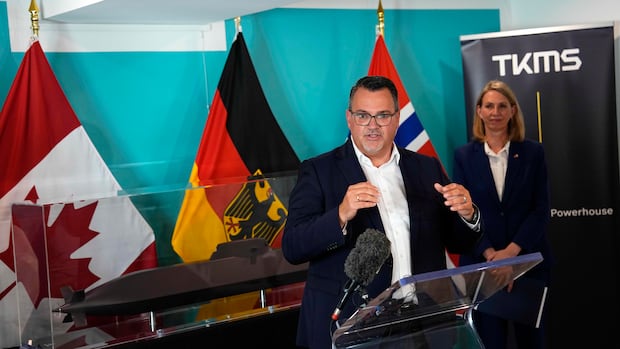
The leader of the German firm set to construct Canada’s new submarines is advocating for greater collaboration among European shipbuilders – a move that might influence developments in Canada as the navy looks at adding corvettes to its fleet.
In an interview with , Oliver Burkhard, CEO of Thyssen Krupp Marine Systems (TKMS), emphasized his company’s recent partnership agreement with Navantia S. A., a Spanish government-owned company.
The two firms are considering working together on naval projects, including the possible manufacturing of TKMS submarine designs at Navantia’s shipyards in Spain.
Burkhard expressed his belief that cooperation among shipbuilders is essential.
Growing Need for Warships
“The pattern which I always observe in this market is [that] everybody in the past had time but no money. Now everybody has money but no time,” Burkhard stated during an interview with , referring to the consistent and rising demand for warship construction.
A recent report from research and strategy firm Imarc estimated that demand increase at more than five percent over the next decade.
WATCH | Irving shipyard building Canada’s River Class destroyers:
Halifax shipyard celebrates keel-laying for Canada’s 1st River-class destroyer
The ceremony at Irving Shipyard marked the official start of construction on what will become HMCS Fraser. The CBC’s Ben Dornan was there for the centuries-old tradition.
Alongside submarines, the Canadian navy has started building its long-awaited River-Class destroyers and indicated there’s a military requirement for smaller, cost-effective ice-capable corvettes.
The destroyers are being constructed by Irving Shipbuilding in Halifax under the National Shipbuilding Program, which is nearing completion of building lightly-armed Arctic and Offshore Patrol Ships.
Since Canada lacks modern submarine-building skills, all 12 planned vessels will be built in Germany.
Burkhard spoke before his trip this week to Ottawa, where he’s meeting with companies partnering with TKMS to support Canada’s submarine program.
Last month, the Carney government selected TKMS as the preferred supplier for the navy’s submarines and aims to finalize a contract by late 2027. Burkhard mentioned that given how quickly things are moving with the government, he expects an agreement may come sooner than anticipated.
He noted he doesn’t foresee any work on Canadian boats being transferred to Navantia.
Prime Minister Mark Carney greets sailors in July at HMC Dockyard in Halifax, following an announcement that TKMS will build the Canadian navy’s new fleet of submarines. (Darren Calabrese/The Canadian Press)
‘It can be built in Canada with our design’
Before selecting TKMS, German officials hinted at how they could potentially provide their MEKO A-100 corvette design to a Canadian yard – aiming to strengthen Canada’s defense industry base.
This idea wasn’t included in the submarine proposal; however, Burkhard confirmed it was considered.
No discussions have taken place with Canadian officials about exporting the MEKO A-100 package yet.
“Export also means that it can be built in Canada with our design,” Burkhard explained. “We don’t want to build them in Germany. We can build them elsewhere together with partners and maybe they are the general contractor. And we are just delivering, let’s say, the material package.”
Although it’s still just a concept right now, Burkhard added: “Let’s say we’re ready if you are. Then we can talk about that.”
The MEKO A-1000, a corvette warship designed by TKMS. Burkhard says even though there’s been no pitch made to Canadian officials about exporting this package for local production; it remains an option worth exploring. (TKMS)
Navy Recognized Need for Corvettes Last Year
The Canadian navy identified its need for corvettes last year and has been evaluating what roles such ships could fill along with necessary capabilities.
<p. Former Vice-Admiral Angus Topshee defended this requirement while still commanding the navy by emphasizing that Canada must protect its vast coastlines stretching over a quarter million kilometers.
University of Calgary defense analyst Rob Huebert said any discussion regarding defense procurement should start from military necessity rather than economic factors. p >
He believes corvettes are crucial for naval needs and appreciates that Burkhard acknowledges countries like Canada must rapidly rearm themselves. p >WATCH | Navy commander discusses defending Canada’s Arctic: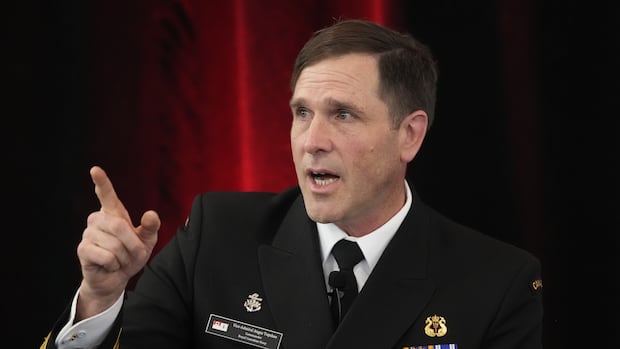
Defending distant unsurveyed Arctic ‘more complicated,’ top naval commander says p >
The navy’s leading officer Vice-Admiral Angus Topshee shared insights into challenges related to Arctic defense during an interview with CBC’s Murray Brewster stating: ‘It’s always difficult and dangerous because it’s remote and not well mapped.’
“I think anything facilitating extra ships’ construction for our navy is beneficial,” Huebert remarked.
“If conflict arises-which I’m quite worried about-we need as many vessels as possible while ensuring replacement capabilities,” he added.”If our government supports this approach I think it’s wise.”
Similar Conditions That Led To Airbus Formation
Huebert also pointed out how beneficial increased cooperation among European shipyards-especially concerning submarines-can be.
He noted some companies like TKMS operate beyond full capacity while others hardly function.
Burkhard likened current shipbuilding market conditions to those seen during the 1960s when low aircraft orders pushed European aerospace firms toward creating Airbus.
At that time their main competition came from U. S. defense contractors like Boeing Lockheed Martin or Mc Donnell Douglas.
WATCH | What Canada gets out of its submarine deal with German company: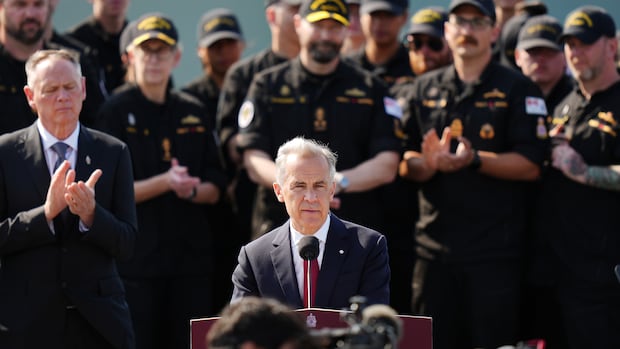
Canada set to receive ‘tens of billions’ investment through sub deal , Carney states
Prime Minister Mark Carney indicates Canada will gain “tens of billions” worth investments from Thyssenkrupp Marine Systems’ contract-this winning bid aimed towards providing new submarines. Carney claimed these investments “will reach every region across our nation.”
While admitting forming a maritime equivalent of Airbus would pose challenges, Burkhard suggested perhaps industry stakeholders could take charge.
“Politicians need re-election so French politicians prioritize their own yards while Spanish ones do likewise,”Burkhard pointed out.“But if industries were willing join forces similar way Airbus did back then…”
Three years ago, a study from Washington-based Center For Strategic & International Studies(CSIS) highlighted necessity behind closer partnerships among European defense firms-noting higher defense spending coincided less collaboration. This issue appeared deeply ingrained within existing structures.
Source link