



As the Group of Seven (G7) meeting approaches next week, Canadian Prime Minister Mark Carney has expressed his hope for a change in a world increasingly influenced by superpowers.
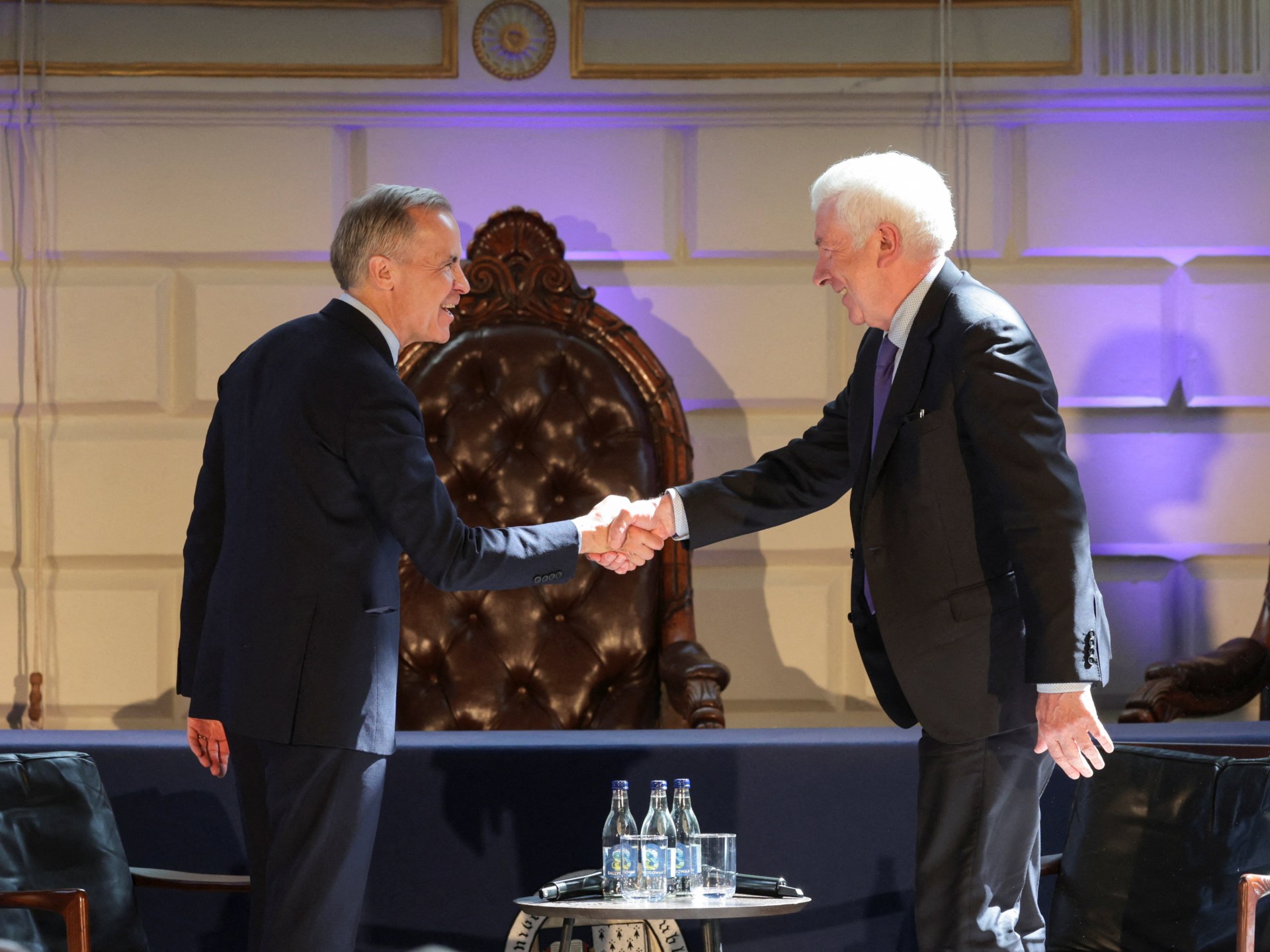
Carney made these comments on Saturday during the launch of the De Chastelain Public Lecture series at Trinity College in Dublin, Ireland, where he was joined by his Irish counterpart, Micheal Martin.
Recommended Stories
list of 3 itemsend of list
Carney believes we are at a pivotal moment and urged leaders from what he calls “middle powers” to come together and harness their collective strength.
“Ireland and Canada are navigating a global rupture, not a quiet transition,” Carney stated.
“The post-Cold War world’s rules-based order is breaking down. Multilateral institutions have weakened. Economic integration, from which we have benefitted is being weaponised. The international trading system, which we’ve relied upon for decades, is under threat.”
While Carney’s statements were broad and did not name specific countries that may be undermining this “rules-based” global order, they come at a time when tensions are high between Canada and its neighbor to the south, the United States.
A longtime ally, the US has increasingly pressured Canada to give up some of its autonomy since President Donald Trump began his second term in Washington, DC.
Trump has suggested that Canada should become the US’s “51st state” – a message he reiterated recently with a social media post on June 1 – using tariffs as leverage to align Canada’s priorities with those of the US regarding trade and immigration.
Both Carney and Trump are slated to participate in the upcoming G7 summit in Evian-les-Bains, France from June 15 to 17.
The call for more collaboration among “middle powers” has resonated particularly well with certain members of the G7, especially within the European Union as it looks to reduce its reliance on the US amid rising tensions.
In his speech on Saturday, Carney specifically reached out to his European counterparts. He stressed unity as an essential response to some superpowers’ isolationist attitudes.
“Canada, Ireland, and Europe are increasingly and more immediately vulnerable to once-distant threats. And I suggest that amidst this change – amidst this disruption – Canada, Ireland, and Europe can be pivotal, powerful and purposeful: a force for good,” Carney noted.
The themes he presented were similar to those from an earlier address at the World Economic Forum in Davos earlier this year when he introduced his concept of “middle powers.”
This earlier speech sparked discussions by questioning how resilient current global alliances really are. It highlighted breaches of international law and pointed out how global economic integration can be used as a tool against smaller nations.
Carney proposed then that moving forward requires creating “a new order” among these “intermediate powers,” capable of matching any single nation’s influence when united.
This previous speech drew criticism from Trump who took aim at Carney during his own remarks at Davos for what he considered disrespectful comments.
“Canada gets a lot of freebies from us, by the way. They should be grateful also, but they’re not,” Trump remarked during his address.