



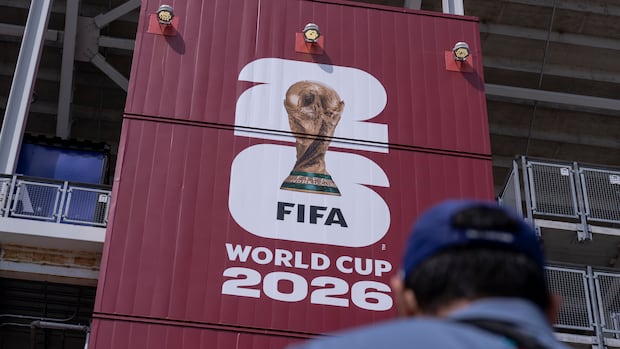
The city of Toronto is standing by its decision to sell World Cup tickets for profit, with the mayor’s office stating that this approach helps “avoid” using property tax dollars on a tournament that has already exceeded its initial budget and starts Friday.
Shirven Rezvany, a spokesperson for Mayor Olivia Chow’s office, confirmed Monday that the city was selling its allocation of World Cup tickets, explaining it was “one of several avenues pursued by the City to avoid spending property tax dollars.”
“All host cities were provided this opportunity by FIFA in order to offset costs. Our understanding is that many, if not all, of them did [that],” he said in a written statement.
FIFA manages ticket sales for the games and allows host cities to purchase a share of ticket packages before they go on sale to private sellers.
In an email update Tuesday, Stephen Conforti, Toronto’s chief financial officer, mentioned that the city has sold over 450 of its approximately 3,500 World Cup packages, which will help “ensure a return on the City of Toronto’s investment.”
The city decided last year to buy these packages, with Toronto’s FIFA World Cup subcommittee recommending an almost $11 million investment in match tickets as a “key revenue generation strategy,” according to a letter from the committee last March. The packages include game tickets along with access to hospitality suites and other amenities at Toronto Stadium.
This decision faced criticism from some councillors who viewed it as scalping. Others thought it presented a significant revenue opportunity.
WATCH | Why Toronto is buying up FIFA tickets:
Toronto wants to spend almost $11M on luxury box seats for the FIFA World Cup
A seat at the FIFA World Cup is one of the most sought-after tickets in sports. As CBC’s Lane Harrison reports, Toronto aims to take advantage of that demand by investing $10.7 million in ticket packages.
City councillor and mayoral candidate Brad Bradford criticized Chow for this decision in a video posted on X, formerly Twitter.
He accused Chow of “scalping” tickets and claimed that Toronto was the only city reselling its FIFA packages for profit.
The City of Vancouver – another Canadian city hosting World Cup matches – confirmed via email to that it too was selling its share of purchased tickets at a profit.
“The great majority of the tickets held by the City are being sold via the FWC26 Sponsorship Program, in order to raise net revenues to offset the cost of event hosting,” Vancouver’s World Cup host committee stated in an emailed response.
The committee reported purchasing about 7,400 World Cup tickets but didn’t specify how many had been sold.
When asked about Bradford’s assertion that Toronto is unique in reselling its tickets – which contradicts what Vancouver told – Isha Chaudhuri, his spokesperson, replied that such practices are “wrong anywhere.”
A report from 2025 by Toronto’s auditor general highlighted that initial projections for FIFA costs were between $30-45 million. By 2022, this figure soared over $280 million. The current estimated cost stands at $380 million according to their findings.
Source link