



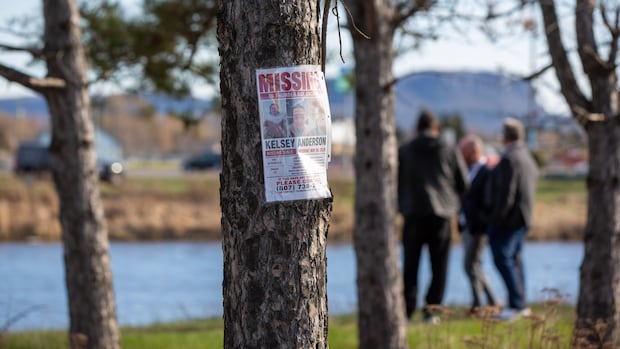
WARNING: This story contains references to missing and murdered Indigenous people. Resources can be found at the bottom of this story.
A man, 33 years old, from Thunder Bay, Ont., has been charged with manslaughter related to the death of 36-year-old Kelsey Anderson, who went missing in the northwestern Ontario city last month.
The Thunder Bay Police Service (TBPS) announced that this charge stems from a significant investigation by their major crime unit, which led to finding a deceased person identified as Anderson.
On Saturday, officers arrested a suspect linked to Anderson’s death, as stated in a news release from the TBPS on Sunday.
The 33-year-old suspect is currently in custody after making his first court appearance.
Kelsey Anderson was raised in Kasabonika Lake First Nation and belonged to Webequie First Nation, an isolated Ojibway community located about 550 kilometers north of Thunder Bay. He also had connections to Nibinamik First Nation.
Kelsey Anderson grew up in Kasabonika Lake First Nation and was a member of Webequie First Nation, a remote Ojibway community about 550 kilometres north of Thunder Bay. He also had ties to Nibinamik First Nation. (Thunder Bay Police Service)
On May 25, the TBPS reported that Anderson was “no longer the subject of a missing persons investigation. This is now a private family matter.”
The last confirmed sighting of Anderson alive was on May 9 at the Thunder Centre shopping area. His family shared with media that it wasn’t typical for him not to stay in touch, which raised their concerns about his safety.
Family members mentioned that he was in Thunder Bay for training purposes and celebrated his 36th birthday shortly after being reported missing.
People from several nearby First Nations in northwestern Ontario and Manitoba traveled to Thunder Bay to assist in locating Anderson. Community searchers received help from Guardian Migizi Security, an Indigenous-led group supporting First Nations during emergencies.
During the search for Anderson, one volunteer discovered the remains of Richard Graham, who had been reported missing in Thunder Bay during summer 2024 at age 42.
On May 28, police confirmed that Graham had been found deceased.
5 Missing People Found Dead This Spring
This spring saw five individuals declared dead after being reported missing in Thunder Bay: Daniela Nekuliak, Ashlynn Bottle, Nodin Skunk, Richard Graham and Kelsey Anderson.
Of these cases, three victims were connected to Nishnawbe Aski Nation (NAN) communities; this raised concerns among First Nation leaders regarding how missing persons cases are managed within the city.
LISTEN | Jeff Saunders: Missing Person Searches:
Superior Morning12:52Jeff Saunders: Missing Person Searches
Detective Constable Jeff Saunders serves as coordinator for missing persons with the Thunder Bay Police Service. He joined us for questions regarding search protocols.
In a recent chat with , , Det. Const. Jeff Saunders remarked that his service deals with around 800 missing persons cases each year.
When asked about Fiddler’s comments, Saunders responded by saying “discussions are always good , and working for betterment towards situations like these is great.”
Saunders explained that while they need to follow their own policies during searches for those who are missing,“we do provide information to search groups.”
“We haven’t had much interaction with search teams until recently,” he noted.
The aims to set up another interview with Chief Darcy Fleury of Thunder Bay police regarding how they plan on collaborating with leaders from First Nations concerning their worries.
Support is available for anyone affected by issues surrounding missing or murdered Indigenous people. Emotional assistance and crisis support can be accessed around-the-clock via a national hotline at1-844-413-6649.
Source link