




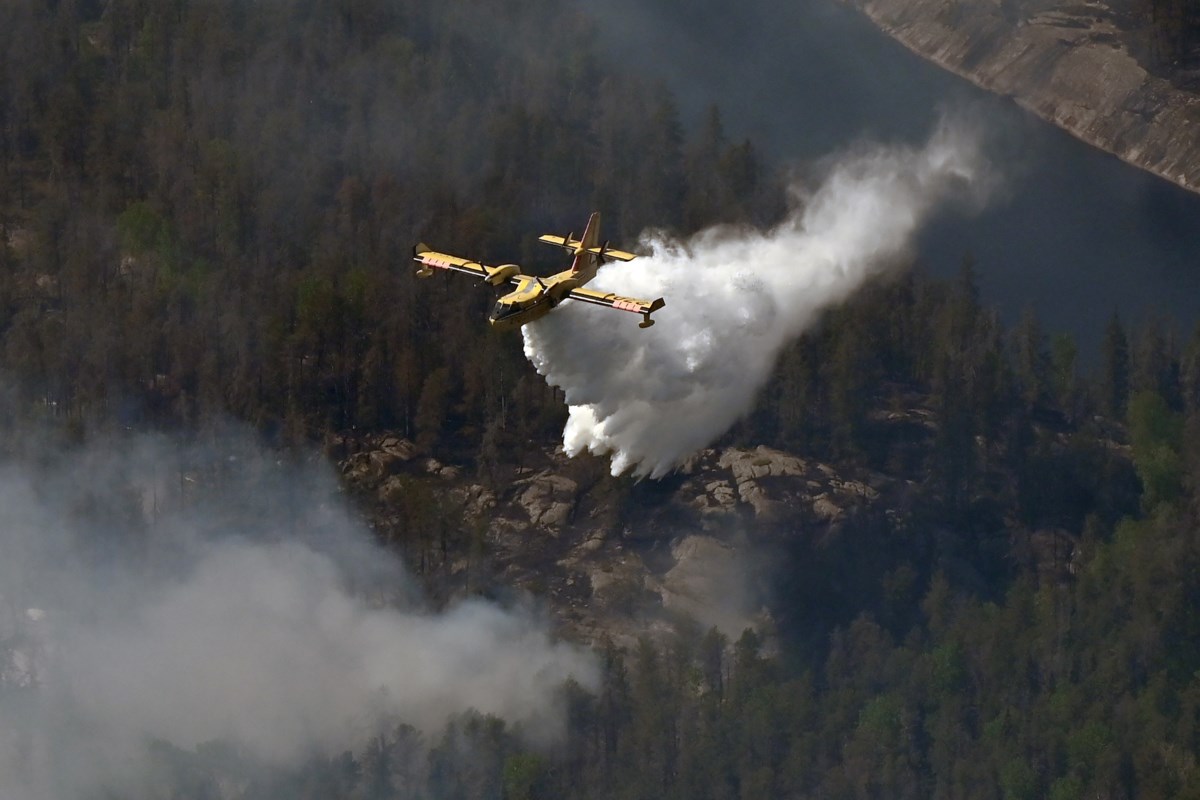
Wildfire activity in Northwestern Ontario is currently much lower than 2025 levels, with a reduction in both the number of fires and the area burned.
THUNDER BAY – This year, wildfire activity in Northwestern Ontario is significantly down compared to last year, even though over 60 fires have been reported across the province this season.
As per Ontario’s Aviation, Forest Fire and Emergency Services (AFFES), there have been 62 wildland fires documented in Ontario this year, with 41 of those occurring in the Northwest Fire Region.
At this stage of the season, it’s confirmed that a total of 280.6 hectares have burned across Ontario. In Northwestern Ontario alone, there were 249.5 hectares burned, which is a decrease of 64.5 percent from the same time last year.
These numbers are a stark contrast to 2025 when Ontario had recorded 99 fires that destroyed 38,734.4 hectares by this date. Notably, Northwestern Ontario was responsible for over 99 percent of those hectares burned at an astounding 38,617.2 hectares across 73 fires within the region.
The ten-year average for this point in fire season stands at about 93 wildland fires and roughly 11,847.9 hectares burned.
While fire incidents are relatively low this spring, several outbreaks in the Northwest led to evacuations and emergency measures earlier this month.
One fire named Dryden 11 was first reported on May 15 and expanded to about 168 hectares before being reassessed to cover approximately 150.3 hectares. It was declared under control on May 21 but remains active.
Another incident known as Fort Frances 4 caused evacuations in Mine Centre, which lies between Atikokan and Fort Frances. This fire was later declared extinguished after burning around 12.6 hectares.
This particular fire along with two others in the Rainy River district resulted in property damage and sadly led to two pets being lost.
The Ontario Provincial Police assisted with evacuation efforts around Sandbar Lake and Sandbar Provincial Park during the Dryden 11 incident; however, officials from the Ministry of Natural Resources noted that no formal evacuation orders were given.
AFFES classifies wildland fires into two main types: those caused by lightning and those triggered by human actions.
Human-related causes can include unattended campfires, fireworks igniting dry grass or sparks from train tracks; hot ATV engines may also ignite flammable materials or trees could fall onto power lines causing issues.
Investigations into fire causes are carried out by specially trained personnel from the Ministry of Natural Resources and can involve help from MNR enforcement staff or even the Ontario Provincial Police if necessary.
Despite some recent wildfire events, there are currently no provincial restrictions on outdoor burning in Northwestern Ontario.
The ministry reminds residents that they’re responsible for any flames they start themselves while encouraging campers and outdoor lovers to adhere to Ontario’s outdoor burning guidelines and check local fire risks before venturing outdoors.
Officials say it’s too soon to tell how severe this year’s wildfire season might turn out to be.
AFFES mentioned it remains uncertain how intense wildfire activity could get throughout this season as long-range forecasts are tricky; they emphasize that such activity can fluctuate quickly based on weather patterns and available dry fuel on landscapes. The agency added that conditions can vary greatly from one year to another as well.