



Alberta is on the verge of deciding if it wants to remain part of Canada or pursue independence.
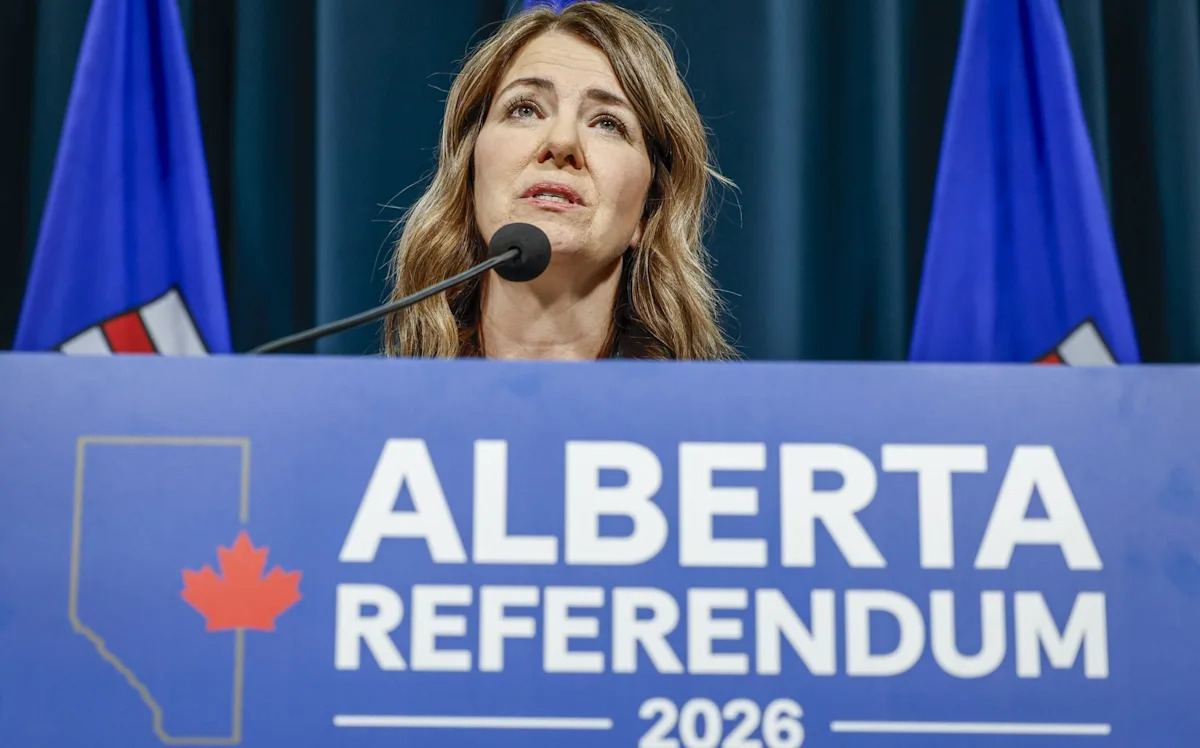
The provincial premier, Danielle Smith, recently revealed that Alberta will hold a referendum to shape its future in Canada. The question posed will be: “Should Alberta remain a province of Canada or should the government of Alberta commence the legal process required under the Canadian constitution to hold a binding provincial referendum on whether or not Alberta should separate from Canada?”
I’ve known Smith for nearly 30 years. She’s sharp and skilled, having been a policy expert, political commentator, and talk radio host with conservative and libertarian views. Her stance on this referendum isn’t in favor of separatism. “I have been clear with Albertans from the start that I am in support of remaining in Canada,” she told reporters in Calgary. “That has and will continue to be the position of my government and my caucus.”
Still, the Alberta premier understands this conversation about separation, no matter how tough it may be, needs closure. The desire for separation in Alberta and other western provinces stems from feelings of favoritism by the federal government towards eastern provinces like Ontario and Quebec. The people of Alberta, Smith said to the media, “want to settle it once and for all.”
Alberta plays a vital role in Canada’s political landscape. It has traditionally leaned right and promotes small government, low taxes, free markets, private business, and more. It’s also rich in oil resources, possessing “the fourth-largest proven oil reserves in the world after Venezuela, Saudi Arabia and Iran,” according to reports from the Alberta Energy Regulator and Oil & Gas Journal.
If Alberta were ever to become an independent nation, it would send shockwaves across Canada. The economic consequences could be dire. There might also be global effects since Canada wouldn’t appear as financially appealing for foreign investments.
Some readers might find it surprising that Canada is facing separatist sentiments. It’s often seen as an incredibly polite, friendly country-traits that are indeed genuine-but underneath lies a significant identity crisis.
Canada has faced various separatist movements over time. Quebec held two major referendums on separation in 1980 and 1995 due to ongoing disputes over language laws and French Canadian identity discussions. The second referendum was particularly close; out of 4,757,509 total votes cast, the “No” side wanting to stay part of Canada only won by 50.58 percent against 49.42 percent-by fewer than 55 thousand votes.
It seems unlikely that Alberta’s referendum will pass successfully this time around. Historically speaking, those supporting remaining within Canada-led by Smith among others-will likely have higher voter turnout compared to separatist supporters. Still, considering how independence talks are unfolding in Alberta isn’t as crazy as one might think.
Don’t expect too much chaos or shouting coming out of Alberta though; only here could you see a separatist movement alongside its federalist opposition discussing national identity so civilly.
Michael Taube was a speech-writer for former Canadian prime minister Stephen Harper
Source link