



When Wendy Mc Hardy settled into her home in a new neighborhood in northeast London, Ont., last summer, the green area just beyond her back fence was a major attraction.
Mc Hardy lives off Highbury Avenue, just north of Fanshawe Park Road East.
A big reason she chose this house was the spacious field behind her property, which is owned and maintained as community green space by the nearby North Park Community Church. This area includes a gravel path that circles around a pond, basketball courts, and a picnic spot.
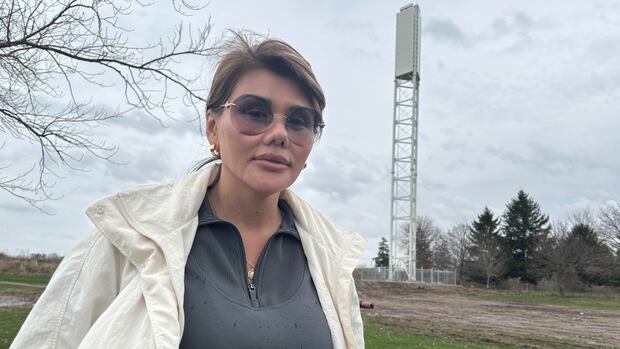
Two weeks ago, Mc Hardy was shocked to see workers installing a 40-metre-tall cellphone tower roughly 160 metres from her home. What frustrates Mc Hardy most is that she and her neighbors were not informed about the tower’s installation in the months leading up to it.
“I’m really upset at the fact that nobody gave us further notification,” said Hardy. “There’s other places in this area where this tower can sit and be safer for everybody.”
She’s worried about how it will affect her property value and dislikes having a tower visible from her back window. Most importantly, she’s concerned about possible health risks from the electromagnetic radiation emitted by cellphone towers.
Cellphone towers must comply with Safety Code 6, which sets radio-frequency exposure guidelines for humans established by Health Canada.
While some people have raised concerns about safety near cellphone towers, Health Canada maintains that no harmful health effects have been proven below these code limits.
The federal government requires companies looking to build new cellphone towers to consult with local municipalities through Innovation, Science, and Economic Development Canada (ISED). However, ISED does not directly evaluate tower applications nor do municipalities have authority to reject them.
London has guidelines that outline how tower applicants should engage with residents.
![]() In its report submitted to the city justifying the tower location, Rogers said the trees provide cover allowing the tower ‘to remain as unobtrusive as possible at street level.’ (Andrew Lupton/)
Bell has an existing cell tower across Fanshawe Park Road on another church’s land. Sometimes companies can share space on existing towers; however, Rogers indicated that wasn’t feasible since Bell’s nearby structure is already fully equipped with their gear.
The other potential sites suggested for this new tower were either too far from coverage targets or already served by other existing towers according to their report. They also mentioned how tree cover at church property helps hide it from view along the road.
Notices explaining Rogers’ plans for this new construction were sent out to homes within a 120-metre radius of where it would stand. The consultation rules state notifications should reach three times the height of any proposed tower.
Some residences on Sandridge Avenue received information packets regarding this project back in 2019 alongside an open house held at Beacock Library concerning proposals around then.
City documents show that Rogers received confirmation via letter in January of 2021 affirming they had met all requirements necessary per city processes before building work began on-site.
The approval granted by officials lasts three years unless extended; hence they got another three-year extension approved last November primarily due because nothing significantly changed since first presented plan.
In its report submitted to the city justifying the tower location, Rogers said the trees provide cover allowing the tower ‘to remain as unobtrusive as possible at street level.’ (Andrew Lupton/)
Bell has an existing cell tower across Fanshawe Park Road on another church’s land. Sometimes companies can share space on existing towers; however, Rogers indicated that wasn’t feasible since Bell’s nearby structure is already fully equipped with their gear.
The other potential sites suggested for this new tower were either too far from coverage targets or already served by other existing towers according to their report. They also mentioned how tree cover at church property helps hide it from view along the road.
Notices explaining Rogers’ plans for this new construction were sent out to homes within a 120-metre radius of where it would stand. The consultation rules state notifications should reach three times the height of any proposed tower.
Some residences on Sandridge Avenue received information packets regarding this project back in 2019 alongside an open house held at Beacock Library concerning proposals around then.
City documents show that Rogers received confirmation via letter in January of 2021 affirming they had met all requirements necessary per city processes before building work began on-site.
The approval granted by officials lasts three years unless extended; hence they got another three-year extension approved last November primarily due because nothing significantly changed since first presented plan.
![]() North Park Community Church entered into a lease agreement with Rogers in 2018 granting permission needed build cell phone infrastructure located eastward towards Fanshawe Park Road East end churchyard – construction didn’t start until two weeks ago (Andrew Lupton/)
spoke representatives from congregational leadership regarding terms surrounding contract arrangements though chose not disclose any specifics pertaining financial compensation agreed upon throughout duration contract terms.
The church agreed upon signing fifteen-year lease during earlier discussions made early stages before commencing renovations enhancing green spaces adjacent building grounds later intending utilize proceeds generated against these costs incurred developing properties over time passed forward afterwards works began few days prior arriving here now.”“
North Park Community Church entered into a lease agreement with Rogers in 2018 granting permission needed build cell phone infrastructure located eastward towards Fanshawe Park Road East end churchyard – construction didn’t start until two weeks ago (Andrew Lupton/)
spoke representatives from congregational leadership regarding terms surrounding contract arrangements though chose not disclose any specifics pertaining financial compensation agreed upon throughout duration contract terms.
The church agreed upon signing fifteen-year lease during earlier discussions made early stages before commencing renovations enhancing green spaces adjacent building grounds later intending utilize proceeds generated against these costs incurred developing properties over time passed forward afterwards works began few days prior arriving here now.”“
Source link
The process began back in 2018
As it turns out, Rogers did follow the city’s consultation guidelines starting back in 2018. This year marked when Rogers signed an agreement with the church for a 30 by 30-metre area to place a tower on the east side of their property. The chosen location is just north of Siloam Cemetery and close to where there’s a gravel operation next door. The city’s public consultation policy for communications tower applications encourages placing towers “in areas away from residential neighborhoods where possible.” In its justification report submitted to the city, Rogers explained that this site was selected as it best met their coverage goals for the area.The lease with The Church
“There’d certainly less incentive enter similar contracts today,” expressed Patrick Hoefnagels chairman board elders overseeing community engagement efforts current developments taking place.”
Your own thoughts lingered around frustrations tied delays experienced while waiting get approval processing timeframe lasting years long finally reached fruition journey ends ultimately finding itself built instead merely being talked rather than action taken sooner.”
“I honestly feel unclear options exist available moving forward presently,” added hopeful note wondering if greater awareness brought amongst local residents could help better inform everyone involved future endeavors reflect growth patterns seen London more broadly speaking.”
Source link