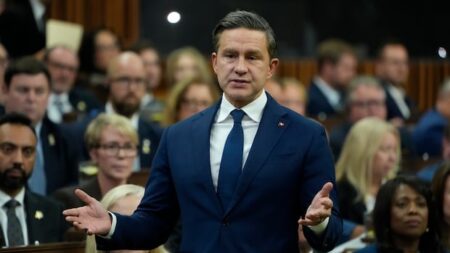



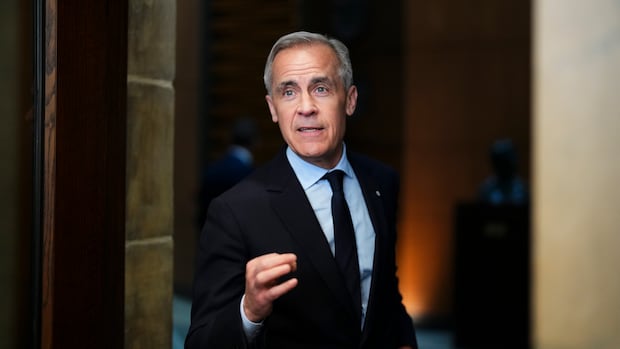
The prime minister stated that a public apology is necessary for a surveillance operation aimed at hundreds of Indigenous people that was backed by the federal government.
“Yes, there should be an apology,” Mark Carney said during a news conference in Halifax on Thursday. “It’s a reprehensible practice. Never should’ve happened.”
Carney was reacting to reports from CBC Indigenous, which uncovered significant RCMP surveillance activities dating back to the late 1960s targeting Indigenous leaders and groups.
The RCMP referred to its initiative as the “Native extremism program.”
CBC Indigenous obtained nearly 6,000 newly declassified documents showing that the Mounties infiltrated legitimate political Indigenous organizations involved in lawful and democratic advocacy, attempting to disrupt their efforts.
WATCH | Carney on an RCMP apology: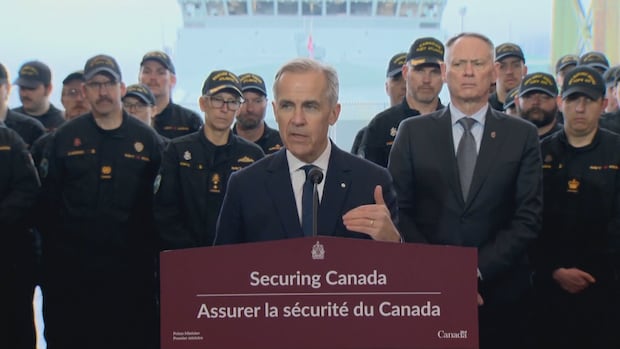 Carney says RCMP’s ‘reprehensible practice’ of spying on Indigenous groups ‘never should have happened’
On Thursday, Prime Minister Mark Carney was asked whether RCMP Commissioner Mike Deheme should formally apologize for the extensive program of surveillance, disruption, and infiltration of Indigenous organizations between 1968 and 1982, as reported by CBC Indigenous.
The documents confirm for the first time that the Liberal government in the mid-’70s approved wiretaps by the RCMP to monitor phone calls of the National Indian Brotherhood, now known as the Assembly of First Nations (AFN), in Ottawa.
AFN National Chief Cindy Woodhouse Nepinak argues that a public apology is deserved not only from the RCMP but also from both the federal public safety minister and the prime minister.
She’s also calling for an investigation as part of a national inquiry into systemic racism within policing.
“We are not the enemy within,” Woodhouse Nepinak said. “We are First Nations and we are the first partners in this land called Canada.”
Carney says RCMP’s ‘reprehensible practice’ of spying on Indigenous groups ‘never should have happened’
On Thursday, Prime Minister Mark Carney was asked whether RCMP Commissioner Mike Deheme should formally apologize for the extensive program of surveillance, disruption, and infiltration of Indigenous organizations between 1968 and 1982, as reported by CBC Indigenous.
The documents confirm for the first time that the Liberal government in the mid-’70s approved wiretaps by the RCMP to monitor phone calls of the National Indian Brotherhood, now known as the Assembly of First Nations (AFN), in Ottawa.
AFN National Chief Cindy Woodhouse Nepinak argues that a public apology is deserved not only from the RCMP but also from both the federal public safety minister and the prime minister.
She’s also calling for an investigation as part of a national inquiry into systemic racism within policing.
“We are not the enemy within,” Woodhouse Nepinak said. “We are First Nations and we are the first partners in this land called Canada.”
Source link
Carney says RCMP’s ‘reprehensible practice’ of spying on Indigenous groups ‘never should have happened’
On Thursday, Prime Minister Mark Carney was asked whether RCMP Commissioner Mike Deheme should formally apologize for the extensive program of surveillance, disruption, and infiltration of Indigenous organizations between 1968 and 1982, as reported by CBC Indigenous.
The documents confirm for the first time that the Liberal government in the mid-’70s approved wiretaps by the RCMP to monitor phone calls of the National Indian Brotherhood, now known as the Assembly of First Nations (AFN), in Ottawa.
AFN National Chief Cindy Woodhouse Nepinak argues that a public apology is deserved not only from the RCMP but also from both the federal public safety minister and the prime minister.
She’s also calling for an investigation as part of a national inquiry into systemic racism within policing.
“We are not the enemy within,” Woodhouse Nepinak said. “We are First Nations and we are the first partners in this land called Canada.”
Mounties promise to engage with Indigenous leaders
RCMP Commissioner Mike Duheme released a statement expressing regret a day after CBC Indigenous’s investigation surfaced and committed to meeting with Indigenous leaders and elders. “I express sincere regret, and while we cannot change the past, we can and must acknowledge that these actions and their impact continue to be felt today,” Duheme wrote in a statement on Wednesday. Carney was specifically asked if he believed it was necessary for the RCMP commissioner to give a public apology. “I didn’t see the full comment that he made,” Carney said. “I believe that was the intent of what he said.” Duheme’s statement follows demands from Indigenous leaders and Public Safety Minister Gary Anandasangaree for redress for those surveilled among indigenous communities.”Although it was 50 years ago, it still troubles me that this happened in our history and we have to address it in a very meaningful way,” Anandasangaree said on Wednesday.</pp The lengthy CBC Indigenous investigation revealed how RDCP Security Service conducted covert surveillance using informants while engaging in counter-subversion against First Nations, Inuit, and Métis rights movements.The RCMP Security Service functioned as Canada’s domestic intelligence agency until 1984 when it was replaced by Canadian Security Intelligence Service (CSIS).</pp The surveillance program concerning Indigenous peoples saw reductions in focus around foreign influence starting in 1978; however CSIS resumed similar activities again beginning in 1988. </pp Natan Obed, president of Inuit Tapiriit Kanatami-the national representational organization for Inuit-shared with his intention to discuss accountability with both Carney and Duheme regarding those targeted by these spy operations.”It’s important to know this and it’s important to understand our history and ensure we learn from it so we never repeat it,” Obed said.”We need structural changes regarding how we respect one another across this country.”Source link