




The top trade negotiator for the Trump administration dismissed Canada’s claim that last-minute demands from the U. S. derailed a deal at the last moment last week, stating that concerns from Canada regarding the deal’s “implementation” caused Ottawa to back out.
In an interview with on Wednesday, Greer mentioned that the Canadian side had new requests when Canada-U. S. Trade Minister Dominic Le Blanc returned from Ottawa after a tentative agreement was reached on Aug. 18.
“We had agreed to, as I’ve shared before in the press, really the best deal available to any country on the planet with respect to Canada,” Greer told chief political correspondent Rosemary Barton in his first one-on-one interview with a Canadian news outlet since tensions rose.
“When [he] came back, they had some additional views. They had some additional requests. They had some additional things that were too much, too much for the United States.”
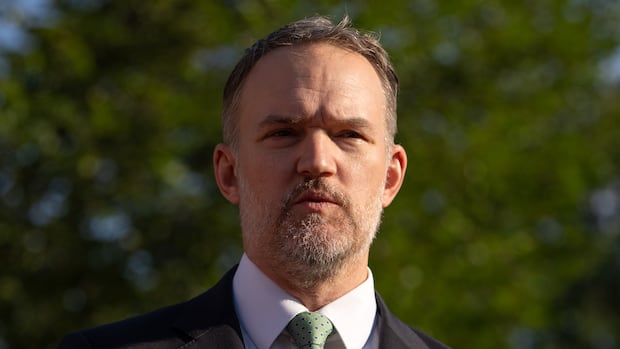
U. S. Trade Representative Jamieson Greer is seen in an interview with from the White House on Wednesday. (Jonathan Austin/CBC)
Greer, who oversees delivering Trump’s tariff policies, also rejected Prime Minister Mark Carney’s opinion that the terms would have affected Canada’s ability to form trade agreements with other nations, endangered key industries and compromised French language protections.
He confirmed that he and Le Blanc “don’t have open channels” of communication as of Wednesday.
This interview comes after recent developments escalated tensions between Canada and the United States.
The United States followed through on its threat to impose new tariffs on billions of dollars’ worth of Canadian goods on Saturday after negotiations fell apart at a critical point. Canada plans to retaliate dollar-for-dollar after Labour Day and is introducing $7.5 billion in support for local workers and businesses.
Greer, right, and Canada-U. S. Trade Minister Dominic Le Blanc speak outside Greer’s office in Washington on Aug. 19, the day after Trump administration temporarily delayed tariffs on Canada. (Kelly Geraldine Malone/The Canadian Press)
The newly announced measures and escalating political rhetoric from both sides mark a stark contrast to last week’s more conciliatory tone when it seemed like both countries were close to reaching an agreement following months of tension.
Greer’s interview happened just one week after he and his Canadian counterpart stood together outside his office assuring everyone they just needed to cross T’s and dot I’s before finalizing their agreement. That evening, U. S. President Donald Trump extended tariffs so negotiators could continue discussions for three more days.
However, by Friday, those talks collapsed completely. Carney stated his government walked away because the U. S team attempted last-minute changes that were “unfair, uneconomic and called into question the reliability of any deal.”
On Wednesday, Greer maintained that the United States did not want control over Canadian deals.
“I think that characterization goes far beyond anything we’ve discussed for a year and a half. We’ve had Canadian officials at federal provincial levels coming to America and saying we want to create Fortress North America,” he said, referencing an idea proposed by Ontario Premier Doug Ford aimed at enhancing cooperation amid threats posed by China’s economy.
“We did not we didn’t have any text like that.”
When asked about last-minute demands during an interview with CNN this week, Trump replied: “That sounds like me.” p >
Greer stated Wednesday that the president didn’t interfere in negotiations and described Trump’s comment as “off-the-cuff.” p >WATCH | Where do negotiations go from here?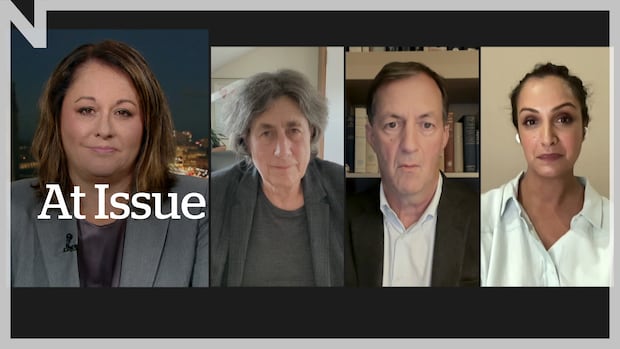
At Issue | Carney’s decision to abandon trade talks p >At Issue special edition: Canada-U. S. trade talks collapse and President Donald Trump threatens even more tariffs. Was it wise for Prime Minister Mark Carney’s government to walk away? Is there still hope for a deal?
On Saturday, Carney emphasized he’d prefer facing consequences from a painful protracted trade war rather than accept what was proposed by the United States.
He mentioned instead focusing efforts on building trade relationships with global allies while strengthening Canada’s economy at home, moving away from dependency on United States toward forming new international alliances.
“Some of biggest payoffs of this plan will take time,” said prime minister.
The White House remarked that Canada turned down what was touted as best offer made available among any trading partner – which included reductions in current tariffs applied towards steel , aluminum , lumber , and vehicles manufactured within Canada.
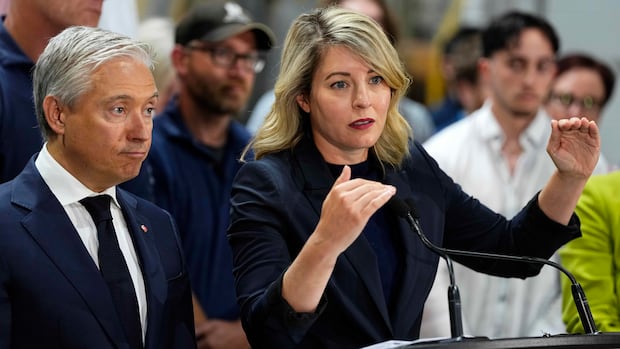
Canada hits back at U. S. with $28B worth retaliatory tariffs p >
Later online, the president showed openness towards maintaining current course despite breakdown occurring – threatening another increase related tariff hikes set further down line into year 2027.
Greer aged 46 serves as attorney specializing international commerce having previously held position serving under Trump during first term as chief aide guiding former U. S. trade representative Robert Lighthizer overseeing original conflict launched against China plus coordinating efforts towards concluding arrangements surrounding CUSMA – which stands representing recently finalized North American framework covering agreements between all three countries involved. p>
Source link