


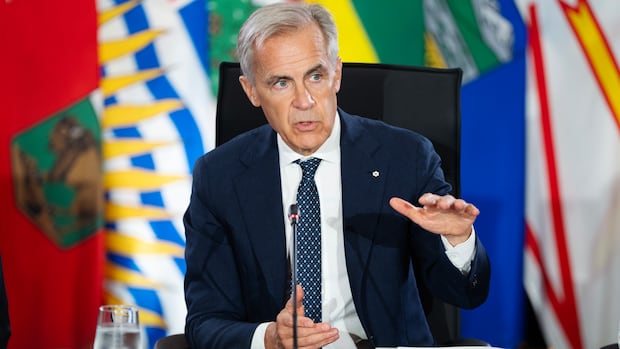
Prime Minister Mark Carney stated his government “will do whatever it takes” to protect Canada’s interests as time runs out to respond to U. S. President Donald Trump’s latest tariff threat.
Carney made these remarks before heading into closed meetings with the country’s 13 premiers, many of whom are eager to learn about potential retaliatory actions after the U. S. administration revealed plans for 50 per cent tariffs on billions of dollars’ worth of Canadian imports starting Aug. 19.
“Let me be clear: Canada will do whatever it takes to defend and support Canadian workers, farmers, businesses and families,” Carney said in his initial public comments before the doors were shut.
The provincial and territorial leaders gathered in Prince Edward Island for their annual summer meetings, but their agenda shifted dramatically when the White House announced its new tariffs, citing what it describes as Canadian discrimination against American motor vehicles, dairy, and alcohol.
WATCH | Carney responds to U. S. tariffs: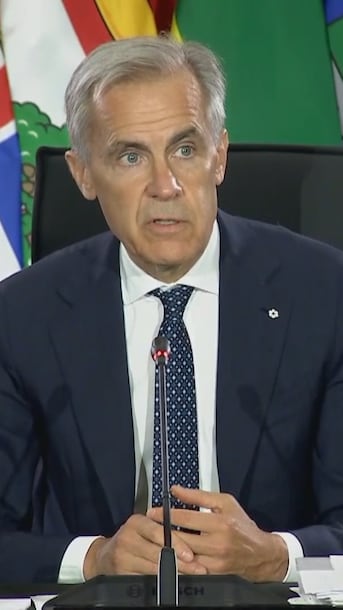 ‘Whatever it takes’: Carney on Canada’s response to U. S. tariffs
Prime Minister Mark Carney indicated that Canada isn’t ruling out any options while addressing the U. S.’s upcoming 50 per cent tariffs on goods covered by a North American trade deal. He made these comments during the First Minister’s Meeting in Charlottetown, where Canada’s premiers are coming together to discuss how they might react to U. S. President Donald Trump’s threats.
Premiers are looking for more information about Canada’s strategy for the next few weeks. Both Canada-U. S. Trade Minister Dominic Le Blanc and Janice Charette, chief trade negotiator with the U. S., have key roles at the table.
“I hope we go aggressive and try to make real progress,” said P. E. I. Premier Rob Lantz as he approached the meeting.
Ontario’s Doug Ford has been openly pushing for a tough approach, even suggesting using Canada’s energy supply amid these new tariffs.
“It’s very hard to deal with President Trump when he changes his mind every single day,” Ford remarked on the last day of discussions.
“One day, the prime minister is with him side by side, and then suddenly President Trump turns on him like a rabid dog.”
Manitoba Premier Wab Kinew mentioned he wants more clarity during his in-person meeting with Carney regarding what steps the federal government may take if discussions go poorly before that deadline.
“Trump’s tariffs are dumb and they make life more difficult for Americans,” he commented.
‘Whatever it takes’: Carney on Canada’s response to U. S. tariffs
Prime Minister Mark Carney indicated that Canada isn’t ruling out any options while addressing the U. S.’s upcoming 50 per cent tariffs on goods covered by a North American trade deal. He made these comments during the First Minister’s Meeting in Charlottetown, where Canada’s premiers are coming together to discuss how they might react to U. S. President Donald Trump’s threats.
Premiers are looking for more information about Canada’s strategy for the next few weeks. Both Canada-U. S. Trade Minister Dominic Le Blanc and Janice Charette, chief trade negotiator with the U. S., have key roles at the table.
“I hope we go aggressive and try to make real progress,” said P. E. I. Premier Rob Lantz as he approached the meeting.
Ontario’s Doug Ford has been openly pushing for a tough approach, even suggesting using Canada’s energy supply amid these new tariffs.
“It’s very hard to deal with President Trump when he changes his mind every single day,” Ford remarked on the last day of discussions.
“One day, the prime minister is with him side by side, and then suddenly President Trump turns on him like a rabid dog.”
Manitoba Premier Wab Kinew mentioned he wants more clarity during his in-person meeting with Carney regarding what steps the federal government may take if discussions go poorly before that deadline.
“Trump’s tariffs are dumb and they make life more difficult for Americans,” he commented.
![]() Alberta Premier Danielle Smith crosses her fingers while speaking with Canada-U. S. Trade Minister Dominic Le Blanc, centre, and New Brunswick Premier Susan Holt prior to meeting with Prime Minister Mark Carney in Charlottetown on Thursday July 23, 2026. (Darren Calabrese/The Canadian Press)
British Columbia Premier David Eby noted that his province stands ready if needed, hinting that access to Canada’s minerals and metals could be used as leverage against the U. S.
“If the prime minister calls British Columbia asking for support with some big sticks at negotiations, then we will be there,” he said during a news conference alongside other premiers on Wednesday.
Alberta Premier Danielle Smith expressed her opposition towards retaliatory tariffs especially concerning oil.
Alberta Premier Danielle Smith crosses her fingers while speaking with Canada-U. S. Trade Minister Dominic Le Blanc, centre, and New Brunswick Premier Susan Holt prior to meeting with Prime Minister Mark Carney in Charlottetown on Thursday July 23, 2026. (Darren Calabrese/The Canadian Press)
British Columbia Premier David Eby noted that his province stands ready if needed, hinting that access to Canada’s minerals and metals could be used as leverage against the U. S.
“If the prime minister calls British Columbia asking for support with some big sticks at negotiations, then we will be there,” he said during a news conference alongside other premiers on Wednesday.
Alberta Premier Danielle Smith expressed her opposition towards retaliatory tariffs especially concerning oil.
Praising collaboration ahead of Thursday’s first ministers’ meeting she expressed hopes that outstanding tariffs-those affecting auto parts, steel, aluminum and softwood industries-could also be addressed soon.
“I think this is a window – this month or 28 days -to sharpen our focus,” she explained.
Source link
‘Whatever it takes’: Carney on Canada’s response to U. S. tariffs
Prime Minister Mark Carney indicated that Canada isn’t ruling out any options while addressing the U. S.’s upcoming 50 per cent tariffs on goods covered by a North American trade deal. He made these comments during the First Minister’s Meeting in Charlottetown, where Canada’s premiers are coming together to discuss how they might react to U. S. President Donald Trump’s threats.
Premiers are looking for more information about Canada’s strategy for the next few weeks. Both Canada-U. S. Trade Minister Dominic Le Blanc and Janice Charette, chief trade negotiator with the U. S., have key roles at the table.
“I hope we go aggressive and try to make real progress,” said P. E. I. Premier Rob Lantz as he approached the meeting.
Ontario’s Doug Ford has been openly pushing for a tough approach, even suggesting using Canada’s energy supply amid these new tariffs.
“It’s very hard to deal with President Trump when he changes his mind every single day,” Ford remarked on the last day of discussions.
“One day, the prime minister is with him side by side, and then suddenly President Trump turns on him like a rabid dog.”
Manitoba Premier Wab Kinew mentioned he wants more clarity during his in-person meeting with Carney regarding what steps the federal government may take if discussions go poorly before that deadline.
“Trump’s tariffs are dumb and they make life more difficult for Americans,” he commented.
Praising collaboration ahead of Thursday’s first ministers’ meeting she expressed hopes that outstanding tariffs-those affecting auto parts, steel, aluminum and softwood industries-could also be addressed soon.
“I think this is a window – this month or 28 days -to sharpen our focus,” she explained.
Premiers Stress Unity
Despite some differing views about how best to respond , the premiers firmly emphasized their commitment to a united “Team Canada” strategy regarding this trade conflict. Carney seized upon Charlottetown’s historical significance as a gathering point for Confederation founders reminding everyone that back then “trade barriers were stifling economic growth , major infrastructure projects increasingly required cooperation across jurisdictions , and fears surrounding American invasion loomed large.” “Plus ça change,” he told them.”What our Confederation founders suspected back then remains true today : our unity is our greatest strength , and our destiny rests in our hands.” A joint statement from premiers released after Wednesday’s meeting urged Carney’s government “to maintain clear , timely consultation processes involving provinces & territories throughout negotiations.”Source link