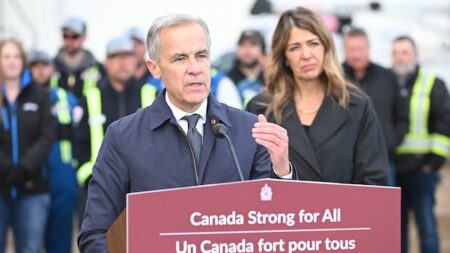




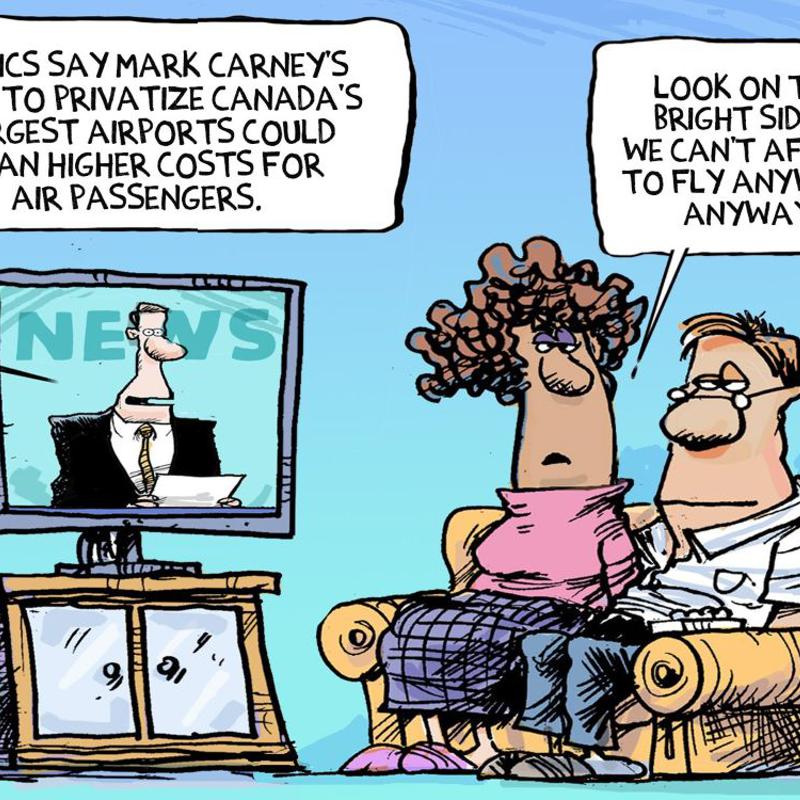
When Prime Minister Mark Carney’s Liberals first suggested airport privatization in the 2025 budget, it was framed as a way to “improve affordability for Canadians.” This notion has since been dropped, as Transport Minister Steven Mac Kinnon admitted that travellers might end up paying more.
Announcements, Events & more from Tyee and select partners Take a Trip with Us: VIFF’s Documentary Series Spans the Globe
‘Insights’ takes audiences far and wide with stories of struggle, triumph and renewal.
In fact, none of the reasons given by Carney for airport privatization stand up to scrutiny, leading to the question: Why is he pursuing this?
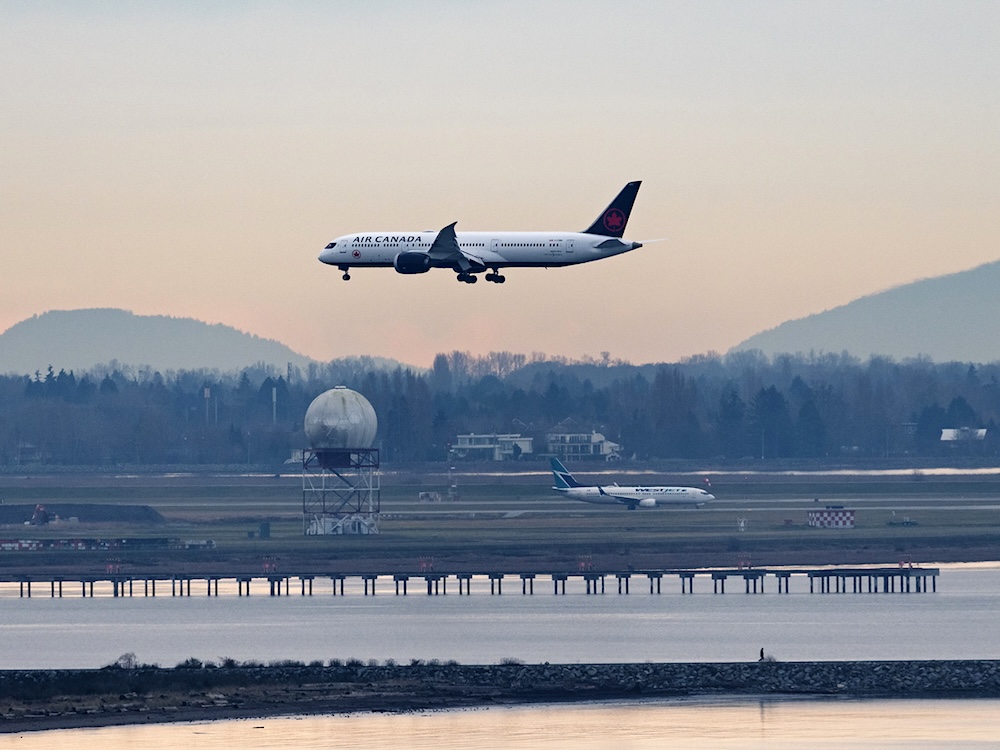
Carney called his recent investment summit an opportunity for the “world’s largest investors” to “peer into our shop window.” It turns out that Canada’s four largest airports were on the market.
Privatizing airport operations risks the welfare of travellers, workers, and communities while boosting corporate power.
Carney and his supporters are trying to confuse critics by claiming it isn’t “privatization” because the government will keep ownership of the land and physical assets. However, this defense is misleading. As global business law firm Gowling WLG pointed out, airport privatization “refers to the transfer of ownership, management, or operational control of airport assets from the public sector to private entities” (emphasis added).
In 1994, the government established the National Airports System. Under this system, Transport Canada owns 23 airports but leases their operations to not-for-profit airport authorities. These authorities manage airports on a cost-recovery basis.
The new plan would allow operations to be leased by for-profit companies that can redirect revenue to their owners. This would shift airports’ focus from serving public needs to catering to private interests.
Free-market advocates argue that profit motives align private interests with public needs. However, this belief is purely theoretical and overlooks countless instances where powerful corporations consistently harm people and the environment in their relentless pursuit of higher profits.
Higher profits can be achieved either through increased revenue or reduced costs. Revenue can rise with higher prices while costs can drop by lowering wages or cutting staff.
This exact scenario unfolded after Australia privatized its airports. Initially imposed price caps were lifted post-privatization; thereafter, revenue per passenger soared three times faster than overall inflation. This contradicts claims that privatization would lower air travel costs-perhaps explaining why the government has retracted its earlier statements about improved affordability.
Supporters of privatization claim that for-profit companies are incentivized to find efficiencies.
However, they often find it easier-and more profitable-to reduce labor expenses. The same year that Sydney’s privatized airport reported AU$376 million in profits, it also cut 40 percent of its workforce following a 12-month protection period for wages and working conditions.
The Canadian government hasn’t mentioned any plans to safeguard jobs for airport employees.
Air travel will only become less enjoyable if our airports employ fewer workers who earn less money.
 Please Advise! How Much Profit Can be Squeezed from Canada’s Airports? read more
According to Carney, privatization will “unlock” the “true value” of our airports. This idea is baseless nonsense. Take Chicago’s parking meter situation as an example: A consortium led by Morgan Stanley paid US$1.15 billion for a 75-year lease. Less than ten years later, they made $1.97 billion off that contract-so much for realizing “true value” through privatization.
The concept of “unlocking” value is even more absurd when applied here in Canada. While Chicago may have had its reasons given it doesn’t issue currency itself; Canada’s government does issue its own currency. Thus John Maynard Keynes-the father of macroeconomics-pointed out: “anything we can actually do we can afford.” p >
The real limitation isn’t financial resources but tangible resources like labor and materials needed for building new airports or expanding railways or repairing bridges-or anything else Canadians require now.
In other words , there’s no need sell off public assets just so we can invest more publicly. What we really need is a government willing enough make those investments. p >
Privatizing our airports won’t make air travel cheaper or better. It won’t improve working conditions either. It’ll just enrich those who are already wealthy while being financially unnecessary overall. So again we ask : Why is Carney’s government pushing this ? ![[Tyee]](https://ontariochronicle.ca/wp-content/uploads/2026/09/yellowblob.png) p >
p >
Source link