NEWYou can now listen to Fox News articles!
After every recent election where a Democratic Socialist or self-described progressive outsider wins unexpectedly, the same conversation comes up: Is America really shifting that much to the left?
Mayor Zohran Mamdani’s ascent in New York brought this topic back into focus. Before his campaign fell apart, Graham Platner’s rapid rise in Maine created similar buzz. Now, as Democrats search for a replacement, many are supporting Troy Jackson, who calls himself a “pickup truck progressive.”
The common belief is that these wins show a nation leaning toward more liberal ideas.
But I don’t think that’s what’s actually happening.
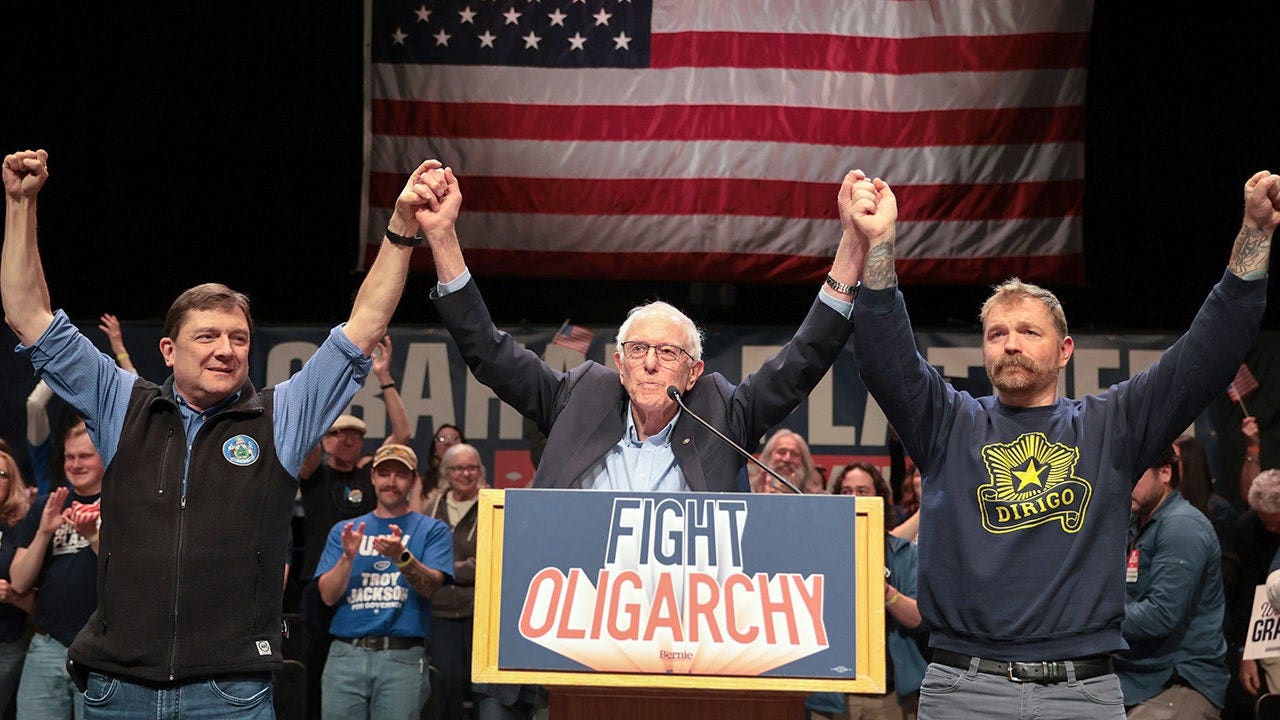
Sen. Bernie Sanders, I-Vt., stands with Troy Jackson (L), who is running for governor of Maine, and now former Democratic U. S. Senate candidate Graham Platner during a “Fighting Oligarchy” tour stop at the Collins Center for the Arts on the University of Maine campus on May 24, 2026, in Orono, Maine. (Joe Raedle / Getty Images)
The growth of democratic socialism isn’t the main story here.
It’s merely an indication.
SOCIALISM’S RISE INSIDE THE DEMOCRATIC PARTY NOW THREATENS THE AMERICAN DREAM
The real story is that countless Americans have lost faith in the institutions they once relied on to tackle issues, create opportunities and ensure effective governance. When trust in these institutions fades away, voters often don’t just lean left or right. They become much more open to candidates promising to shake things up.
Gallup’s latest polling should serve as a strong warning signal. Trust in America’s institutions remains at near historic lows. Congress has the confidence of only 9% of Americans. Trust in law enforcement, organized religion, higher education, big business and other institutions once viewed as reliable has drastically declined over the last generation.
Look beyond individual statistics and you’ll see a clear pattern emerging.
BERNIE-BACKED SOCIALIST WHO ALLIED WITH PLATNER COULD SUPPLANT HIM ON BALLOT
This isn’t just about one failing institution.
It’s about a widespread crisis of trust across the entire system.
That distinction matters because politics doesn’t occur in isolation. Voters assess candidates not only based on their policy stances but also on whether they believe those surrounding institutions can deliver meaningful outcomes.
When Americans lose faith that those institutions function effectively, they start ignoring candidates who offer gradual change.
The real story is that millions of Americans have lost confidence in the institutions they once trusted to solve problems, create opportunity and make government work.
They begin searching for alternatives.
Some seek them on the right.
Some seek them on the left.
But nearly all are seeking outsiders
That’s what made Platner’s campaign so interesting before it fell apart. His attraction wasn’t just about progressive policies; he symbolized a rejection of traditional politics as usual. His outsider identity became part of his appeal
The same goes for Mamdani

HOPE Tenant Union member Antonia Marrero called evictions a form of “violence” as New York City Mayor Zohran Mamdani smiled behind her during a press conference drawing criticism from conservatives online (Fox News)
Whether you agree with his policies or not , his supporters aren’t just backing him because of his platform. They’re backing disruption. They’re opposing institutions they feel have let them down.
And look at what occurred after Platner dropped out in Maine.
Many Democrats didn’t immediately look for a safe establishment replacement. Instead , attention quickly shifted to Jackson – someone who proudly refers to himself as “pickup truck progressive ”and has built his career presenting himself as an advocate for working people against established interests.
Different state.
Different ideology.
Same political demand.
We’re seeing variations of this narrative unfold all over the country.
Candidates willing to challenge existing structures are outperforming those who simply aim to manage them.
The labels might differ./ P >
The frustration remains constant./ P >
This explains why I think we keep misinterpreting this political moment./ P >
The key division within American politics isn’t simply Democrat versus Republican./ P >
Nor is it merely liberal versus conservative./ P >
Increasingly , it boils down to establishment versus anti-establishment./ P >
Institution versus outsider./ P >
The surge in democratic socialism reflects one aspect of this shift./ P >
Right-wing populism represents another./ P >
The two showcase different political reactions stemming from an identical underlying issue : millions of Americans no longer trust their surrounding institutions enough to address their challenges./ /
/P >
/P >
/strong >/ em > Members from Democratic Socialists assemble outside Trump-owned building during May Day rally NYC 2019 (Spencer Platt/Getty Images)
When people lose faith , disruption seems better than stability. History shows us folks rarely jump onto fringe political movements out-of-the-blue simply due to new beliefs. They do it when they’ve lost trust in systems that once made moderate views feel acceptable. That’s why I’m convinced that while democratic socialism may seem significant politically it’s not quite what’s most important. What truly matters is this erosion of confidence that’s allowed its rise. Until our systems earn back public trust again we shouldn’t be shocked if we encounter more candidates like Zohran Mamdani. Or Graham Platner. Or Troy Jackson. CLICK HERE FOR MORE FOX NEWS OPINION Because they’re not causing this political moment. They’re products born out of it. CLICK HERE TO FROM LEE HARTLEY CARTER
<a href=“https://www. foxnews. com/opinion/lee-carter-why-i-believe-collapsing-trust-not-ideology-reshaping-american-politics” Source link