




A resident from Mississauga has triumphed in a legal battle against a bylaw that mandated homeowners keep their lawn grass under 20 centimetres tall.
Wolf Ruck shared with Toronto that he effectively undertook an extensive self-study in law to confront the City of Mississauga in a legal skirmish aimed at protecting his naturalized garden. On January 6, the Ontario Superior Court ruled in Ruck’s favor, concluding that the city’s bylaw regulating grass length on homeowners’ lawns violated his charter rights.
Ruck recalls that the dispute began in 2021 when a bylaw officer visited him, stating there had been complaints about his lawn and instructed him to trim everything down as the goldenrod he planted was considered a “health hazard.”
“At that point, I had to educate him and say goldenrod is often mistaken for ragweed,” Ruck mentioned during an interview with Toronto on Friday. He explained that while goldenrod resembles ragweed, it is ragweed that actually causes allergies.
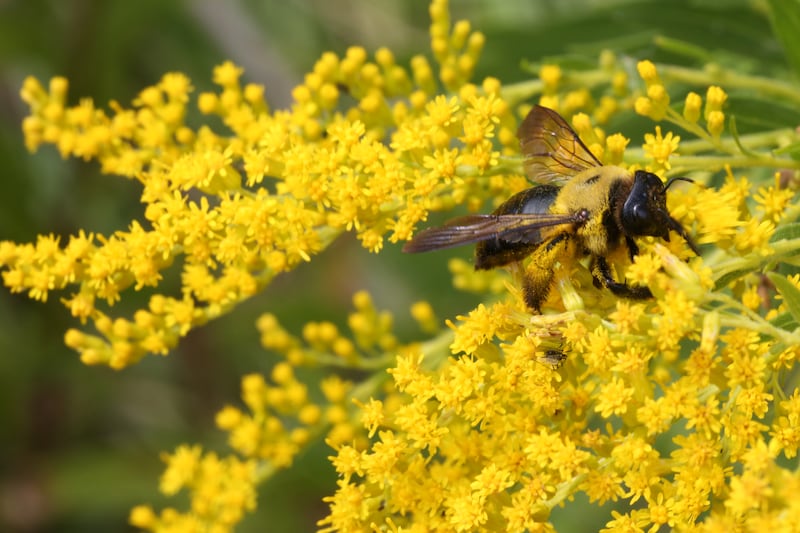
Eastern Carpenter Bee Eastern carpenter bee (Xylocopa virginica) collects pollen from a flowering goldenrod plant in Markham, Ontario, Canada, on September 03, 2023. (Photo by Creative Touch Imaging Ltd./Nur Photo via Getty Images)
Ruck belongs to the natural gardening community, which emphasizes ecological functionality over mere aesthetics. In court documents, he argued that his yard serves as a sanctuary for birds and wildlife and noted that longer grass provides food sources for animals.
Despite this, he continued receiving complaints from neighbors over subsequent years. By 2023, the city decided to mow his lawn and clear away troublesome weeds-such as dog-strangling vine and sow thistle-when he did not comply with their requests. The city paid $287.59 to its contractor for this work and charged Ruck’s property taxes accordingly.
“The majority of people are not interested in the kind of work that I’m doing with my property,” Ruck stated. “In fact, they consider it as an affront, as aesthetically unpleasing, and so on and so forth; that’s why they lodge these complaints.”
Initially representing himself in court, Ruck later received assistance from the Canadian Constitution Foundation (CCF).
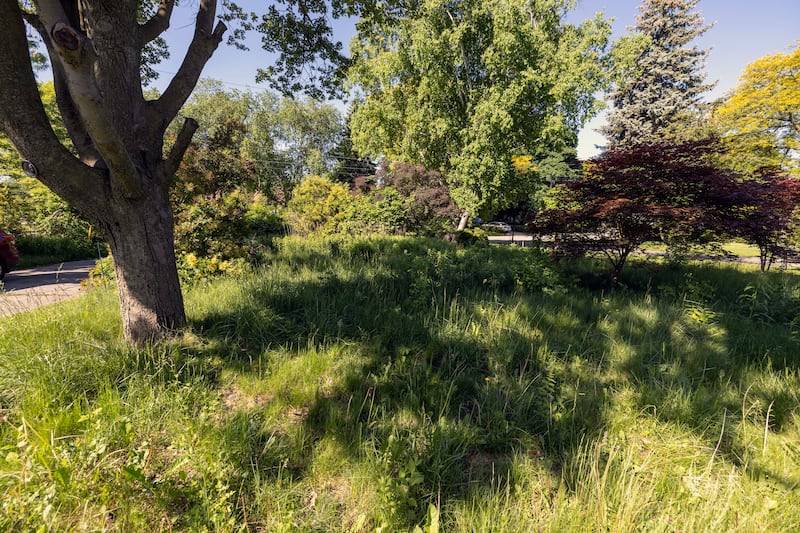 Naturalized Lawn The front yard of Wolf Ruck’s Mississauga home, May 30, 2024. (Andrew Francis Wallace/ via Getty Images)
While Ruck didn’t receive any damages from this ruling, he was cleared from having to pay for the city-ordered yard maintenance they performed without his consent. Furthermore, Doi invalidated those “unconstitutional provisions” within Mississauga’s bylaw related to grass height and mandates concerning plants listed as noxious weeds.
How tall grass and nuisance weeds were regulated stemmed from the Weed Control Act-which Doi pointed out wasn’t designed for residential or commercial properties but rather intended for agricultural lands.
John Mather from DMG Advocates LLP who represented CCF expressed excitement about Doi’s decision during an interview with Toronto calling it a “great victory” not just for Ruck but also for other natural gardeners throughout Ontario.
“Yes municipalities can pass bylaws regarding how people maintain their lawns for valid reasons like reducing fire hazards or controlling invasive species,” Mather stated.
“However when doing so they must respect private property owners’ rights to express themselves minimally while being proportional; unfortunately City of Mississauga failed to provide evidence justifying this particular bylaw.”
The Canadian Constitution Foundation indicated through its conversation with Toronto that this ruling “should act as a warning” for other municipalities across Ontario since similar bylaws may face challenges if they’re not updated appropriately considering naturalized gardens like Ruck’s.
Naturalized Lawn The front yard of Wolf Ruck’s Mississauga home, May 30, 2024. (Andrew Francis Wallace/ via Getty Images)
While Ruck didn’t receive any damages from this ruling, he was cleared from having to pay for the city-ordered yard maintenance they performed without his consent. Furthermore, Doi invalidated those “unconstitutional provisions” within Mississauga’s bylaw related to grass height and mandates concerning plants listed as noxious weeds.
How tall grass and nuisance weeds were regulated stemmed from the Weed Control Act-which Doi pointed out wasn’t designed for residential or commercial properties but rather intended for agricultural lands.
John Mather from DMG Advocates LLP who represented CCF expressed excitement about Doi’s decision during an interview with Toronto calling it a “great victory” not just for Ruck but also for other natural gardeners throughout Ontario.
“Yes municipalities can pass bylaws regarding how people maintain their lawns for valid reasons like reducing fire hazards or controlling invasive species,” Mather stated.
“However when doing so they must respect private property owners’ rights to express themselves minimally while being proportional; unfortunately City of Mississauga failed to provide evidence justifying this particular bylaw.”
The Canadian Constitution Foundation indicated through its conversation with Toronto that this ruling “should act as a warning” for other municipalities across Ontario since similar bylaws may face challenges if they’re not updated appropriately considering naturalized gardens like Ruck’s.
Some municipalities such as Burlington have already revised their regulations providing examples of how reasonable property standards can be achieved without hindering free expression,” added CCF officials in their statement. City’s next stepsCity’s next steps
“This particular decision is essentially establishing precedence not just here but also across Peel Region , Ontario , even all over Canada. It sets precedents which environmentally conscious individuals can use who aim towards responsible actions concerning climate change alongside biodiversity decline ,” said RUCK.
As far what City Of mississaugas plans moving forward are concerned they’re still reviewing things according Irene Mc Cutcheon senior communication advisor. “
“The City hasn’t made decisions regarding future actions at this point,” she mentioned via email.”
Taking this week ’s ruling positively himself rucks looking forward now celebrating upcoming birthday turning eighty.”
“I couldn’t ask better birthday celebration.”
Source link
‘Not insignificant’
On Wednesday, Superior Court Justice Michael Doi ruled that residents have the right to express themselves freely; thus deeming portions of the bylaw unconstitutional. “In this case, I find that the impact of the By-law’s tall grass and nuisance weed provisions on the right to freedom of expression is relatively serious. The provisions serve to restrict societal expression at a landowner’s home,” wrote Superior Court Justice Michael Doi in Wednesday’s decision. “Given Mr. Ruck’s expressive content regarding ecological conservation and re-wilding with nature-and his intention to convey this through offering his lifestyle as an example-the challenged provisions of the By-law restrict his right to free expression on his own private property significantly.”Naturalized Lawn The front yard of Wolf Ruck’s Mississauga home, May 30, 2024. (Andrew Francis Wallace/ via Getty Images)
While Ruck didn’t receive any damages from this ruling, he was cleared from having to pay for the city-ordered yard maintenance they performed without his consent. Furthermore, Doi invalidated those “unconstitutional provisions” within Mississauga’s bylaw related to grass height and mandates concerning plants listed as noxious weeds.
How tall grass and nuisance weeds were regulated stemmed from the Weed Control Act-which Doi pointed out wasn’t designed for residential or commercial properties but rather intended for agricultural lands.
John Mather from DMG Advocates LLP who represented CCF expressed excitement about Doi’s decision during an interview with Toronto calling it a “great victory” not just for Ruck but also for other natural gardeners throughout Ontario.
“Yes municipalities can pass bylaws regarding how people maintain their lawns for valid reasons like reducing fire hazards or controlling invasive species,” Mather stated.
“However when doing so they must respect private property owners’ rights to express themselves minimally while being proportional; unfortunately City of Mississauga failed to provide evidence justifying this particular bylaw.”
The Canadian Constitution Foundation indicated through its conversation with Toronto that this ruling “should act as a warning” for other municipalities across Ontario since similar bylaws may face challenges if they’re not updated appropriately considering naturalized gardens like Ruck’s.Some municipalities such as Burlington have already revised their regulations providing examples of how reasonable property standards can be achieved without hindering free expression,” added CCF officials in their statement. City’s next steps
City’s next steps
The79-year-old claims he’s relieved yet pleased following Doi’s verdict suggesting it may assist fellow naturalist gardeners.
“This particular decision is essentially establishing precedence not just here but also across Peel Region , Ontario , even all over Canada. It sets precedents which environmentally conscious individuals can use who aim towards responsible actions concerning climate change alongside biodiversity decline ,” said RUCK.
As far what City Of mississaugas plans moving forward are concerned they’re still reviewing things according Irene Mc Cutcheon senior communication advisor. “
“The City hasn’t made decisions regarding future actions at this point,” she mentioned via email.”
Taking this week ’s ruling positively himself rucks looking forward now celebrating upcoming birthday turning eighty.”
“I couldn’t ask better birthday celebration.”Source link