





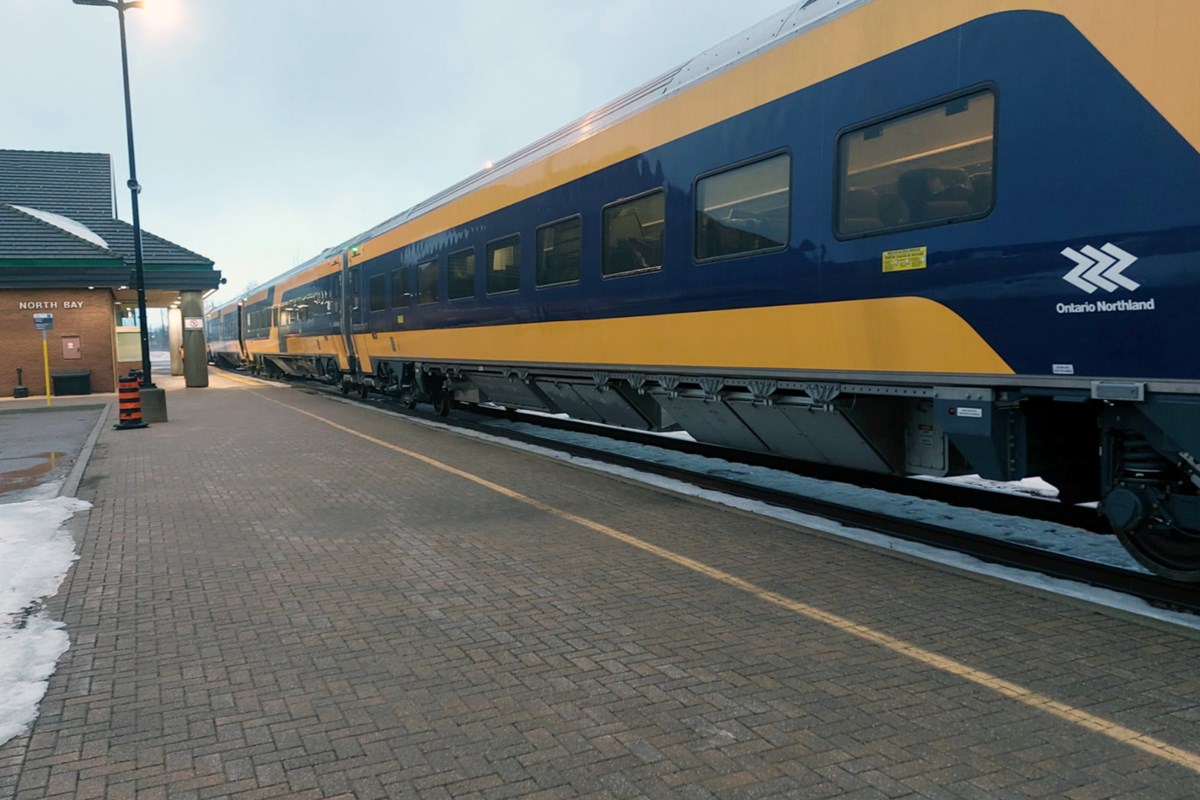
Can the Northlander maintain its route amid the traffic between Washago and Richmond Hill? This is a concern for many, says the writer.
Recently, the Government of Ontario and the Federal Standing Committee on Transport, Infrastructure and Communities have drawn attention with their announcements about passenger rail in Northern Ontario.
In March, the Ontario Northland Transportation Commission acquired 205 kilometres of track running from North Bay to Washago. This vital piece of rail infrastructure now belongs to the public and should enhance the reliability of the Northlander service through Cottage Country. The company also started testing its new train sets along this entire route.
Meanwhile, members of Parliament brought up several issues affecting train services between Sudbury and White River during discussions with interim leaders and representatives from VIA Rail Canada. The organization plans to put forward a strategy to restore this crucial but remote route’s reliability (let’s hope so).
These are encouraging developments.
However, there are still significant challenges that need addressing by the government.
We can’t predict how well the Northlander trains will perform in harsh winter conditions. The same models purchased by VIA Rail notoriously had issues just before last holiday season.
There’s quite a bit of congestion between Washago and Richmond Hill that often leads to delays for VIA’s flagship service, the Canadian. Can we expect the Northlander to stick to its schedule on those very same tracks?
Earlier this year, the Budd Car was out of service for a full month due to ongoing mechanical failures. Not long ago, even the baggage car was out of commission. How much longer can this aging equipment continue operating before it completely breaks down?
While purchasing these tracks helps in bringing back the Northlander service, real progress comes when we can discuss problems openly with politicians, bureaucrats, and relevant stakeholders about transportation matters. p >
To drive change and add valuable input to conversations surrounding transportation services, people need access to clear and unbiased information that isn’t filtered through political agendas or managed by media relations teams. p >
The Freedom of Information and Protection of Privacy Act allows Ontarians access to official documents from various ministries or public organizations like ONTC and GO Transit – with only a few specific exceptions allowed. p >
Premier Doug Ford aims to change that situation. He’s suggesting that his records as head government official-and those belonging to his cabinet ministers-should be kept confidential. p ><p id=” E414 ”is ="QOWT-WORD-PARA "QOWT-EID =" E414 " ""> This proposed shift raises serious concerns for researchers , journalists , ordinary citizens who submit FOIs seeking insights into governmental activities behind closed doors. p ><p id=” E428 ”is ="QOUT-WORD-PARA "> If enacted , these changes could weaken our democracy undermine trust in government & taxpayer-funded institutions. p >
Since launching Northern Tracks Blog , I’ve submitted nearly two dozen information requests covering various public transport topics related specifically & amp; amp; lt;/span></span>< p class=" qout-text"></div></div>