



The Memorandum of Understanding aimed at stopping the conflict between the US and Iran is about to expire on Monday, with no indication that either side wants to renew it. Both parties have accused each other of breaches for weeks now.
“We have not yet made a decision to restart negotiations with the United States,” Iranian Foreign Minister Abbas Araghchi mentioned in a Telegram post on Saturday.
At the same time, mediators from Qatar and Pakistan were still in communication with Iran. Araghchi also noted that Iran was working on another agreement with Oman to establish new shipping routes in the Strait of Hormuz but stressed that this could only happen if a political solution was achieved.
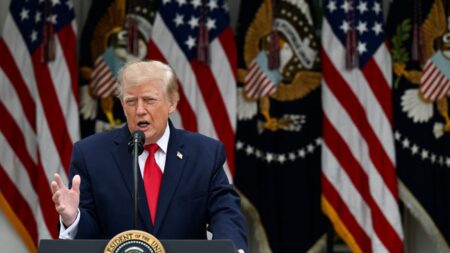
On the US side, President Donald Trump told his supporters in New York on Friday that America would soon assert control over this vital waterway.
Here’s what you should know as the Mo U expires.
What is the Mo U?
The agreement, signed on June 17 by Trump and Iranian President Masoud Pezeshkian, followed rare high-level discussions hosted by Pakistan. It aimed to end more than three months of warfare that resulted in thousands of deaths and disrupted commercial activity in the Gulf, particularly affecting global oil and gas exports.
This deal set aside complex issues like Iran’s nuclear program for later discussions; its goal was not just an immediate diplomatic solution to halt hostilities with Tehran but also to resolve conflicts in Lebanon.
The agreement stated that both countries “declare the immediate and permanent termination of military operations” and outlined a “final deal” which would “confirm the permanent termination of war on all fronts.” This “final deal” was expected to receive UN Security Council endorsement within 60 days at most, extendable by mutual consent.
The US committed to lifting its naval blockade within 30 days, withdrawing forces near Iran after reaching a “final deal,” and initiating a reconstruction package worth at least $300 billion for Iran. Washington also agreed to lift sanctions against Iran, provide waivers for Iranian oil exports, and allow Tehran access to frozen assets. In return, Iran was supposed to clear mines from the Strait of Hormuz and let ships pass “without charge” for 60 days.
Tehran reaffirmed it wouldn’t pursue nuclear weapons while agreeing to negotiate related issues like enrichment details which would be included in a “final deal” supported by the UN.
Was the Mo U successful?
While there were slight differences between how the US and Iranian sides interpreted the agreement, much of their disputes centered around fundamental issues such as whether it constituted a ceasefire or something more enduring along with what actions each party needed to take.
The question of whether or not the entire agreement remained valid became contentious quickly; by June 27, Trump labeled Iranian attacks in the region as “a foolish violation” of the accord. Meanwhile, Iran claimed US strikes “violate Article 1 of the Memorandum of Understanding.”
On July 7, Trump declared that the agreement was “over,” leading to continued US assaults on Iran-including strikes on what Tehran described as civilian infrastructure-which resulted in at least 50 casualties. Iranian officials asserted that America had “violated and suspended” all obligations while Tehran had done likewise regarding its commitments.
Since then, sanctions against Iran haven’t been completely lifted; Trump has dismissed any idea about compensating Iran for reconstruction instead suggesting that Tehran should compensate families affected by its actions over decades including those harmed by roadside bombs during various conflicts.
No progress has been made toward reopening Hormuz either since both Iranian and US officials continue insisting their respective sides control it. Earlier this week, Pentagon reported firing upon a Panama-flagged cargo ship because it allegedly “violated the US blockade against Iran.”
“The ceasefire stopped being effective when the US didn’t meet its obligations under this agreement or Mo U,” Mostafa Khoshcheshm-a professor at Tehran’s University of Applied Sciences-told Al Jazeera.
Khoshcheshm emphasized that Tehran sees failure from Washington regarding promises such as releasing Iranian assets or removing sanctions alongside lifting its naval blockade while having Israel pull back from southern Lebanon. He stated: “Now formally speaking, it’s said that deadline has ended.”
What happens next?
The expiration date for Mo U comes up Monday but opinions differ depending on whom you ask about what exactly this means going forward.
Iran’s Araghchi stated Friday according to the Iranian Students’ News Agency (ISNA) that what existed within Islamabad’s Mo U represented “the end of war-not simply a ceasefire.” He insisted since American violations occurred alongside ongoing attacks there wasn’t “a need for any extension regarding sixty-day ceasefire.”.
A recent shake-up within Iran’s national security framework hints at adopting firmer positions moving into future negotiations along with less willingness concerning concessions-particularly around controlling Hormuz. Earlier this month former IRGC head Mohsen Rezaei took charge as chief leader over Iran’s Supreme National Security Council-the nation’s top security entity-aimed toward better coordination between military strategies plus civil operations per analysts’ assessments shared through Al Jazeera reporting channels.
Khoshcheshm notes Rezaei’s selection alongside other leadership transitions indicates confidence among Iranians believing they hold an advantage currently. New talks would probably involve greater demands surrounding ending Gaza warfare , lifting embargoes inclusive blockading Yemen whilst even proposing denuclearization efforts directed towards Israel.
Few cards left to play for USA
For its part , Trump’s administration escalated rhetoric focused heavily upon economic warfare surrounding straits policy adjustments further recently. On Friday he announced intentions concerning officially claiming ownership over waterways highlighting his assertion saying: “After we finish defeating Iran , which is being very badly defeated , pretty soon I’ll be declaring Hormuz Strait territory belonging officially unto United States.”
Treasury Secretary Scott Bessent remarked similarly announcing intention implementing measures unseen thus far pertaining interactions involving foreign affairs relevantly impacting regional relations therein too! p >
However analysts contend limited options remain available ultimately seeking leverage upon expediting pressure exerted toward power dynamics influencing Tehran ‘ s actions , Barbara Slavin – Distinguished Fellow located at Washington DC-based Stimson Centre reiterated sentiments conveyed earlier – explained challenges faced presently centered mainly around diminishing stock levels interceptors combined depleting strategic reserves implying nearly exhausted military capacities potential scenarios tried without success leaving economic pathways hindered greatly causing disruption induced primarily through trade channels operated via critical pathways known worldwide already established nearby.
“Clearly furious amidst frustrations stemming directly linked outcome perceived failures associated unsatisfactory responses exhibited previously following signing agreements back during summer last year ” she said adding frustration observed throughout international landscape emphasizing wide-reaching implications existent economically manipulating current conditions resulting notably increasing pressures felt within White House corridors overall !
One way nor another likely outcomes suggest potential reimbursement found due emergence conflicts witnessed earlier alongside gaining significant authority across waters stretched encompassing crucial regions impacting trade networks navigated regularly afterwards considerably shifting balance seen prior times previously overlooked again coinciding perhaps following midterm elections approaching nearer bringing fewer repercussions facing electoral chances arising out event matters resolved settling futures together amongst involved entities seeking peaceably thereafter achieving stability gradually grown scarce nowadays finally !
Mohammad Galibaf – Parliament Speaker conversely expressed sentiment revealing confidence projecting belief displaying strength derived obtained successfully attributed accomplishments derived illustrated depicting sources emerged clearly outlining victory portrayed optimistically presenting realities unfolding anew actualized behind scenes currently remaining pivotal players operating wisely governing tactics ahead ensuring situations unfold favorably until concluding periods arrive eventually meeting satisfactory resolutions attained smoothly transitioning away hardship borne historically encountered thus far moving forward jointly fostering collaborative engagement cultivated possibly sustaining lasting coexistence realized steadily once again revitalizing hopes ignited fervently reigniting aspirations recently stifled temporarily jeopardized excessively previously unaddressed concerns often neglected thought forgotten obscured shadows hidden away.. p >
Source link