





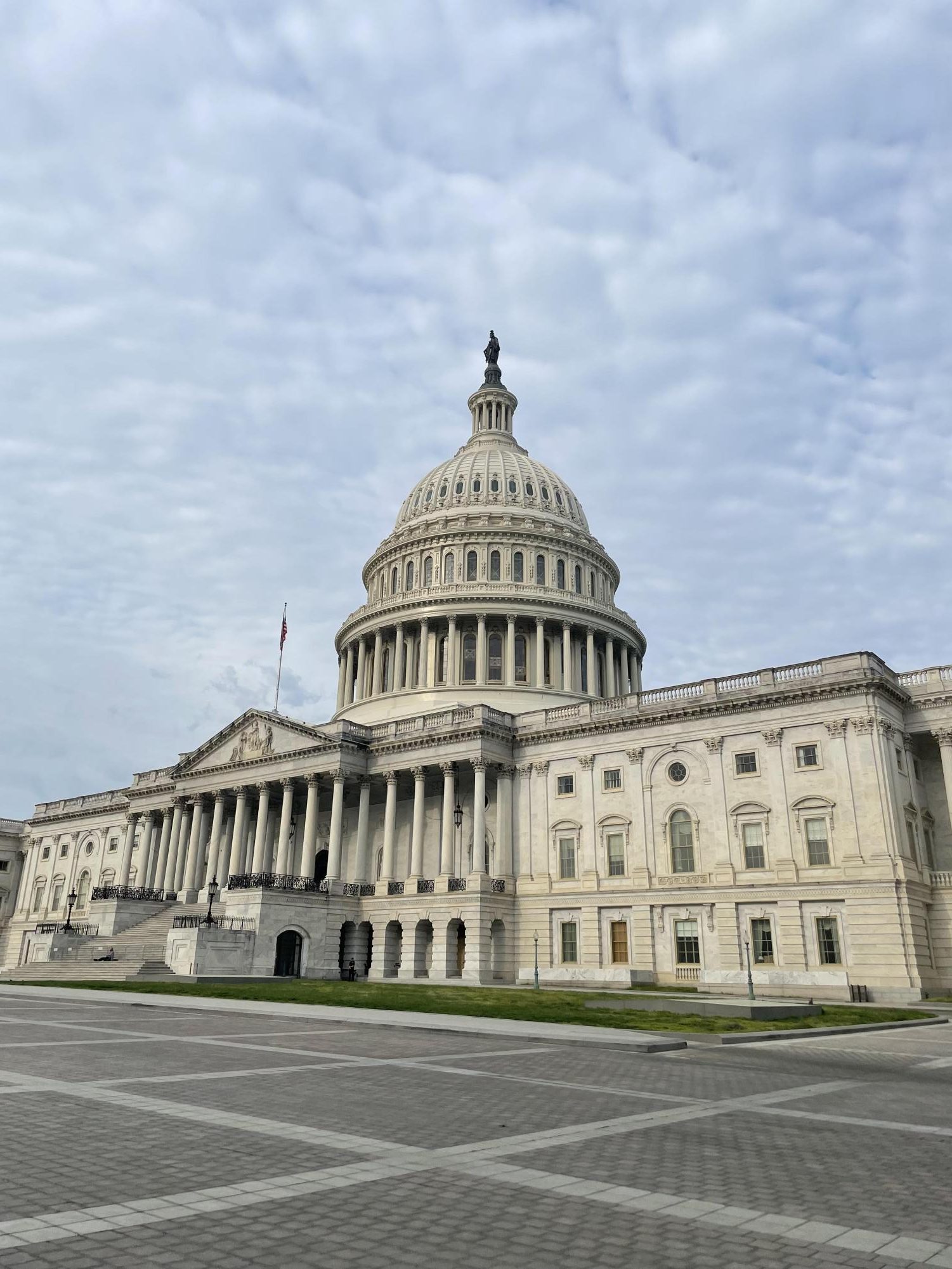
The system aims to dictate voters’ choices, whether they agree or not.
“You have a civic duty to your country to vote” is a common saying this time of year. But no one really questions if the current voting structure is actually hurting the United States. The Netherlands has many parties in its parliament, while Switzerland features four major ones, yet America is dominated by just two parties. Critics say that America’s diversity fits into these two larger groups. However, these coalitions are so extensive that voters who hold specific values often must accept views they don’t truly support. In such a diverse country as America, having only a two-party system forces constituents to compromise their personal beliefs.
“The Melting Pot” describes America due to its vast array of cultures, religions, ethnicities and moral values. Despite our rich diversity, our political landscape condenses down to just two main parties: the Democrats and Republicans. For a nation this varied, shouldn’t there be multiple parties like in the Netherlands? While America uses a presidential system, the Netherlands operates under a parliamentary system where seats are allocated based on each party’s percentage of votes. This setup allows even smaller parties to gain representation.
In America, only one candidate wins an election; it’s essentially “winner-takes-all.” This leads voters to favor already established parties with “a chance” of winning. Political scientists refer to this tendency as Duverger’s Law, which states that in each race there will be one winner; thus, voters tend to abandon smaller parties and rally around those capable of winning. This dynamic allows the majority to dominate while penalizing smaller factions.
A clear example can be seen in how Americans view the Green Party. Many believe that voting for it-despite alignment with its policies-is simply “wasting a vote.” This feeling stems from Duverger’s Law’s psychological impact; voters think the Green Party has no real chance due to how the system functions.
In 1992, Ross Perot ran as an independent candidate for president and received 19 percent of the national popular vote-an impressive result for someone outside the major parties since Theodore Roosevelt in 1912. Yet despite his 19 percent share, he ended up with zero Electoral College votes because of the constraints imposed by the two-party structure.
With such varied beliefs within a two-party system, we should ask ourselves: do votes genuinely reflect constituents’ views? According to Pew Research Center’s November 2024 survey, about one-third of voters said their choice was more about opposing another candidate than supporting their own preferred option. This shows that casting a vote isn’t always about direct endorsement but rather about opposition; fundamental beliefs become secondary instead.
The current setup pressures Americans into choosing candidates based solely on who “might win” or who is “less objectionable,” leaving little room for genuine support. It’s unrealistic for anyone to completely agree with any candidate all the time-that’s just life! Compromise plays an essential role in effective politics and should start right at ballot time. But when does compromise turn into complacency? Nowadays in America, voting feels more like a ritual confining individuals within boundaries they’ve helped create themselves.
Source link