



Since a wave of wildfires hit northwestern Ontario in mid-July, around 2,000 evacuees have returned home.
However, as of Friday, approximately 829 individuals are still displaced, according to officials from Ontario’s Ministry of Emergency Preparedness and Response.
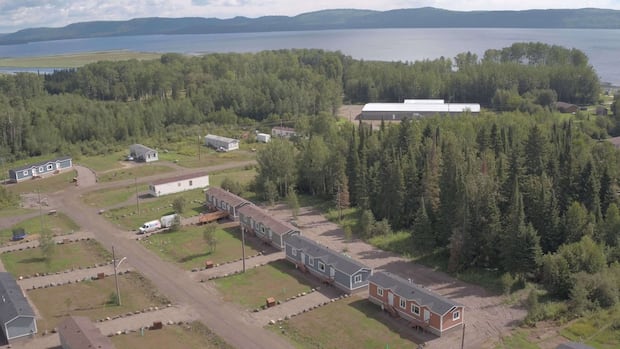
This summer’s wildfires led to the evacuation of more than a dozen communities in the area, primarily First Nations, and resulted in the complete destruction of two communities: Namaygoosisagagun First Nation (also referred to as Collins First Nation) and Whitewater Lake First Nation.
With wildfire threats decreasing across much of the region, Kiashke Zaaging Anishinaabek (commonly known as Gull Bay First Nation) ended its state of emergency from mid-July on Wednesday, encouraging evacuees to come back home.
Last week, Gull Bay’s Chief Wilfred King criticized the Ontario government’s decision to lift wildfire implementation and evacuation orders around the community, stating “our members are still at risk and our infrastructure is at risk.”
Despite his warnings against being overly optimistic about reduced fire hazards, he and two band councillors managed to assess the situation via helicopter on Tuesday morning.
Chief Wilfred King of Gull Bay First Nation is leading the call for a public inquiry into the Ontario government’s wildfire response, including an overhaul of the province’s emergency management system. (Sarah Law/CBC)
“Although there were some hot spots, we were informed that MNR (Ministry of Natural Resources) was making sure that the west side of those fires were being manned properly,” King told on Thursday.
“We didn’t see big fires or a lot of smoke, so we were confident that things have improved dramatically.”
That said, King continues to push for a public inquiry into how the province handled wildfires because he has concerns about communication with First Nation leaders and insufficient emergency preparedness measures.
“There are some things initially that happened a month ago that still needs to be addressed,” King said.
‘If we need to evacuate again, we will do so’
Gull Bay First Nation is an Ojibway community situated about 215 kilometres north of Thunder Bay. About 370 people live there.
While road access to Gull Bay has been restored, Highway 527 between Kopka River and Armstrong remains closed in both directions along with a large part of Highway 811 due to nearby wildfires.
Around 140 wildfires are currently active throughout Ontario, mostly located in the northwest. The nearest fires to Gull Bay First Nation include:
Thunder Bay 36-the largest wildfire in the province-which remains uncontrolled at over 301,000 hectares. Dryden 34-also not under control-covering about 45,800 hectares. Dryden 35-not under control at nearly 31,500 hectares. Thunder Bay 56-still uncontrolled at almost 7,950 hectares.
The Thunder Bay 36 fire alongside Dryden 34 and Dryden 35 makes up what’s known as the Rinker Lake Complex.
“Fire Ranger crews from Manitoba, Nova Scotia and Ontario continue suppression efforts across the Rinker Lake Wildland Fire Complex today,” said Aviation, Forest Fire and Emergency Services in its latest update Thursday evening. p >
“Approximately60 firefighters from Mexico are expectedto arrive overthe nexttwodaysandwilljoincrewsonthefirelineprovidingadditionalcapacitytosupportongoingsuppressionefforts. Firesactivityacrossthe Rinker Lakewildlandfirecomplexremainslow.” p >
Wildfirehazardsrangefromlowtohighacrosstheregionwithareasofhighhazardprimarilyinthe Kenoraand Drydenfiremanagementsectors.
Meanwhilealmostallevacueesfrom Gull Bayhavereturnedhome”andeverybodywassafe.”
“Nobodywasinjured, nopropertywas[damaged], sowe’requitehappywiththeendresultofeverything,”Kingsaid.
Howeverheremindpeopletheofficialwildfireseasondoesn’tenduntil Oct31.
“We’rejusttellingmemberstobevigilant, andifweneedtoevacuateagain, wewilldosow.” p >
Source link