




The funding for the non-profit clinic could be ‘the largest donation in Canadian health history’ but it comes amid a major debate over private health care in Ontario.
Editor’s note: This article originally appeared on The Trillium, a new Village Media website devoted exclusively to covering provincial politics at Queen’s Park.
A Canadian philanthropist is investing heavily to create a large independent surgical center in the Toronto area.
Walter Schroeder aims for the not-for-profit clinic in Richmond Hill to carry out three times as many orthopedic day surgeries as an average hospital, helping alleviate the burden on thousands of Ontarians waiting for surgery.
A spokesperson from Ford’s government confirmed to The Trillium on Wednesday that they are aware of the plan.
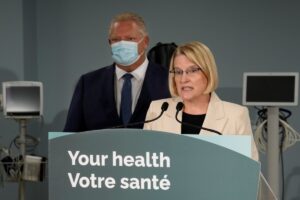
“The ministry has received draft plans from the Schroeder Clinic on how they can help reduce wait times for critical surgeries so Ontarians can receive the treatments they need sooner,” said Hannah Jensen, a representative for Health Minister Sylvia Jones.
The center’s application will be reviewed under the Your Health Act if it passes, Jensen noted, referring to pending legislation aimed at establishing a new licensing framework for private and non-profit surgical and diagnostic clinics.
“As the province expands the types of surgeries and procedures being done in communities to include hips and knees and orthopedics, it will ensure that new community surgical and diagnostic centers maintain high quality standards with strong oversight,” Jensen stated.
Meanwhile, opposition NDP members and public health advocates have expressed their concerns about this initiative, warning that the new legislation, Bill 60, might lead Ontario towards a two-tier healthcare system.
Walter Schroeder is a self-made millionaire from Manitoba who established Dominion Bond Rating Service (DBRS). He now runs a charitable foundation that has significantly supported hospitals and hospital foundations across Ontario.
Although Schroeder wasn’t available for an interview with The Trillium regarding this story, he discussed his vision with TVO back in 2021. He mentioned that once finished, this center would handle 8,000 outpatient orthopedic surgeries annually-three times what major hospitals typically manage.
He recounted acquiring a large medical building in Richmond Hill after its previous owner went bankrupt before construction was completed. Property records indicate that Terra Hill Ambulatory Surgical and Medical Centre, a non-profit associated with Schroeder, purchased the property for $55 million with a $25 million mortgage.
In his TVO conversation, Schroeder indicated he might invest up to $150 million into this project overall but expected an additional $50 million to $80 million from public sources.
However, Michael Mc Connell, treasurer of Schroeder Foundation, later clarified that those expectations have changed; now there won’t be any need for public funding. In fact, he mentioned that the foundation plans to contribute up to $350 million toward this project if it proceeds-marking “the largest donation in Canadian health history.”
The Public-Private Debate
The opposition at Queen’s Park stands against Bill 60-the legislation designed to create licensing protocols for both profit-based and non-profit corporations operating surgical and diagnostic clinics.
The NDP warns this bill will bring Ontario “one step closer to a two-tier health-care system where those who can afford it will jump ahead while everyone else waits even longer.”
They’re calling on the government instead to extend operating hours at existing hospitals.
Doris Grinspun CEO of Registered Nurses’ Association of Ontario echoed similar worries about “the creation of a two-tier system full of gimmicks.”
She expressed concerns that these independent ambulatory surgical centers could pull staff away from public hospitals which already struggle with staffing shortages while still needing complex cases handled by overwhelmed facilities. She urged Schroeder to focus his philanthropic efforts solely on supporting public healthcare.
Natalie Mehra from Ontario Health Coalition shared these sentiments regarding governance systems within public hospitals versus private clinics.
“Why would we not have our public hospitals with their governance systems and their expertise in providing public health care offer those services?” she asked. “Why hand them over to businessmen?”
“I think it’s crucial for people understand what represents their best interests; there’s such a stark difference between governance at private clinics compared to public hospitals when considering patient protections and quality control,” she elaborated.
Mehra also raised alarm over comments made by Schroeder during his TVO interview suggesting payment options would only partially rely on OHIP coverage. She was particularly concerned about one board member linked with advocating two-tier healthcare involved in fundraising efforts related to Cambie’s legal challenge aimed at allowing Canadians to pay directly for necessary medical treatment when confronted by extensive waiting times within our public system.
“What commitment does this proposed facility have towards maintaining single-tier medicare?” she questioned.
Mc Connell responded by stating their commitment is rooted in philanthropy; emphasizing plans involve managing the medical center via an operational charity focused “for betterment of Ontario.”
“What Ontarians should know-and anyone reading your article needs clarity-is this isn’t meant as profit-driven enterprise; everything operates through OHIP or (Workplace Safety Insurance Board) ensuring support extends towards military personnel or Indigenous communities,” he explained further.
On another note concerning Bill 60-the Ontario Liberals voiced apprehensions but appear somewhat more receptive regarding establishing non-profit surgical centers moving forward.
Health critic Adil Shamji supports creating independent non-profits yet believes current legislation fails provide adequate reassurances preventing corporate takeover over our healthcare system.
“It doesn’t assure me we’ll protect our healthcare workers from being drained out nor guarantee patient safety while avoiding upselling or extra charges,” he expressed critically.
That said Shamji-a physician himself-acknowledged merit exists behind transitioning day surgeries into specialized standalone facilities while remaining cautiously optimistic about supporting Schroeder’s ambitions provided they align closely enough protecting both patients & public sector integrity throughout operations moving ahead.” “
>Source link