





Special to Ontario Construction News
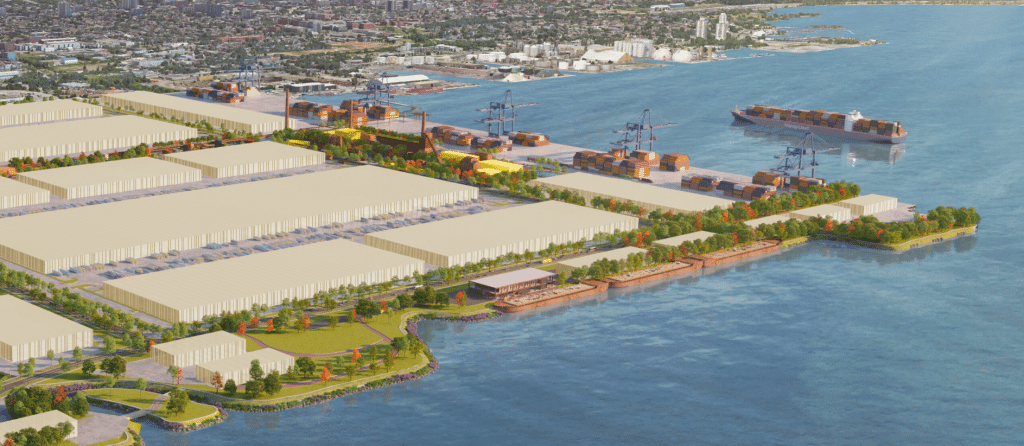
The committee of adjustment in Hamilton has unanimously voted against a land severance application that would have allowed for a “hyperscale and enterprise” AI data centre campus on the former Stelco waterfront steelworks lands.
This decision came after a meeting on June 4, where the committee listened to over 70 speakers and reviewed an impressive 1,688 public submissions against the proposal, likely setting a record for a single agenda item as noted by city staff.
Hundreds of demonstrators gathered outside Hamilton City Hall during the meeting to express their opposition to the campus, citing environmental concerns regarding noise, land usage, effects on water supply, and significant electricity consumption.
“In many years, I’ve never seen that kind of response from the public,” said committee member Robert Reid after the lengthy meeting.
Slate Asset Management had proposed constructing an AI data centre on an 88-hectare section of the larger 324-hectare (800 acre) Steelport waterfront development. They partnered with the Digital Research Alliance of Canada and have sought federal funding through AI Sovereign Compute.
In their application, Slate mentioned that data centres are one potential use for this smaller parcel of land. They also indicated plans to utilize existing infrastructure from the former steel mill site to minimize impacts on local electricity supply and suggested cooling options using water from Hamilton Harbour. Toronto-based Slate is developing these former Stelco lands into what they call Steelport.
The rise in AI adoption has led to increased demand for large-scale data centres capable of handling vast amounts of data necessary for extensive computations. This trend has generated significant investment and job opportunities. Currently, over 300 traditional data centres operate across Canada, primarily in major urban areas. There are five hyperscale data centres in Canada with another 96 currently under development.
Due to their greater requirements for land, power, and cooling water compared to standard data centres, large-scale AI facilities have faced protests in various locations throughout Canada and the United States. Many activists are calling for a pause on new data centre projects.
Coincidentally, while opponents were voicing their concerns at the Hamilton meeting, the Carney government announced its plan for expanding large-scale AI data centres aimed at boosting Canada’s computing capacity significantly by 2030.
The Liberal government in Ottawa also issued an open call for applications focused on developing these large-scale facilities as part of its strategy.
Source link