




This summer, several Western intelligence agencies were thrown into disarray as they tried to determine what an accused Canadian spy may have accessed during her internships at various government departments and agencies.
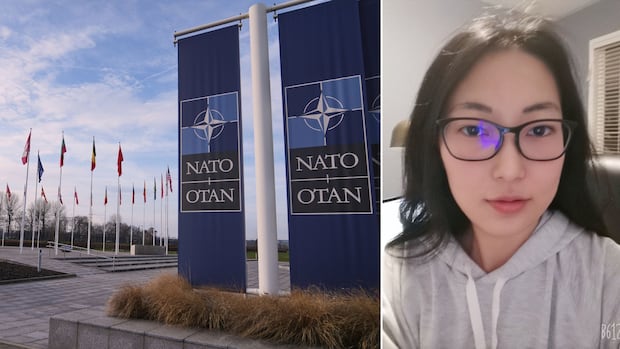
Biwei Zhang, who interned at NATO’s military headquarters in Mons, Belgium, was taken into custody by Belgian authorities in July on charges of espionage and connecting with a foreign crime organization. She has been held in pretrial detention since her arrest and recently had an appeal for release denied.
Belgian justice and security officials have provided scant information about the case, even opting not to disclose her name. However, an investigation by identified her through public records and revealed that she had moved among several prominent organizations over the past decade.
Zhang reportedly worked as an economist for Statistics Canada, served as a systems engineer in satellite operations for the Canadian Space Agency, and held roles at both the European Space Agency in Italy and the World Trade Organization in Switzerland.
While Belgian authorities haven’t stated who she might have been spying for, reports from European media outlets suggest it could be China.
The Canadian Security and Intelligence Service (CSIS) confirmed that it is conducting a damage assessment involving multiple departments.
“When security incidents of this nature arise, it is customary that departments and agencies conduct a review to identify and address the potential consequences,” said Magali Hébert, a CSIS spokesperson, in a written statement.
“CSIS can confirm that it is engaged with federal counterparts in that regard.”
reached out to several confidential sources within the intelligence and diplomatic communities regarding the implications of Zhang’s allegations.
Kenneth Lasoen, who teaches intelligence studies at the University of Antwerp, mentioned that a “serious post-mortem” into her alleged actions would likely be one of the first priorities for some European intelligence services.
WATCH | More about the alleged spy case:
NATO spy suspect possibly recruited after she was vetted, says ex-CSIS officer
Former CSIS intelligence officer Dan Stanton outlined various possibilities regarding how Zhang could have passed Canada’s security screening processes – such as being recruited by a foreign intelligence service shortly before her internship.
All involved are trying to piece together what access she may have had, what kind of damage might have occurred, and whether Zhang is connected to any broader network.
A lot of public discussion surrounding this case in Canada has focused on how Zhang obtained security clearance. A House of Commons committee plans to hold hearings regarding this issue.
However, intelligence services are more focused on understanding what she may have witnessed or done during her time there and whether there were any accomplices involved.
“I would think the most interesting part from the damage assessment would be – of course – to find out exactly who she works for, what the lines of communication were [and] how did she work for her handlers?” Lasoen told .
In response to her arrest’s aftermath, NATO stated none of its critical systems were compromised due to Zhang’s actions.
The European Space Agency has emphasized its comments about security screenings being primarily under national authority’s purview. An official from the World Trade Organization (WTO) confirmed that Zhang worked there briefly in 2023.
‘Are there still logs?’
Reconstructing Zhang’s alleged activities across different agencies-both in Europe and Canada-will depend significantly on how long these institutions retain their security data records.
“Are there still logs of the movements of her badge, for example? Are there still images on security cameras showing her trying to enter restricted areas or moving around parts of offices where she shouldn’t have been?” Lasoen asked rhetorically.
“I’m sure at SHAPE [NATO], because that’s more recent history; they’ll manage to reconstruct most events. But concerning earlier locations like others involved-it’s uncertain how long ago those instances were or their policy on retaining such information.” p >
An expert specializing in counterterrorism who also trains certain European intelligence services noted it’s significant that Belgian authorities accuse Zhang of communicating with a criminal organization.
Under Belgium’s updated laws , anyone enticing someone else into espionage qualifies as part of a criminal organization.
“But then that’s where it gets a bit risky , as far as I would be concerned , diplomatically ,” Lasoen remarked.
“If we’re going to call Chinese secret services ‘criminal organizations’, I’m sure they will view it differently.”
Given that this situation involves spying at NATO’s military headquarters , any information collected or activities undertaken could directly benefit Chinese military intelligence.
The ongoing question among intelligence circles is: Was she directly working with them or linked through some third-party criminal organization ?
There are known third-party networks operating throughout Europe allegedly collaborating with Chinese intelligence agencies , including Fujian community associations according to Pro Publica investigations conducted within Italy & Spain.
Chinese overseas police stations also represent recognized sources used by these liaisons.
While no such stations exist presently within Belgium , France recently dismantled nine associated locations.
Authorities situated within Brussels contend with informal consular networks believed responsible for offering support aimed towards local Chinese nationals residing there.
In Canada , officials will thoroughly analyze every department where Zhang gained access , evaluating data seen through military/intelligence lenses so they can ascertain potential value toward foreign powers. P >WATCH | How CBC identified Zhang:<img src="https://ontariochronicle. ca/wp-content/uploads/2026/09/1788525320_798_default. jpg" alt="" class="thumbnail" loading="lazy"/
identifies Canadian intern accused of spying on NATO
Zhang previously held positions at notable organizations like WTO, EAS, and Statistics Canada
. For instance, the publicly reported while working at Statistics Canada, she monitored shipping data originating from Port Montreal which holds economic significance but carries considerable military implications if conflict arises.
Zhang’s role as IT intern also bears potential importance according experts focusing disruptive cybersecurity efforts.
The approach taken by China toward cyber espionage markedly differs compared adversaries such Russia, Iran, and North Korea.
While these nations often resort ‘smash-and-grab’ tactics targeting companies & ransom demands; China prefers stealthy intrusions methodical tactics difficult detect.
“They’ll use strategies requiring patience careful planning making detection near impossible,” stated J Paul Haynes CEO Cinchy, a Toronto-based governance/data access firm.” The aim here aims implant malware vital infrastructures system activation later date per chance during crises conflicts.” Or establish something Haynes terms “beachhead” outside hackers combined human insiders inside premises.”You’d hear arguments consistently highlighting insiders pose greatest challenges defenses against attempts sabotage,” he added commenting regularly Centre International Governance Innovation.
A consortium comprising Le Lettre & Le Soir Knack Follow Money indicated counterintelligence investigations initiated following sighting loitering behaviors restricted military command buildings consistently raising concerns asking personnel highly specific hypothetical inquiries concerning breaches protocols last week publications suggested Belgian officials now suspect accomplices involvement based their ongoing analysis surrounding events surrounding Biwei Zachary.’
Source link