




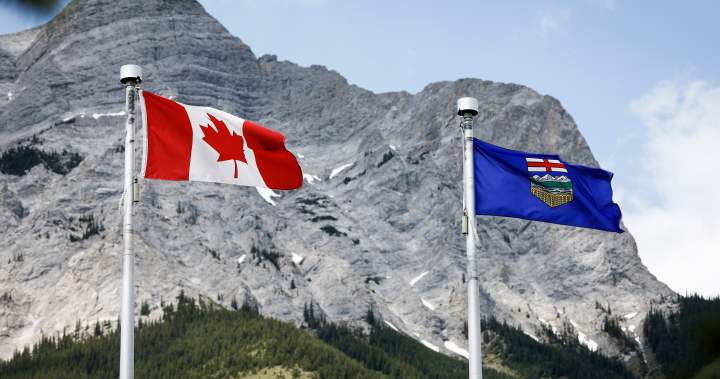
The future of the province that about five million people call home hangs in the balance over the next five months, as Albertans face a significant question: Should we stay or should we leave?
On October 19, Albertans will go to the polls for a historic referendum that might alter not just Alberta’s direction, but Canada’s as well.
The vote, first announced on February 19, originally included nine questions regarding immigration and potential changes to Canada’s Constitution.
Then on May 21, Premier Danielle Smith revealed a 10th question would be added, putting the matter of Alberta separatism directly before voters.
The question is: “Should Alberta remain a province of Canada? Or should the government of Alberta commence the legal process required under the Canadian Constitution to hold a binding provincial referendum on whether or not Alberta should separate from Canada?”
Story continues below
So how did we arrive at this point?
For several months, reporters throughout Alberta have been investigating the key issues surrounding the independence referendum and this week those stories are being presented.
presents “Road to the Referendum.”
This week-long series will cover various topics, starting with major events leading up to the decision to hold a referendum.
Get daily National news
Get daily Canada news delivered to your inbox so you’ll never miss the day’s top stories.
We’ll talk with separatists about their motivations for wanting independence – along with federalists who are committed to remaining part of Canada.
We’ll look into practical concerns that Albertans may have about what leaving Canada would actually entail: What happens with our borders, currency, military and more?
What does it mean for places like Lloydminster that sit on both sides of the border between Alberta and Saskatchewan?
Constitutionally, what would a yes vote or even just holding a referendum imply for treaty rights – those agreements recognized by law between Indigenous peoples and the Crown signed over a century ago?
The lands belonging to five different treaty nations fall within Alberta’s borders: Treaty 8 covers northern Alberta; Treaty 6 spans Edmonton and central areas; while Treaty 7 extends from south of Red Deer down to the U. S. border. Small portions of two additional treaties also reach into Alberta: Treaty 10 near Cold Lake and Treaty 4 east of Medicine Hat.
Story continues below
A couple of significant court victories by First Nations have restricted what actions the provincial government can take regarding holding an official referendum. We speak with members from one First Nation advocating against separation about their views on this upcoming vote.
More on Canada More videos
If there is a referendum or separation, how would it affect our economy?
<p. What happens with plans for new pipelines that Alberta has long advocated for and now has an agreement with Ottawa in place?
An economic analysis shows that fears surrounding separatism are already unsettling investors and major companies which raises concerns about Alberta’s financial future.
Sponsors of an independent Alberta argue crafting our own economic policies could lead us toward prosperity and end any stagnation linked to federal decisions.
Doubters contest this view stating even considering such an idea may scare off investments and jobs, leaving us without options as a landlocked entity compared to before.
Canada has seen debates around separatism before. We delve into lessons learned from Quebec’s referendums and explore potential long-lasting effects from this upcoming campaign in Alberta.
High-profile leaders within our province along with experts in politics and economics – including those fighting hard either way – have all been invited into discussions during our broadcasts.
Story continues below p >
This story will receive updates throughout each day’s coverage. Stay tuned… p >
2:05 Saskatchewan professor calls separatism illegal p >Previous Video Next Video
& copy 2026 , a division of Corus Entertainment Inc. p >
Source link