




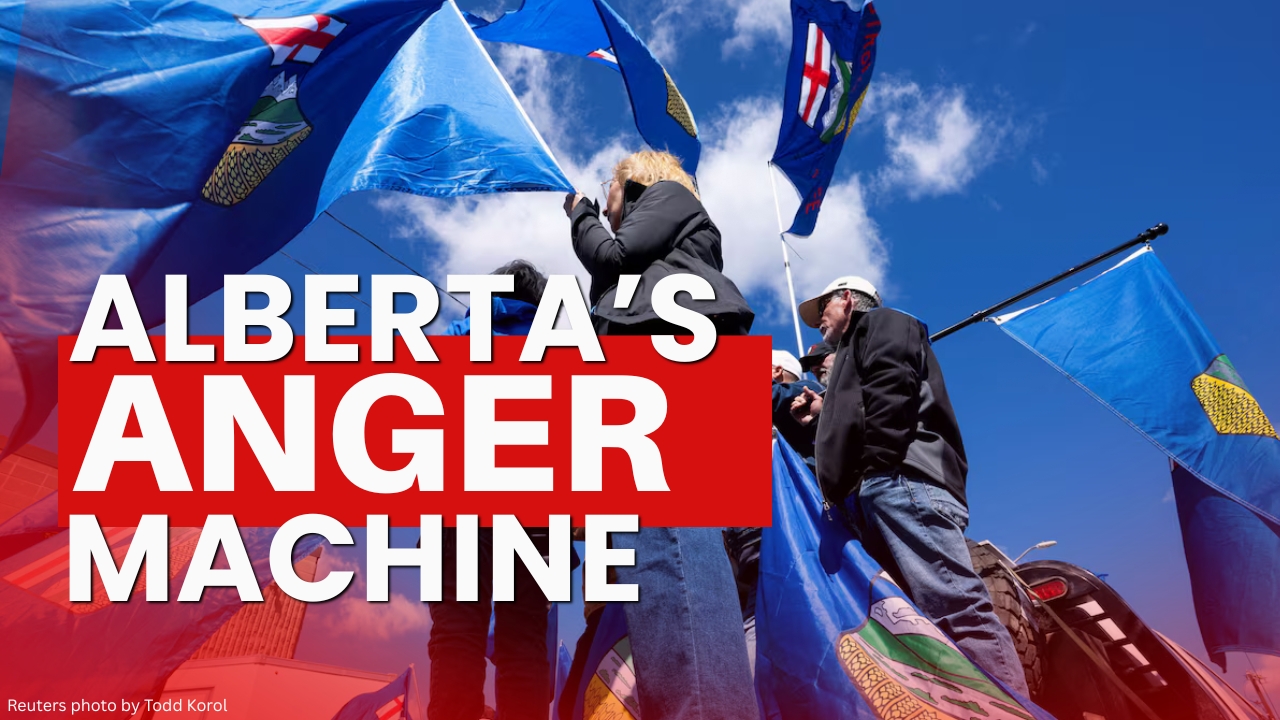
The aim is to shape a society that leans heavily conservative, Christian nationalist, authoritarian libertarian, and distinct from the rest of Canada
The activists steering Alberta’s separatist drive are leveraging the organizations, strategies, and mindset they developed while opposing COVID-19 health measures, according to Mount Royal University political expert Duane Bratt.
In a conversation with Energi Media (see below), Bratt emphasized that the link goes beyond just familiar faces transitioning from one political issue to another. Both movements share a populist framework fueled by anger, skepticism toward institutions, dismissal of expertise, and the promise of straightforward answers to complicated issues.
Key separatist figures surfaced during the pandemic struggle. Bratt mentioned individuals like David Parker, Mitch Sylvestre, Chris Scott, and Jeff Rath, along with alternative media outlets such as Rebel News and the Western Standard. Their political talents, followers, and networks didn’t vanish when health restrictions were lifted; they shifted focus towards Alberta independence.
Bratt noted that many individuals had valid concerns about school closures, masking mandates, vaccination efforts, and other measures that disrupted their daily lives. His point revolves around a smaller group of activists who continue to harbor anger across various issues and help keep that frustration alive among their supporters.
This intensity has political significance. While support for separation remains limited in scope, its most fervent advocates are highly driven and wield influence within the United Conservative Party.
The party faced divisions over COVID measures during Jason Kenney’s tenure as premier. Kenney’s attempts to mediate between conflicting factions led to his ousting and Danielle Smith’s ascension as she aligned with those opposing the restrictions. Bratt stated that Smith now faces a similar balancing act regarding separatism since the UCP isn’t officially separatist but contains a strong separatist element.
The shared perspective is evident in how the movement addresses rights and freedoms. According to Bratt, pandemic opponents often framed masking and vaccination solely as infringements on personal liberty without considering others’ rights to protection from illness. Separatists use similar reasoning when they demand Alberta’s right to exit Canada while ignoring Indigenous treaty rights and other constitutional responsibilities.
Courts that upheld reasonable limits on individual rights during the pandemic were criticized as unelected bodies lacking accountability. Similar criticisms arose against court rulings dismissing separatist petition questions because they clashed with Indigenous treaties and rights.
Bratt also pointed out an analogous information ecosystem. Distrust in CBC has spread to CTV, Global News, Globe and Mail, Postmedia among other established news sources. In their place, supporters increasingly turn towards smaller alternative platforms and podcasts that blend commentary with activism around a unified ideological stance.
These outlets can create an echo chamber where audiences repeatedly encounter identical messages-unlike traditional news organizations which separate reporting from opinion while exposing audiences to differing viewpoints.
A greater concern lies in animosity toward democratic institutions and expertise itself. Bratt highlighted that extreme separatist rhetoric is starting to extend beyond altering Alberta’s constitutional status into reimagining its entire political system. Some backers question whether political adversaries or residents of provinces benefiting from equalization payments should possess equal voting rights.
Bratt warned not all Albertans considering separation endorse this anti-democratic outlook; some are driven by economic or constitutional grievances instead. However, leading figures within the movement often describe a new vision for Alberta without detailing how dissenting voices or minority rights would be safeguarded.
This same rejection of expertise was seen during the pandemic when online research was treated as equivalent to professional medical knowledge. Separatists similarly disregard insights from political scientists, historians, economists , and constitutional experts studying secession processes , fiscal transfers , treaty obligations , and investment risks.
He anticipates this movement will endure even if Albertans choose not to separate from Canada since organizations formed during the pandemic have already shown their adaptability across different issues.
Bratt stressed democratic societies must differentiate between individuals posing genuine inquiries versus those consistently acting in bad faith. Free expression doesn’t mean every assertion deserves equal credibility. Evidence continues being crucial for determining which ideas warrant influence.
The key takeaway he offered is recognizing this recurring pattern. When familiar actors shift causes while reiterating attacks against expertise , institutions , and democratic boundaries , the unifying principle isn’t merely any single issue-it stems from an overarching worldview driving them forward.
! function(e, n, t){var o, c=e. get Elements By Tag Name(n)[0]; e. get Element By Id(t)||(o=e. create Element(n), o. id=t, o. src=”https://connect. facebook. net/en_US/sdk. js#xfbml=1&version=v24.0″, c. parent Node. insert Before(o, c))}(document,”script”,”facebook-jssdk”);
Source link