



Angela Gismondi
Special to Ontario Construction News
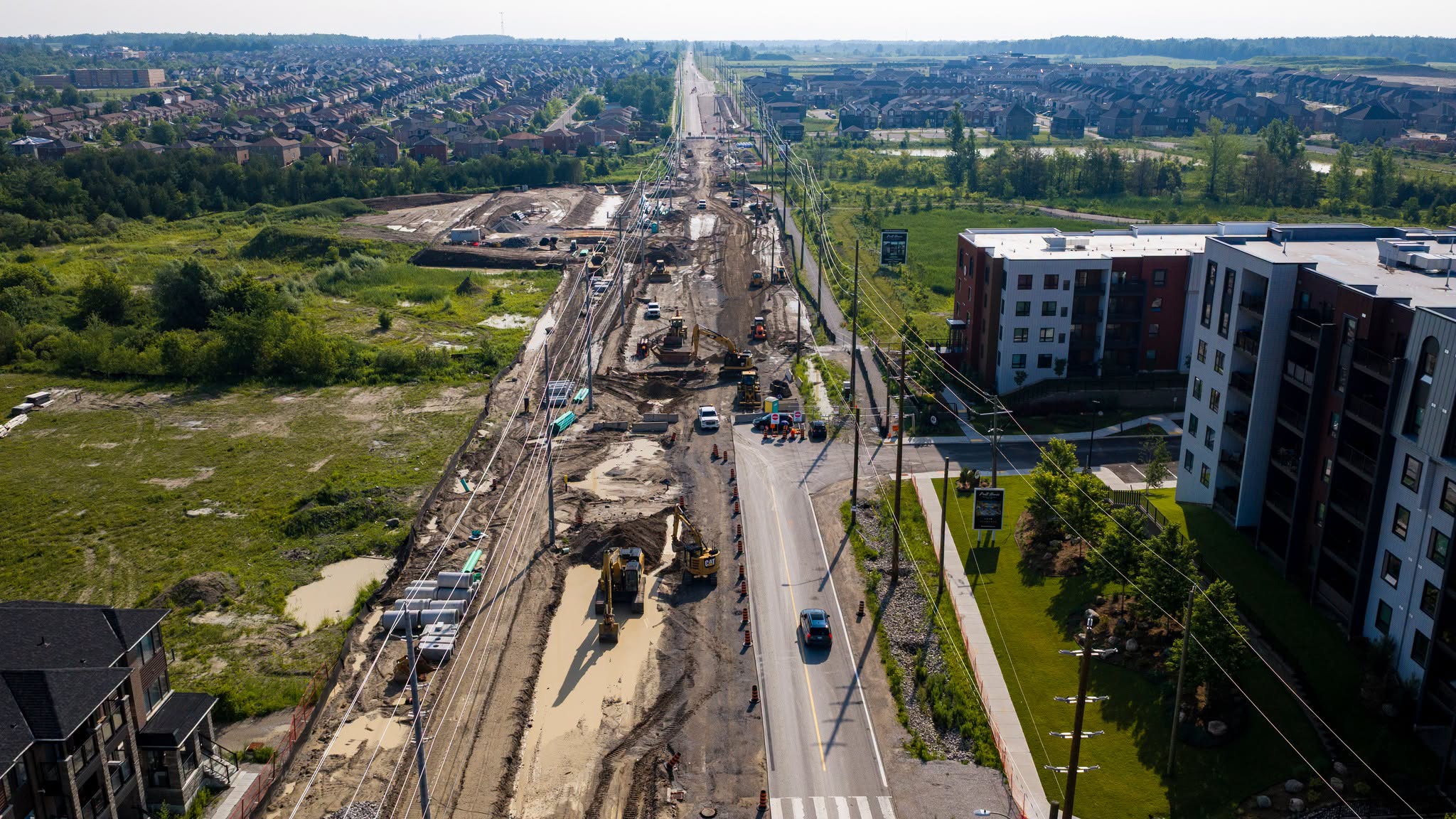
The City of Barrie is among Canada’s rapidly growing municipalities, and major infrastructure projects along Mapleview Drive East, Yonge Street, Mc Kay Road and Huronia Road are currently being developed to provide essential water and wastewater services necessary for new housing and employment areas.
“These four projects signify important investments in the infrastructure required to support growth in Barrie’s southern region, and their advantages go beyond just providing service capacity for new developments,” said Sherry Diemert, director of infrastructure for the City of Barrie. “The Yonge Street and Mapleview Drive East projects will upgrade existing rural or outdated road corridors into modern complete streets, featuring additional vehicle capacity, separated paths for pedestrians and cyclists, accessible transit stops, street lighting and improved intersections.
“The work also allows us to tackle existing infrastructure issues like poor pavement conditions, an undersized culvert at Hewitts Creek and stormwater management needs while enhancing connections between new neighborhoods, Maple Ridge Secondary School, commercial zones and the wider active transportation network.”
The city’s official plan anticipates significant growth over the next few decades, with Barrie’s population expected to surpass 298,000 and job numbers projected to hit 150,000 by 2051. Alongside these long-term projections, the city has committed to facilitating the construction of 23,000 new housing units by 2031.
“From our perspective at the Simcoe County Home Builders’ Association, we’ve always supported proactive infrastructure planning and timely investment,” said Tucky. “It’s promising to see these projects progressing because they will be vital in supporting housing growth moving forward. Ultimately, reaching housing targets requires more than just builders ready to construct; it demands strong cooperation between municipalities, developers and all levels of government to ensure that the necessary infrastructure is available for sustainable growth.”
The Mc Kay Road East Watermain & Trunk Sanitary Sewer project on Mc Kay Road East includes a new watermain running from east to west across Highway 400 as well as a new trunk sanitary sewer between Highway 400 and Huronia Road. These upgrades were initiated after the City of Barrie Multi-Modal Active Transportation Master Plan (MMATMP) identified Mc Kay Road East as a crucial transportation corridor needing several improvements to accommodate future growth.
The plan also recognized Yonge Street as another key transportation route that needs various enhancements through 2031. Upgrades will involve reconstructing and widening Yonge Street (Mapleview E to Lockhart) to include five lanes alongside a cycle track and sidewalk. This project will also cover reconstructing St. Paul Crescent (Mapleview E to Yonge).
The transportation master plan highlighted Huronia Road as another vital corridor requiring improvements. Construction aims at enhancing underground infrastructure on Huronia Road from Lockhart down to the south city limit in support of ongoing growth in that area. This work consists of reconstructing and widening the current two-lane roadway while adding wider paved shoulders improving stormwater drainage replacing major culverts installing eco-passage turtle fencing where needed. The project also includes upgrading intersections on Huronia Road with Mc Kay Road East enabling left-turn movements from all approaches plus constructing a trunk sanitary sewer between Mc Kay Road East and Lockhart along with related watermain systems supporting future development.
In addition, significant upgrades are being made along Mapleview Drive East from Yonge Street up until Prince William Way. The project encompasses widening the roadway enhancing intersections building multi-use trails along with installing stormwater management systems.
The Mapleview, Yonge, Huronia, and Mc Kayprojects have been expedited with construction already underway aiming for substantial completion by Spring 2028, Diemert stated via email correspondence with Ontario Construction News.
Projects are benefiting from over $53 million in provincial funding through grants provided under Housing Enabling Core Services along with Housing Enabling Water Systems Fund programs.
“Funding serves as a key asset since the city has received around $53 million from provincial grants which include $18.5 million earmarked specifically for Mapleview/Yonge road enhancements alongside $34.9 million allocated towards Huronia/Mc Kay servicing initiatives,” Diemert explained further. “The city continues collaborating closely with contractors aiming at identifying chances to optimize construction timelines enhance productivity while adhering strictly project schedules all while meeting financial milestone deliverables. Utility coordination remains critical due ongoing relocation efforts involving Hydro One Inn Power Bell Rogers Enbridge municipal water wastewater drainage infrastructures. Ultimately primary risks pertain more towards schedule management utility coordination rather than concerns regarding funding labour availability.”
Together these projects illustrate how investing in growth-related infrastructure can be effectively coordinated not only enabling fresh housing jobs but also bolstering transportation safety environmental resilience overall service levels remarked Diemert.
“Both Mc Kay Road Huronia servicing undertakings aim extending crucial municipal water wastewater structures into currently unserviced regions thus allowing thousands potential new dwellings additionally supporting approximately338 hectares designated employment land,” noted Diemert further adding this initiative leverages large-scale operations replace outdated deteriorated culverts improve junctions restore failing road surfaces incorporate measures such eco-passage systems turtles.”
Catering this magnitude expansion necessitates strategic planning land usage transport channels essential utilities including waste management municipal services infrastructures. Diemert emphasized connection between timing development synchronized scheduling municipality capabilities accommodates expansion efficiently maintains sustainability throughout evolving landscape hence fostering long-term urban prosperity ahead.”
Source link