





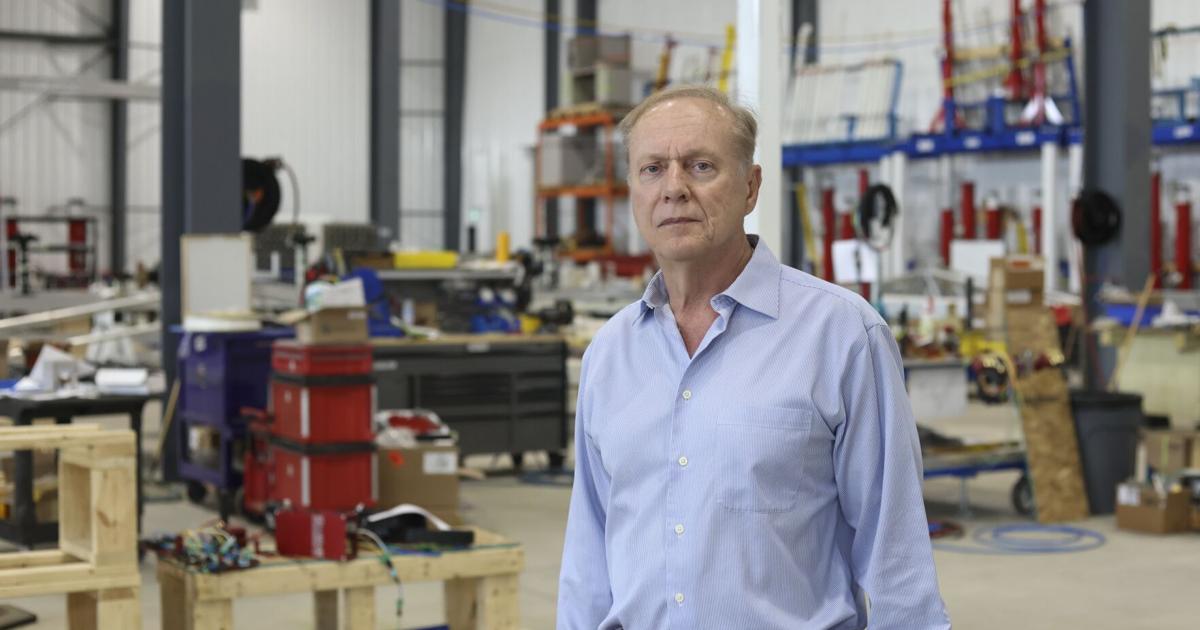
PARIS-When Ray Givens chose to open a branch of his company based in London, Ont., in Europe, he suggested teaming up with a fellow entrepreneur from Germany.
They could share a workshop, staff, and manage the high startup costs together – not to mention the stress involved.
“The owner of that company said, ‘No, not a chance,’” Givens remembered. “He said it was way too risky, the chances of success were way too low, and that it was not worth it at all.”
Concerned by U. S. President Donald Trump’s rising tariffs on steel and aluminum for the massive cranes and customized machinery produced by Givens Engineering for automotive assembly lines, he decided to push forward anyway.
Since January – with a friend in Germany acting as his translator and main administrator – Givens has been navigating corporate documents, bank accounts, and numerous rules of this unfamiliar territory.
He currently has one employee on payroll, another joining soon, but no sales yet. His rented German workspace is cluttered with parts of cranes, manipulators, and machines awaiting storage solutions and labor.
“The Germany expansion is in case tariffs go off the scale,” he explained about a risk he believes has only a 50 percent chance of succeeding. “If tariffs get crazy, I want to be prepared for this. I want an alternative option to sell into Europe.”
U. S. President Donald Trump says he’s not looking to renew the Canada-U. S.-Mexico Agreement on free trade that he signed in 2020.
U. S. President Donald Trump says he’s not looking to renew the Canada-U. S.-Mexico Agreement on free trade that he signed in 2020.
The deadline of July 1 for renewing the Canada-United States-Mexico free trade agreement is quickly approaching. Canadian businesses large and small are facing similar dilemmas.
No matter how much they hope for a return to an easygoing setup allowing tariff-free sales south of the border, their long-term survival – along with that of the Canadian economy – depends on finding new markets abroad.
This urgency is being fueled by Prime Minister Mark Carney’s aim to double exports to non-U. S. countries by 2035.
In an interview with Star while in Paris, International Trade Minister Maninder Sidhu mentioned that Export Development Canada (a federal agency providing financial assistance and guidance for exporters) saw its number of European clients jump from 1,740 in early 2026 compared to around 900 in 2025 – “so it’s a big double,” he noted.
“The growth comes from those larger companies already engaged in international trading,” stated Catherine Fortin Le Faivre who serves as vice president for international policy at the Canadian Chamber of Commerce.
“The challenge lies with smaller companies – especially those who never thought they’d need alternative markets before. Now they’re asking themselves: ‘How do I begin this?’”
Growing Interest Among Canadian Firms
This illustrates a lesser-known side of Canada’s delicate economy.</
The federal government is working on free trade agreements while forming strategic partnerships and defense procurement deals promoting Canada as reliable ground rich in energy resources and minerals.
The path leading from opportunity to profit is filled with uncharted obstacles and potential issues.
A trade official at the Canadian embassy in Paris told Star that many small- and medium-sized enterprises want to export but don’t know how.”“
“Being ‘export-ready’ takes time,” she explained.” It requires crafting market-specific business strategies tailored toward specific countries along with aligning standards.”
The classic example features someone making jams at home dreaming about global sales.
“Is it professional? No; but it’s possible,” continued “Many firms started out like this.” The official pointed out.” Just because your jams are popular back home doesn’t guarantee success overseas.”
An evident rise exists among Canadian companies eager for new market opportunities.
Your Money Matters: Preparing Financially For Retirement
Little Space Left! Registration Will Close Soon! Sign Up Today!
Source link