



This is the second in CBC Sudbury’s three-part series on what’s being done to meet electricity demands in northern Ontario.
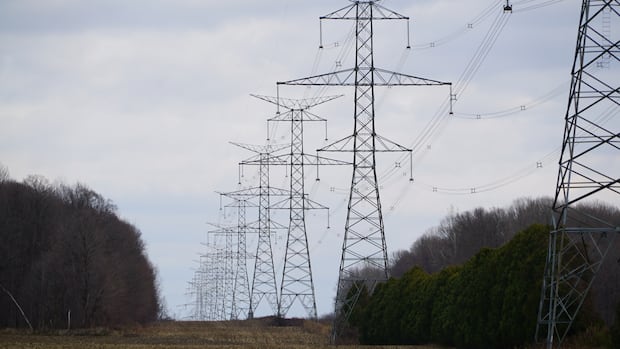
Ontario’s decision to quickly push forward with a new transmission line between Barrie and Sudbury has raised concerns about its potential environmental effects.
Advocates like Brennain Lloyd are questioning how this project – a 500-kilovolt line from Hydro One – might impact wetlands, lakes, wildlife habitats, and species at risk.
“This will be an expensive project, an expensive proposition,” said Lloyd, project co-ordinator at Northwatch, a regional environmental advocacy organization focused on resource and energy issues in northeastern Ontario.
“There should be a very clear purpose or need established before it moves forward.”
Lloyd mentioned that Northwatch hasn’t yet conducted a thorough study of the entire corridor but noted that the broader study area crosses mostly undeveloped land in northeastern and central Ontario.
“There will be areas of ecological value that are transected by the line.”
The business case for the new line
Hydro One plans to start construction of the line in 2029, aiming for it to be fully operational by 2032.
The province announced the expedited timeline for this line – indicating it’s a priority project – back in February. Officials stated it will help meet increasing electricity demands, support northern industries, and strengthen the power grid.
The line would stretch approximately 290 kilometres between the Hanmer transformer station in Greater Sudbury and the Essa transformer station near Barrie. It’s one of two major power lines being advanced in northern Ontario, alongside another 230-kilovolt line connecting Dryden and Red Lake.
In an interview with , Energy and Mines Minister Stephen Lecce expressed that Ontario needs to build energy infrastructure ahead of demand outstripping capacity.
Ontario Energy and Mines Minister Stephen Lecce says the province wants to build new energy infrastructure before electricity shortages emerge. (Sarah Law/CBC)
However, both Lecce and Hydro One emphasize that this project will undergo strict environmental review processes.
Lecce stated that quicker approvals don’t equate to weaker environmental protections.
“We’ve introduced and passed legislation that strengthens enforcement regimes,” he said, highlighting penalties which can include jail time and multimillion-dollar fines. “The signal is zero tolerance. We have a strong record in this province, but we will be on guard and fully committed to safeguarding our natural environment, human health.”
During the interview, Lecce stressed how crucial it is to plan ahead for future electricity needs.
He remarked that planning proactively is better than “scrambling for transmission and generation after the fact.”
“Our transmission just does not have capacity to reliably supply and meet that demand forecast.”
The projected growth for electricity demand in northern Ontario is expected to rise by 81 percent by 2050 due to mining activity, housing developments, agriculture expansion, and industrial growth as highlighted by the minister.
The latest annual planning outlook from the Independent Electricity System Operator (IESO) – responsible for managing Ontario’s electricity system – indicates demand could increase anywhere from 38 percent up to 98 percent by 2050 based on factors like decarbonization efforts within the economy or geopolitical trade challenges.The time is now to build using all the accelerating tools we have to really electrify the region.- Stephen Lecce, Ontario’s energy and mines ministerThe Barrie to Sudbury initiative could generate around 9,000 jobs while boosting spending on materials sourced from Ontario or Canada as per Lecce’s comments. He didn’t clarify how many jobs would be temporary due solely to construction activities related directly with building this power line.”It means the entire supply chain gets fired up. People work; families get stability so kids can stay where they grew up.”</pp